


🇷🇴
Romania
Zelenskyy Releases Secret Russian Documents on Putin's Falling Polls
Translated from Romanian, summarized and contextualized by DistantNews.
At a glance
News
Named sources
Ongoing story
- Ukrainian President Volodymyr Zelenskyy claims to have intercepted secret Russian documents revealing deep internal crises within Vladimir Putin's regime.
- The documents reportedly show a projected rise in public disapproval of Putin and a collapse in support for the ruling United Russia party ahead of upcoming elections.
- Zelenskyy suggests these internal issues are exacerbated by Russia's military and economic realities, particularly recent events over the summer.
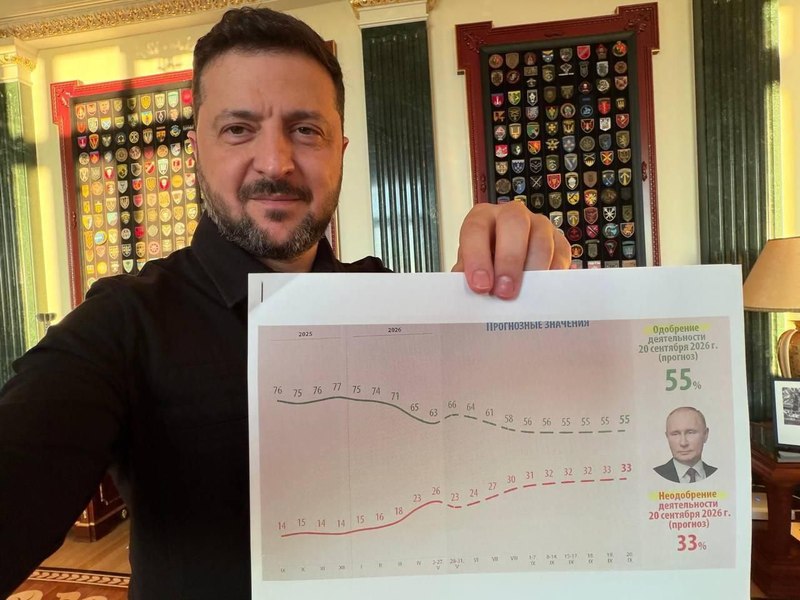
Ukrainian President Volodymyr Zelenskyy has released what he claims are intercepted secret Russian reports, alleging they expose a profound internal crisis within Vladimir Putin's administration. These documents, purportedly intended for the Kremlin's top leadership, indicate a steady increase in public disapproval of Putin, projected to reach at least 33% by the State Duma elections on September 20.
Simultaneously, support for the ruling United Russia party is reportedly collapsing, fueling concerns about a dangerous wave of protests across various regions. Zelenskyy presented these confidential projections on his Telegram channel, highlighting growing anxiety within the Kremlin regarding the country's internal stability as Russia approaches a critical political juncture.
The intercepted documents offer a classified and candid assessment of Russian public sentiment leading up to the parliamentary elections. "The so-called projected indicators of Russians' dissatisfaction with Putin will continue to grow steadily," Zelenskyy stated. "He has already begun to get used to the idea that this increase in dissatisfaction cannot be stopped and that the indicator will not level off before September, when the elections are scheduled."
The so-called projected indicators of Russians' dissatisfaction with Putin will continue to grow steadily. He has already begun to get used to the idea that this increase in dissatisfaction cannot be stopped and that the indicator will not level off before September, when the elections are scheduled.
According to the data obtained by Kyiv, internal Kremlin analysts estimate that by September 20, 2026, only 55% of the Russian population will approve of Putin's actions, while a historic 33% will explicitly express disapproval, with the remaining 12% undecided. Beyond the president's image, the United Russia party faces a significant legitimacy crisis, with secret reports noting a "constant downward trend" in popular support. Kremlin strategists reportedly acknowledge in the documents that maintaining control of the State Duma will require "significantly more falsifications" and electoral manipulation than in previous cycles.
Zelenskyy emphasized that these alarming projections for Moscow were calculated before the full impact of the summer's military and economic realities. "We believe that these reports do not even take into account potential events in June, July, and August, which cannot but further affect the situation in Russia," he noted. The reports allegedly detail a concerning rise in "protest spirit" in key Russian regions, attributing the morale collapse to desperate regime decisions.
We believe that these reports do not even take into account potential events in June, July, and August, which cannot but further affect the situation in Russia.
DistantNews Editorial
Originally published by Adevărul in Romanian. Translated, summarized, and contextualized by our editorial team with added local perspective. Read our editorial standards.
More Stories
From Our Blog

What Gets Lost (and Found) When News Is Translated

The Critical Role of Diaspora Media in Global News

What Travellers Should Know About Countries with Restricted Press

A Digital Nomad's Guide to Following Local News

How the Same Story Looks Different in Different Countries
