


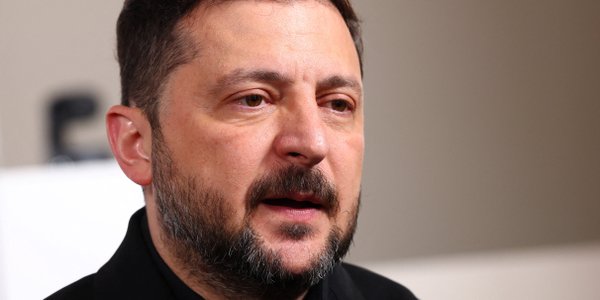
Zelenskyy's Risky Game with Poland: Ukraine Continues to Weaken
Translated from Polish, summarized and contextualized by DistantNews.
At a glance
Opinion
Named sources
Context piece
- The author criticizes Ukrainian President Zelenskyy's nationalist rhetoric, calling it self-destructive.
- He argues that Ukraine's past political calculations, based on an overestimation of its geopolitical importance, led to stagnation and corruption.
- The article suggests that Zelenskyy's current approach risks alienating allies and weakening Ukraine's future prospects.
Bogusław Chrabota, writing for Rzeczpospolita, argues that Ukrainian President Volodymyr Zelenskyy's embrace of nationalist sentiment is a perilous gamble, potentially undermining Ukraine's long-term stability and international standing. Chrabota contends that this rhetoric, particularly coming from a leader representing a nation that has historically suffered greatly from nationalism, is fundamentally self-defeating.
The author reflects on Ukraine's past political landscape, noting that even as recently as twelve years ago, the nation's political class debated its future path, oscillating between closer ties with Russia and a course toward the European Union. This period, Chrabota suggests, was characterized by a naive overestimation of Ukraine's geopolitical leverage, leading to a "lazy inertia" among elites. This perceived attractiveness, like that of an "eligible bride," fostered slow reforms, rampant corruption, and a powerful oligarchic system, which in turn benefited pro-Russian politicians.
The fanning of nationalist sentiments in Ukraine by Zelenskyy, a representative of a nation that has always borne the greatest sacrifice from nationalists, is in fact suicidal.
Chrabota draws a parallel between the past and present, implying that Zelenskyy's current strategy, while perhaps emotionally resonant domestically, risks repeating historical miscalculations. The Euromaidan revolution, sparked by a protest against the rejection of an EU association agreement, initially signaled a clear desire for democracy and an end to corruption, symbolized by Ukrainian and European flags. However, the author implies that a resurgence of nationalism, even if seemingly aimed at national unity, could jeopardize the very alliances and democratic aspirations Ukraine seeks to uphold, ultimately weakening its position in the ongoing conflict and future reconstruction.
Ukraine is like an attractive bride and can choose among suitors.
DistantNews Editorial
Originally published by Rzeczpospolita in Polish. Translated, summarized, and contextualized by our editorial team with added local perspective. Read our editorial standards.
More Stories



From Our Blog

What Gets Lost (and Found) When News Is Translated

The Critical Role of Diaspora Media in Global News

What Travellers Should Know About Countries with Restricted Press

A Digital Nomad's Guide to Following Local News

How the Same Story Looks Different in Different Countries
