


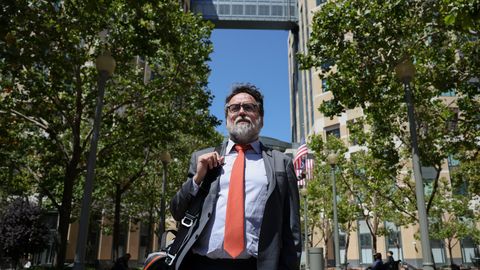
Zuckerberg's companies in court: Meta claims child protection, but ex-engineer says safety tools were designed to fail
Translated from Estonian, summarized and contextualized by DistantNews.
At a glance
News
Named sources
Under investigation
- A former Meta engineer testified that the company's safety features, like Instagram's time limits, were designed to fail.
- Arturo Béjar stated these features were voluntary and contradicted the platform's goal of keeping users engaged for as long as possible.
- Meta claims the former engineer distorts the company's years of safety work.
During the ongoing trial over social media's impact on children's mental health, a former Meta engineer has challenged the company's core defense. Arturo Béjar, formerly Meta's director of engineering, testified that features like Instagram's time limits and break reminders were intentionally designed to be ineffective.
Béjar argued that these safety measures were voluntary and fundamentally opposed the platform's primary objective: maximizing user engagement by keeping individuals on screen for extended periods. He suggested that the design choices prioritized keeping users hooked over genuinely protecting them from potential harm.
Meta, however, has pushed back against Béjar's claims, asserting that the former engineer misrepresents the company's extensive efforts in child safety over many years. The trial in Oakland is scrutinizing the gap between Meta's public statements about user well-being and the actual product design of its platforms, Facebook and Instagram.
The central question revolves around whether features like the voluntary 'Take a Break' settings represent a genuine attempt to mitigate harm or merely a public relations tactic that fails to address the addictive nature of the apps. Both former employees, state authorities, and Meta itself are seeking answers in this high-profile case.
DistantNews Editorial
Originally published by Postimees in Estonian. Translated, summarized, and contextualized by our editorial team with added local perspective. Read our editorial standards.
More Stories
/nginx/o/2024/11/30/16516494t1h4354.jpg)

From Our Blog

What Gets Lost (and Found) When News Is Translated

The Critical Role of Diaspora Media in Global News

What Travellers Should Know About Countries with Restricted Press

A Digital Nomad's Guide to Following Local News

How the Same Story Looks Different in Different Countries
