


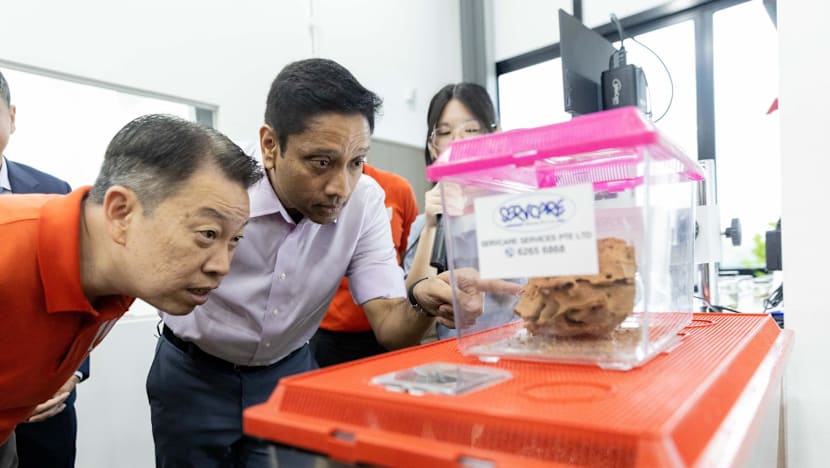
1,800 pest management workers to benefit from sustainable pay rises under Progressive Wage Model
Summarized and contextualized by DistantNews.
At a glance
News
Named sources
New plan
- Around 1,800 pest management workers in Singapore will benefit from wage increases under the Progressive Wage Model (PWM).
- The expansion covers Singaporean citizens and permanent residents in the sector, including vector control technicians.
- The PWM ensures sustainable pay rises tied to skills enhancement and productivity, with employers required to meet minimum wage and training standards.
Approximately 1,800 workers in Singapore's pest management sector are set to receive sustainable wage increases through the expansion of the Progressive Wage Model (PWM). Tripartite partners announced on Wednesday that the initiative will benefit full-time and part-time pest management workers, as well as licensed vector control technicians, who are Singapore citizens or permanent residents.
Pest management work requires specialised skills, from detecting pest activities and applying pest control measures, to handling chemicals safely to reduce public health risks.
The PWM is designed as a wage structure that links pay increases to workers' skills enhancement and productivity improvements. Under this model, employers are mandated to pay eligible workers at least the minimum wage corresponding to their job level and to ensure they meet specified training requirements. This model is already in place for sectors such as cleaning, security, landscape, lift and escalator, retail, food services, and waste management, along with occupations like administrators and drivers.
A tripartite cluster, comprising representatives from the Ministry of Manpower, the National Trades Union Congress (NTUC), and the Singapore National Employers Federation, will be established to determine the specific implementation details for the pest management sector. This cluster will also focus on enhancing professionalism within the industry, improving its image, and monitoring compliance with the PWM and its overall impact.
With our densely populated built environment including housing estates and food establishments, just to name a few, the job of a pest management worker is critical and demanding.
Minister of State for Manpower, Dr. Wan Rizal, highlighted the essential role of pest management workers in safeguarding public health and mitigating vector-borne diseases. He stated that the PWM's extension to this sector acknowledges the expertise and importance of these workers. Dr. Wan Rizal, who is also a Member of Parliament, noted that pest management requires specialized skills, from detecting pest activities and applying control measures to safely handling chemicals, making the job critical and demanding in Singapore's densely populated environment.
This is a meaningful step to raise industry standards and give workers better wages, skills and career prospects.
Melvin Yong, assistant secretary-general of NTUC and MP for Radin Mas, described the move as a "meaningful step to raise industry standards and give workers better wages, skills and career prospects." He expressed his heartenedness that pest management workers will now be covered, recognizing their essential contribution to public health and a clean living environment, even if their work is not always visible. Mr. Kung Teong Wah, co-chair of the tripartite cluster, stressed the importance of ensuring wage requirements consider business realities, including cost pressures, manpower constraints, and productivity levels, to enable employers to support meaningful wage adjustments.
Their work may not always be visible, but it is essential to public health and a clean, safe living environment.
DistantNews Editorial
Originally published by CNA. Summarized and contextualized by our editorial team with added local perspective. Read our editorial standards.
More Stories


From Our Blog

What Gets Lost (and Found) When News Is Translated

The Critical Role of Diaspora Media in Global News

What Travellers Should Know About Countries with Restricted Press

A Digital Nomad's Guide to Following Local News

How the Same Story Looks Different in Different Countries
