


130-Year-Old Wines Valued at $5 Million Re-corked After Discovery in Nazi Collaborator's Hidden Cellar
Translated from Spanish, summarized and contextualized by DistantNews.
At a glance
News
Named sources
Outcome reported
- Experts have confirmed that 136 wines, hidden for decades in a Czech castle's chapel, are in perfect condition and drinkable.
- The collection includes rare bottles of Château d’Yquem, Pedro Ximénez sherry, and port wine, estimated to be worth $5 million.
- The wines were hidden by the Beaufort-Spontin family, accused of Nazi collaboration, before they fled the country after World War II.
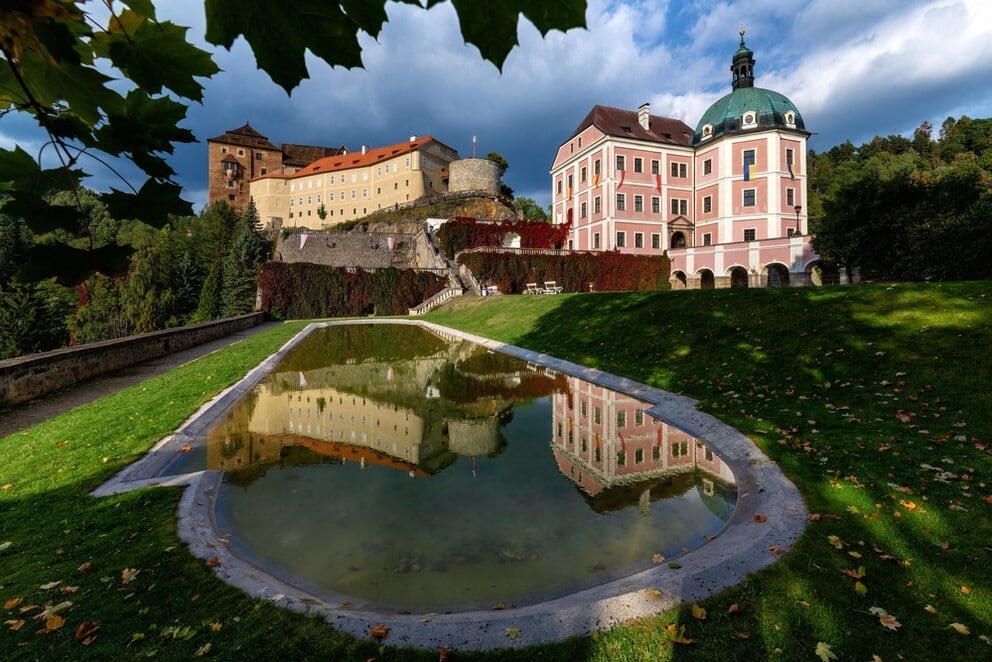
An astonishing discovery in a subterranean cellar beneath a chapel at the Becov nad Teplou castle in the Czech Republic has revealed a collection of 136 wines, some dating back to the 1890s, that are surprisingly still in perfect condition and considered drinkable.
in perfect condition
The hoard includes rare bottles such as eight of Château d’Yquem from harvests between 1892 and 1896, a Pedro Ximénez sherry from 1899, and a port wine from 1892. Experts estimate the entire collection's value at $5 million.
These valuable bottles were hidden beneath the chapel floor by the castle's former owners, the Beaufort-Spontin family. It is believed they concealed the wines when forced to abandon the country at the end of World War II, having been accused of collaborating with the Nazis. The family had owned the castle since 1813, holding high positions within the Austro-Hungarian nobility before the property was confiscated by communists.
In other words, they can be drunk.
The wines remained undisturbed in the cool, humid environment of the castle's thick-walled chapel, which housed a sanctuary. They were first discovered in 1985 by communist secret police but were subsequently forgotten. A rediscovery during an inventory 10 years ago prompted a detailed study and restoration process.
The collection benefited from very good conservation conditions in this old chapel. I think very humid and very cold, with thick walls, and also underground, so it preserved the humidity and temperature in a very constant way.
Toni El Khawand, the chief winemaker at Château d’Yquem who led the evaluation and "restoration," commented on the exceptional preservation. He attributed the wines' condition to the "very good conservation conditions" within the ancient chapel, noting its high humidity, cold temperatures, thick walls, and underground location, which maintained a constant environment. El Khawand confirmed that a small amount was tasted to ensure the wine's aromatic profile and palate balance were consistent with its age, after which the bottles underwent a re-corking and new capsule process to ensure their longevity.
We tasted a very small amount to ensure that, aromatically and in terms of balance on the palate and general perception, the wine corresponded to a Château d’Yquem of that age.
DistantNews Editorial
Originally published by La Nación in Spanish. Translated, summarized, and contextualized by our editorial team with added local perspective. Read our editorial standards.
More Stories



From Our Blog

What Gets Lost (and Found) When News Is Translated

The Critical Role of Diaspora Media in Global News

What Travellers Should Know About Countries with Restricted Press

A Digital Nomad's Guide to Following Local News

How the Same Story Looks Different in Different Countries
