


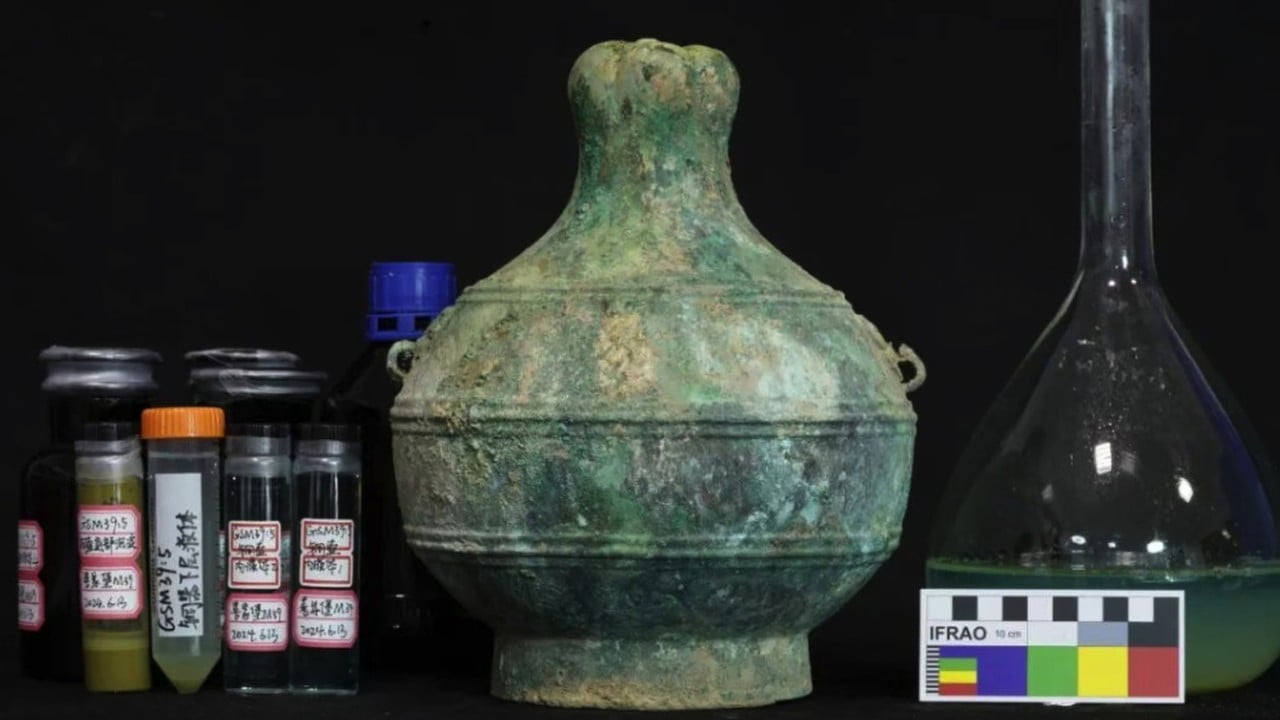
2,300-year-old wine found near Great Wall ruin reveals ancient brewing secrets
Summarized and contextualized by DistantNews.
At a glance
News
Documents & data
Context piece
- A well-preserved bronze wine vessel, dating back 2,300 years to the Warring States period, was discovered near a Qin Great Wall ruin in Gansu, China.
- The sealed vessel still contained liquid, offering insights into ancient Chinese brewing techniques and cereal utilization.
- The discovery was made during excavations at the Shanjiabao cemetery, near a section of the Qin Great Wall built between 325-251 BC.
An ancient bronze wine vessel, remarkably preserved and still containing liquid, has been unearthed near a ruin of the Qin Great Wall in China's Gansu province. The artifact dates back 2,300 years to the Warring States period, offering a rare glimpse into the brewing practices of the era.
The discovery was made at the Shanjiabao cemetery, located just 2 kilometers from a section of the Qin Great Wall. This wall, built between 325 and 251 BC, is one of China's earliest ancient fortifications. The perfectly sealed bronze jar's contents provide valuable data for understanding how the Qin people utilized cereals and their brewing techniques.
Researchers believe this study will contribute significantly to reconstructing ancient Chinese brewing technology and refining our understanding of its development. The Qin Great Wall stretches 170 kilometers and features numerous forts and outposts, which were once inhabited by soldiers and their families during the Warring States period. Excavations at the Shanjiabao Cemetery began in March 2024.
This study provides a clear understanding of the cereals utilisation and brewing techniques of the Qin people, contributing to the reconstruction of ancient Chinese brewing technology and also refining the development process.
DistantNews Editorial
Originally published by South China Morning Post. Summarized and contextualized by our editorial team with added local perspective. Read our editorial standards.
More Stories



From Our Blog

Countries Without a Free Press: What You Need to Know

What Press Freedom Means for the News You Read

What Gets Lost (and Found) When News Is Translated

The Critical Role of Diaspora Media in Global News

What Travellers Should Know About Countries with Restricted Press
