

2026 U.S. measles cases have passed record-breaking tally for all of 2025
Summarized and contextualized by DistantNews.
At a glance
News
Sources not specified
Context piece
- The U.S. has surpassed its 2025 measles case count in 2026, with five months remaining in the year.
- This makes 2026 the worst year for measles in the U.S. since 1991, driven by major outbreaks in several states.
- Declining vaccination rates, falling below the 95% threshold needed for herd immunity, are a key factor contributing to the rise in cases.
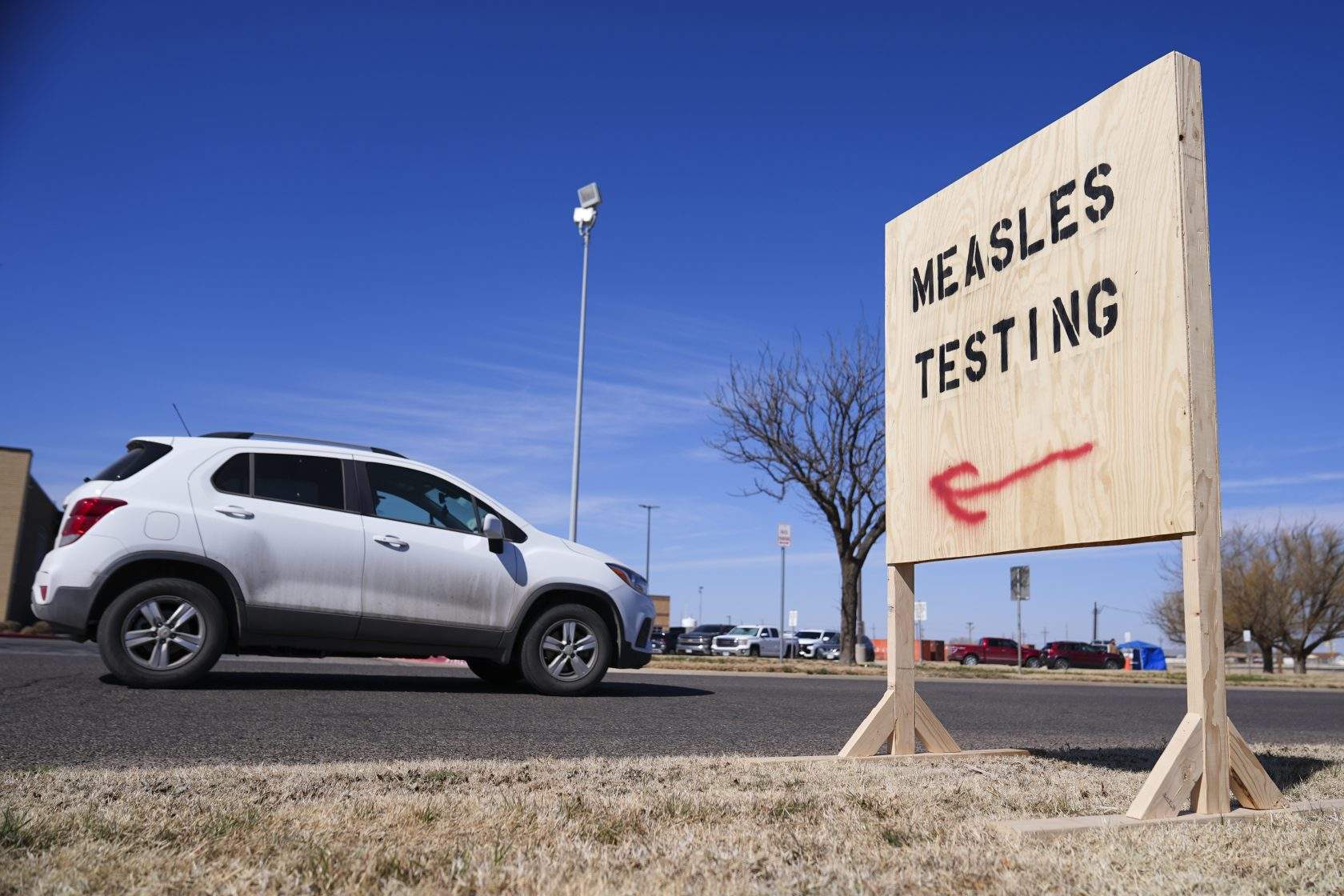
The United States is experiencing its most severe measles outbreak in over three decades, with the number of reported cases in 2026 already exceeding the total for the entirety of 2025. As of Friday, the U.S. Centers for Disease Control and Prevention (CDC) had logged 2,318 measles cases, a stark increase from the 2,289 cases recorded throughout last year.
The nation had 2,289 cases in 2025, the worst year for measles in more than three decades.
This surge has made 2026 the worst year for measles in the U.S. since 1991. Major outbreaks in South Carolina, Utah, and Arizona have each sickened hundreds of individuals, while smaller clusters have emerged in other states. International health officials are set to convene in November to assess whether the U.S. and Mexico have maintained their measles-free status.
Now, 2026 has easily become the U.S.’s worst year for measles since 1991, as major outbreaks in South Carolina, Utah and Arizona have sickened hundreds and smaller clusters of cases sparked in other states.
Experts attribute the resurgence primarily to declining vaccination rates. The U.S. had successfully eliminated local measles transmission in 2000 by maintaining high vaccination coverage, typically above the 95% required for herd immunity. However, recent years have seen a drop in these rates. National vaccination rates for measles, mumps, and rubella (MMR) fell to 92.5% among kindergartners in the 2024-25 school year, down from 95.2% in 2019-20, with certain communities experiencing even lower coverage.
The U.S. eliminated local measles spread in 2000 by maintaining high vaccination rates, which have fallen in recent years to below the 95 per cent coverage needed to prevent outbreaks.
Compounding the issue, public health officials acknowledge that official case counts are likely an underestimation. Many individuals may not seek medical treatment for measles, and the virus's high contagiousness means outbreaks can spread rapidly. In Utah, where measles has been prevalent for over a year, over 700 people have been infected. Mathematical modeling suggests the actual number of cases in the Utah-Arizona border outbreak could be three to four times higher than currently reported. Similarly, South Carolina's largest outbreak in 35 years is also believed to be an undercount, though the exact extent remains unknown.
National vaccination rates for measles, mumps and rubella, which dropped to 92.5 per cent among kindergartners in the 2024-25 school year, from 95.2 per cent in 2019-20, obscure even lower rates in certain communities.
DistantNews Editorial
Originally published by Global News. Summarized and contextualized by our editorial team with added local perspective. Read our editorial standards.
More Stories
From Our Blog

What Gets Lost (and Found) When News Is Translated

The Critical Role of Diaspora Media in Global News

What Travellers Should Know About Countries with Restricted Press

A Digital Nomad's Guide to Following Local News

How the Same Story Looks Different in Different Countries
