


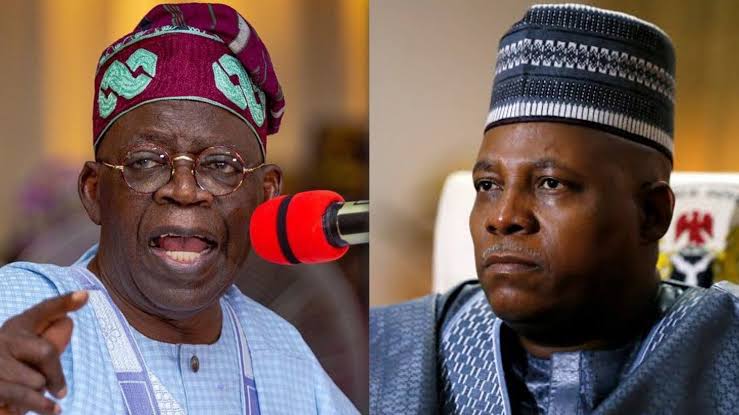
2027: Afenifere, others react to APC Muslim-Muslim ticket
Translated from English, summarized and contextualized by DistantNews.
At a glance
News
Named sources
Context piece
- Stakeholders hold divergent views on the All Progressives Congress's (APC) decision to maintain a Muslim-Muslim presidential ticket for the 2027 election.
- Some argue that competence should supersede religious considerations, citing past successful administrations with mixed-faith leadership.
- Others advocate for greater inclusiveness and a stronger focus on governance, questioning the impact of religious uniformity on leadership quality.
Nigeria's political landscape is abuzz with debate following speculation that the All Progressives Congress (APC) may retain its Muslim-Muslim presidential ticket for the 2027 general election. Stakeholders have expressed a range of opinions, with some prioritizing competence and good governance over religious or ethnic balancing, while others call for more inclusive representation.
The attention of Afenifere has been drawn to renewed attempts by certain political interests to rekindle controversy over the APC’s Muslim-Muslim presidential ticket. We consider it necessary to restate our principled position on this matter.
The pan-Yoruba socio-political group Afenifere reiterated its stance, emphasizing that it is not a religious organization but one focused on justice, equity, and the welfare of the people, regardless of faith. Afenifere's National Organizing Secretary, Abagun Kole Omololu, stated that while some politicians might exploit religion for political gain, most Nigerians are more concerned with security, economic opportunities, education, and accountable leadership.
Afenifere is not a religious organisation. It is a pan-Yoruba socio-political movement established to protect, promote and advance the collective interests of the Yoruba people wherever they reside across the globe.
Afenifere pointed to historical examples of successful governance in Nigeria, such as the administration of Alhaji Lateef Jakande, a Muslim governor with a Muslim deputy in Lagos State, which has a predominantly Christian population. They also cited Chief M.K.O. Abiola and Ambassador Babagana Kingibe, both Muslims, who secured a nationwide mandate in 1993 based on their character and vision. The group argued that religious uniformity in state leadership does not automatically guarantee better governance or economic development.
While some politicians may seek to weaponise religion for partisan advantage, the overwhelming majority of Nigerians are far more concerned about security, economic opportunities, affordable living, quality education, healthcare and accountable leadership than the faith of those entrusted with public office.
Conversely, the debate highlights a broader tension between religious inclusivity and the pursuit of effective leadership. While proponents of the Muslim-Muslim ticket emphasize the APC's previous success with it, critics argue that such a ticket could alienate significant segments of the population and undermine national unity. The discussion underscores the complex interplay of religion, ethnicity, and governance in Nigerian politics as the country approaches the next election cycle.
History offers ample evidence that Nigerians have consistently demonstrated political maturity by placing competence above creed.
DistantNews Editorial
Originally published by Vanguard in English. Translated, summarized, and contextualized by our editorial team with added local perspective. Read our editorial standards.
More Stories


From Our Blog

How the Same Story Looks Different in Different Countries

What Gets Lost (and Found) When News Is Translated

The Critical Role of Diaspora Media in Global News

What Travellers Should Know About Countries with Restricted Press

A Digital Nomad's Guide to Following Local News
