

3,200-year-old city unearthed in Ireland could rewrite ancient European history
Translated from English, summarized and contextualized by DistantNews.
At a glance
News
Sources not specified
Context piece
- Archaeologists have uncovered evidence of a large, organized 3,200-year-old city in County Armagh, Ireland.
- The findings challenge previous views, suggesting substantial planned settlements in Western Europe emerged much earlier than thought.
- The site, Haughey's Fort, was part of a larger interconnected landscape used for living, trade, and ceremonies.
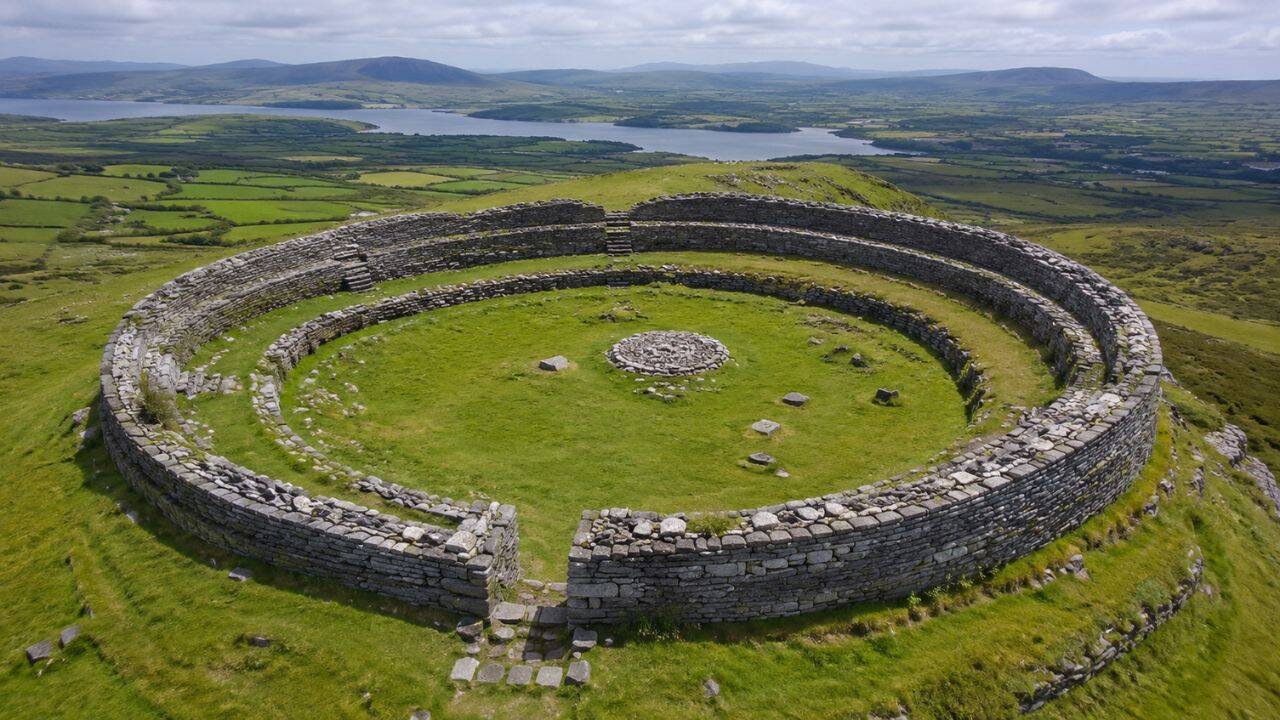
A sprawling 3,200-year-old city, previously hidden beneath the landscape of County Armagh, Ireland, is prompting a significant reevaluation of ancient European history. Fresh archaeological research indicates this was not merely a collection of prehistoric monuments but a meticulously organized community center where people lived, worked, traded, and performed ceremonies.
The discoveries challenge the long-held belief that large, planned settlements in Western Europe only appeared much later. Haughey's Fort, once seen as an isolated hilltop enclosure, now appears to be a central component of a much larger, deliberately designed landscape. Modern survey methods and excavations reveal a settlement of considerable size, actively involved in craft production, ceremonial activities, and long-distance trade.
This new understanding paints a different picture of Bronze Age Ireland, showcasing communities capable of organizing people, resources, and space on a scale previously not associated with the period. The findings, published in Cambridge University Press, suggest Haughey's Fort housed over 200 timber-built houses, an unusual concentration for prehistoric Ireland, pointing to a planned settlement rather than scattered farmsteads.
Among the structures are exceptionally large circular buildings, some measuring up to 30 meters across. Archaeologists believe these likely served as communal gathering places or institutional spaces for significant social or political events. The research further posits that Haughey's Fort was part of an extensive landscape with distinct, interconnected areas, including the King's Stables, an artificial pool used for ritual practices, evidenced by deliberate placements of weapon molds, animal remains, and human bone fragments.
DistantNews Editorial
Originally published by Times of India in English. Translated, summarized, and contextualized by our editorial team with added local perspective. Read our editorial standards.
More Stories

From Our Blog

What Press Freedom Means for the News You Read

What Gets Lost (and Found) When News Is Translated

The Critical Role of Diaspora Media in Global News

What Travellers Should Know About Countries with Restricted Press

A Digital Nomad's Guide to Following Local News
