

Mexican mayor weds caiman in ancient ritual symbolizing harmony with nature
Translated from English, summarized and contextualized by DistantNews.
At a glance
In-depth
Sources not specified
Context piece
- A Mexican town holds an annual wedding ceremony where the mayor symbolically marries a female caiman.
- The ritual, over 230 years old, symbolizes harmony between people and nature, and peace between Indigenous communities.
- Locals believe the union brings good harvests, plentiful fishing, rain, peace, and prosperity.
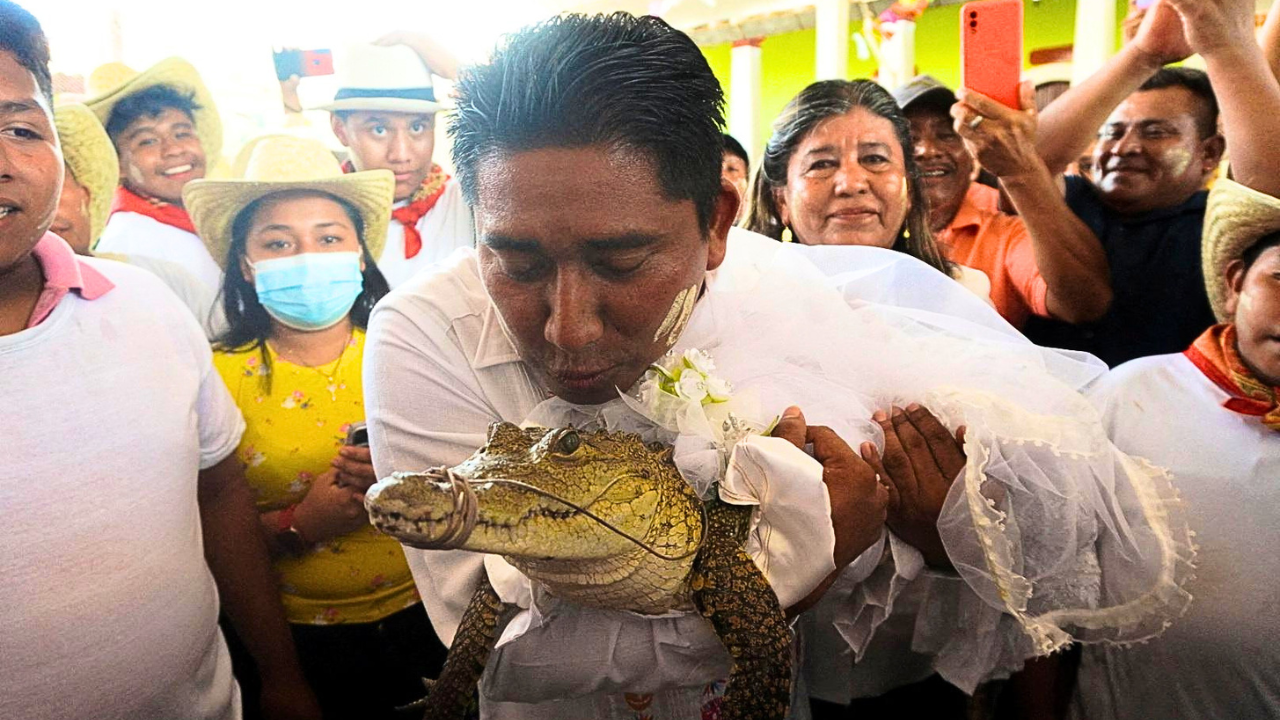
In the southern Mexican state of Oaxaca, the town of San Pedro Huamelula annually celebrates a unique wedding. The town's mayor, dressed for the occasion, symbolically marries a female caiman, a reptile native to the region. This tradition, believed to be over 230 years old and rooted in pre-Hispanic Indigenous practices, is a cherished cultural event.
The caiman, referred to as an Indigenous princess and a symbol of Mother Earth, is adorned in a white gown and traditional clothing. Residents carry her through the town, highlighting the ceremony's importance. This year, Mayor Daniel Gutierrez performed the symbolic union with a caiman named Ana Cintia Ramirez Ahumada.
Far from a mere spectacle, the ritual represents a deep bond between the community and the natural world. For generations, residents have relied on farming, fishing, and coastal resources, believing this symbolic marriage ensures good harvests, plentiful fishing, rain, peace, and prosperity. The caiman embodies nature, while the mayor represents the community, emphasizing that human and natural worlds thrive in harmony.
The ceremony also commemorates an ancient peace agreement between the Chontal and Huave (Ikoots) Indigenous peoples. Legend states that a marriage between a Chontal king and a Huave princess ended conflict and ushered in an era of peace. Today, the mayor stands in for the Chontal ruler, and the caiman represents the Huave princess, celebrating unity and cooperation between the two cultures.
Without us, the world collapses.
DistantNews Editorial
Originally published by Times of India in English. Translated, summarized, and contextualized by our editorial team with added local perspective. Read our editorial standards.
More Stories


From Our Blog

What Press Freedom Means for the News You Read

What Gets Lost (and Found) When News Is Translated

The Critical Role of Diaspora Media in Global News

What Travellers Should Know About Countries with Restricted Press

A Digital Nomad's Guide to Following Local News
