

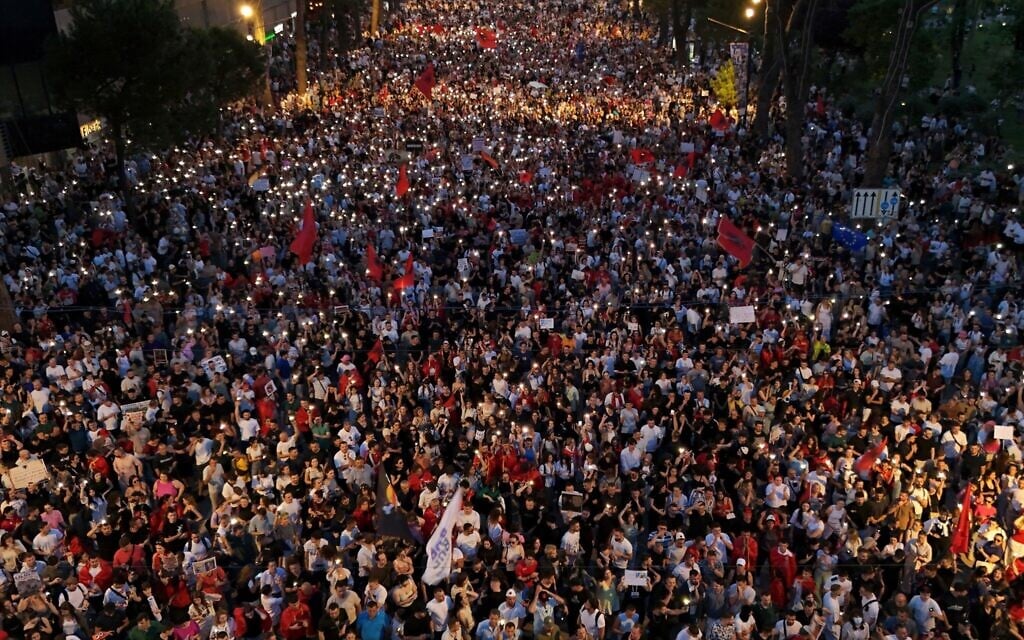

40 groups contest move to dilute environmental oversight of big projects
Summarized and contextualized by DistantNews.
At a glance
News
Sources not specified
Context piece
- Approximately 40 organizations are opposing a proposal to weaken environmental impact assessments for large projects.
- The plan would replace detailed ministry probes with generic assessments by private consultants.
- Critics argue this move bypasses crucial scientific safeguards and could lead to irreversible environmental, health, and economic damage.
A coalition of around 40 environmental, health, and civil society organizations has formally appealed to the Interior Ministry and the National Planning Council, protesting a proposed change that would dilute the environmental oversight of major infrastructure projects. The current system involves detailed environmental impact assessments by the Ministry of Environmental Protection.
the shortening of planning procedures by providing certainty to the entrepreneur and the planning institution regarding the required framework.
The proposed revision seeks to replace these in-depth probes with generic, standardized assessments. These would be commissioned by the head of the National Planning Council and carried out by private consultants. According to the planning council's website, the aim is to "shorten planning procedures by providing certainty to the entrepreneur and the planning institution regarding the required framework." This initiative is part of the Economic Arrangements Bill accompanying the 2026 state budget and applies to projects in transportation, waste management, energy, and mining.
The goal of this move is to streamline and expedite planning procedures, so that it will be possible to use a generic base of guidelines to which adjustments will be made, as required, according to the unique characteristics of a plan.
The National Planning Council, Israel's top planning authority, explains that the goal is to "streamline and expedite planning procedures" by using a general set of guidelines that can be adjusted. However, the Environmental Protection Ministry advocates for a more comprehensive and detailed set of guidelines, requiring consultants to address all potential situations. Disagreements also exist over the required level of detail in these assessments.
While the Planning Administration’s position is that the set of generic guidelines should include the relevant base guidelines, which will be refined in each plan according to its characteristics, the Environmental Protection Ministry proposes a very broad and detailed set of guidelines, including requirements for addressing all possible situations, from which the environmental consultant of the planning institution is required to choose the relevant clauses for the discussed plan.
Among the protesting organizations are the Society for the Protection of Nature in Israel, Adam Teva V’Din, and the Israel Association of Public Health Physicians. They argue that environmental impact assessments are not mere bureaucratic hurdles but essential scientific safeguards. In a joint letter, they stated, "The environmental impact assessment is not a bureaucratic obstacle that must be bypassed or reduced; it constitutes the only professional and scientific safety net that ensures that development processes in the country will not exact an irreversible price – health, ecological, and economic – from the public."
The environmental impact assessment is not a bureaucratic obstacle that must be bypassed or reduced; it constitutes the only professional and scientific safety net that ensures that development processes in the country will not exact an irreversible price – health, ecological, and economic – from the public.
DistantNews Editorial
Originally published by Times of Israel. Summarized and contextualized by our editorial team with added local perspective. Read our editorial standards.
More Stories

From Our Blog

What Gets Lost (and Found) When News Is Translated

The Critical Role of Diaspora Media in Global News

What Travellers Should Know About Countries with Restricted Press

A Digital Nomad's Guide to Following Local News

How the Same Story Looks Different in Different Countries
