

60,000 Seagrass Shoots Planted to Restore Danish Fjords
Translated from Danish, summarized and contextualized by DistantNews.
At a glance
News
From a news agency
Context piece
- Volunteers are planting approximately 20,000 seagrass shoots in Danish fjords and coasts this Sunday.
- This is the third year of the "Denmark Plants Seagrass" project, aiming to restore marine life and protect coastlines.
- The project has planted about 60,000 seagrass shoots in total, addressing a two-thirds loss of seagrass in Denmark since 1900.
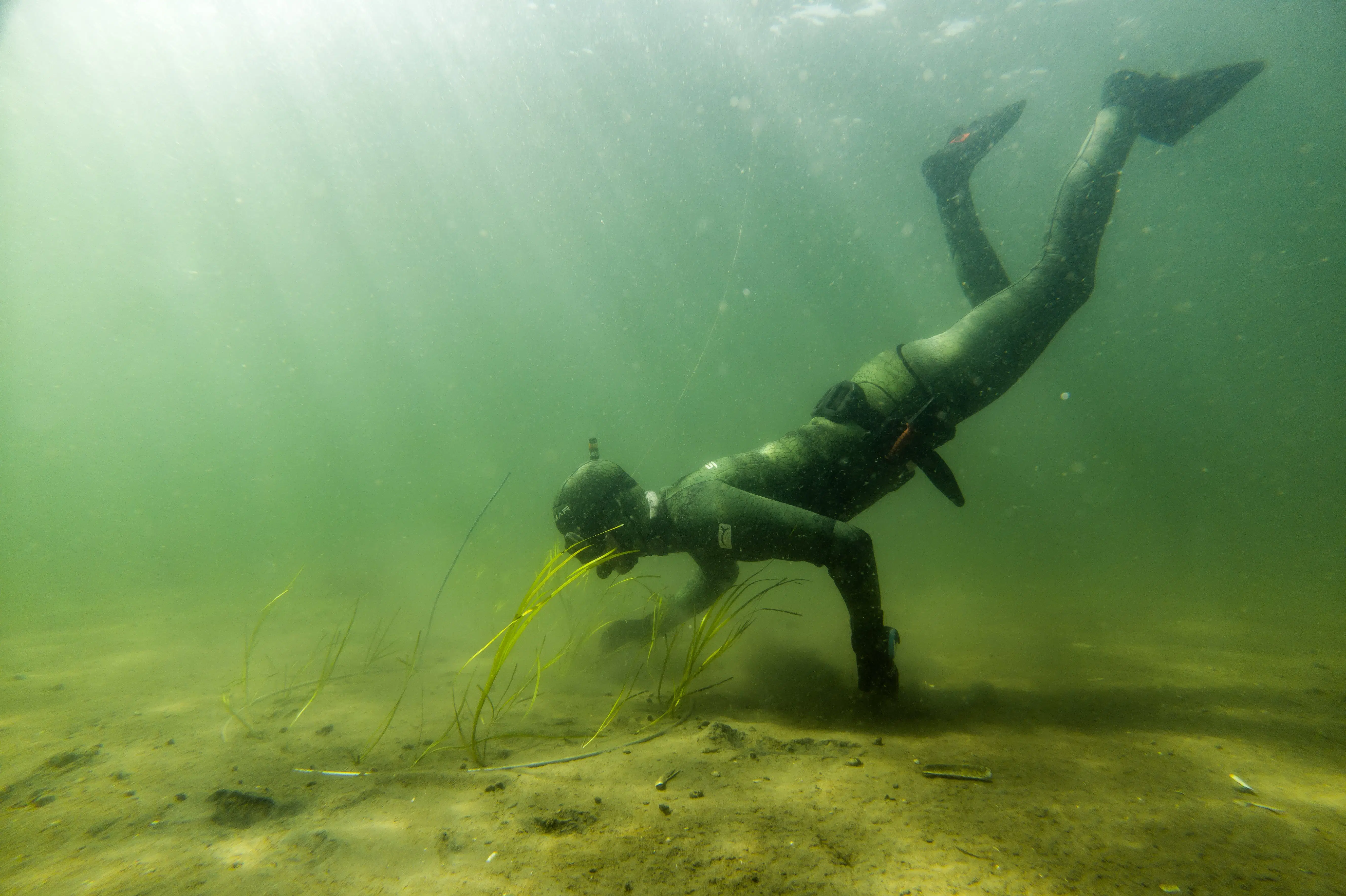
Volunteers across Denmark are planting seagrass shoots this Sunday, aiming to revitalize marine ecosystems and bolster coastal defenses. This initiative, part of the "Denmark Plants Seagrass" project, marks its third year and has seen approximately 60,000 seagrass shoots planted to date.
We continuously receive data on how the seagrass shoots are doing. This allows us to determine the most optimal places to plant seagrass.
The project, a collaboration between Think Tank Sea and the University of Southern Denmark, is funded by Nordea-fonden. Seagrass plays a vital role as a habitat and food source for fish and birds, while also protecting coastlines by reducing wave impact and stabilizing the seabed. Denmark has lost about two-thirds of its seagrass since 1900 due to pollution, climate change, bottom trawling, and coastal development.
Marine biologist Timi Banke from the University of Southern Denmark highlighted the project's importance, stating that the planting experiences provide crucial knowledge for effective nature restoration. "We continuously receive data on how the seagrass shoots are doing. This allows us to determine the most optimal places to plant seagrass," Banke explained. The project's success is evident in areas like Horsens Fjord, where seagrass concentrations are now visible from the air, even appearing on Google Maps.
When seagrass shoots reach a certain density, they can actually be seen from the air. This is the case, for example, in Horsens Fjord, which was one of the first places where we started large-scale planting.
With the Danish sea facing unprecedented pressure from oxygen depletion and minimal seabed life, initiatives like seagrass planting and the establishment of stone reefs are gaining momentum. The "green tripartite agreement" aims to convert fields into nature areas, reducing nutrient runoff into the sea. Banke noted that this agreement creates momentum for seagrass planting, as more land converted to nature improves conditions for marine restoration. While the "Denmark Plants Seagrass" project concludes this year, efforts are underway to transfer its knowledge and methods to municipalities and volunteer organizations.
The green tripartite agreement means there is momentum for planting seagrass. The more areas are converted from, for example, agriculture to nature, the more areas there will be for marine restoration, because the conditions will improve.
DistantNews Editorial
Originally published by Berlingske in Danish. Translated, summarized, and contextualized by our editorial team with added local perspective. Read our editorial standards.
More Stories


From Our Blog

What Gets Lost (and Found) When News Is Translated

The Critical Role of Diaspora Media in Global News

What Travellers Should Know About Countries with Restricted Press

A Digital Nomad's Guide to Following Local News

How the Same Story Looks Different in Different Countries
