


7,000 years ago, hunters carried trout past waterfalls to stock Norwegian mountain lakes
Translated from English, summarized and contextualized by DistantNews.
At a glance
News
Named sources
Context piece
- Archaeologists discovered well-preserved wooden fish traps dating back 7,000 years at Lake Tesse in Norway.
- The traps show that Mesolithic hunter-gatherers deliberately introduced brown trout into mountain lakes before the advent of farming.
- This practice created managed fisheries whose descendants are still caught by local anglers today.
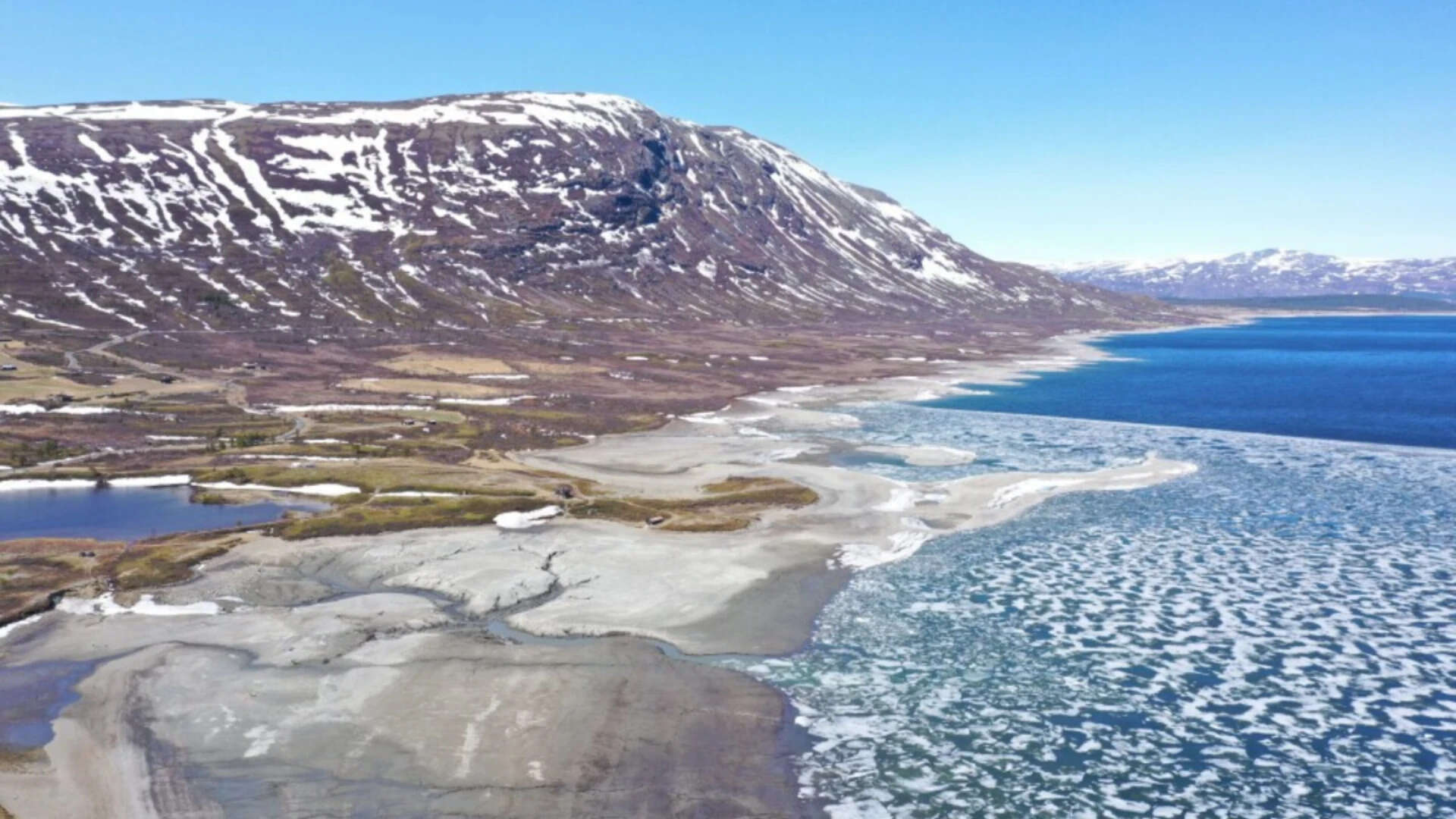
Ancient hunter-gatherers in Norway deliberately stocked remote mountain lakes with brown trout 7,000 years ago, creating managed fisheries that persist to this day. Archaeologists uncovered remarkably preserved wooden fish traps at Lake Tesse, a high-altitude lake in southern Norway, which radiocarbon dating confirmed were in use from around 5000 BC.
The discovery, published in the journal Antiquity, provides evidence that Mesolithic hunter-fisher-gatherers actively altered ecosystems to secure reliable food sources centuries before farming was introduced to Scandinavia. Until about 8400 BC, the area was covered by thick ice, and the newly formed lakes were devoid of fish. Natural barriers like steep rivers and waterfalls prevented fish from migrating into these lakes.
Lead researcher Axel Mjærum of the University of Oslo noted that scientists have long suspected human intervention in establishing fish populations in these mountain watercourses. "For more than 100 years, it has been known that the fish inhabiting watercourses in the Norwegian mountains are descended from specimens translocated by humans," Mjærum stated. "However, until now, it has remained unclear when people first began transporting fish upstream into lakes and rivers that originally lacked natural fish."
Brown trout were an ideal choice due to their size, substantial food yield, and relative ease of capture. The fish traps, exposed by falling water levels at Lake Tesse in 2022, were found to be meticulously maintained and reused over thousands of years, with some posts dated to between 5000 and 2650 BC. This indicates a long-standing practice of trap fishing in the area.
For more than 100 years, it has been known that the fish inhabiting watercourses in the Norwegian mountains are descended from specimens translocated by humans. However, until now, it has remained unclear when people first began transporting fish upstream into lakes and rivers that originally lacked natural fish.
DistantNews Editorial
Originally published by Times of India in English. Translated, summarized, and contextualized by our editorial team with added local perspective. Read our editorial standards.
More Stories


From Our Blog

What Press Freedom Means for the News You Read

What Gets Lost (and Found) When News Is Translated

The Critical Role of Diaspora Media in Global News

What Travellers Should Know About Countries with Restricted Press

A Digital Nomad's Guide to Following Local News
