


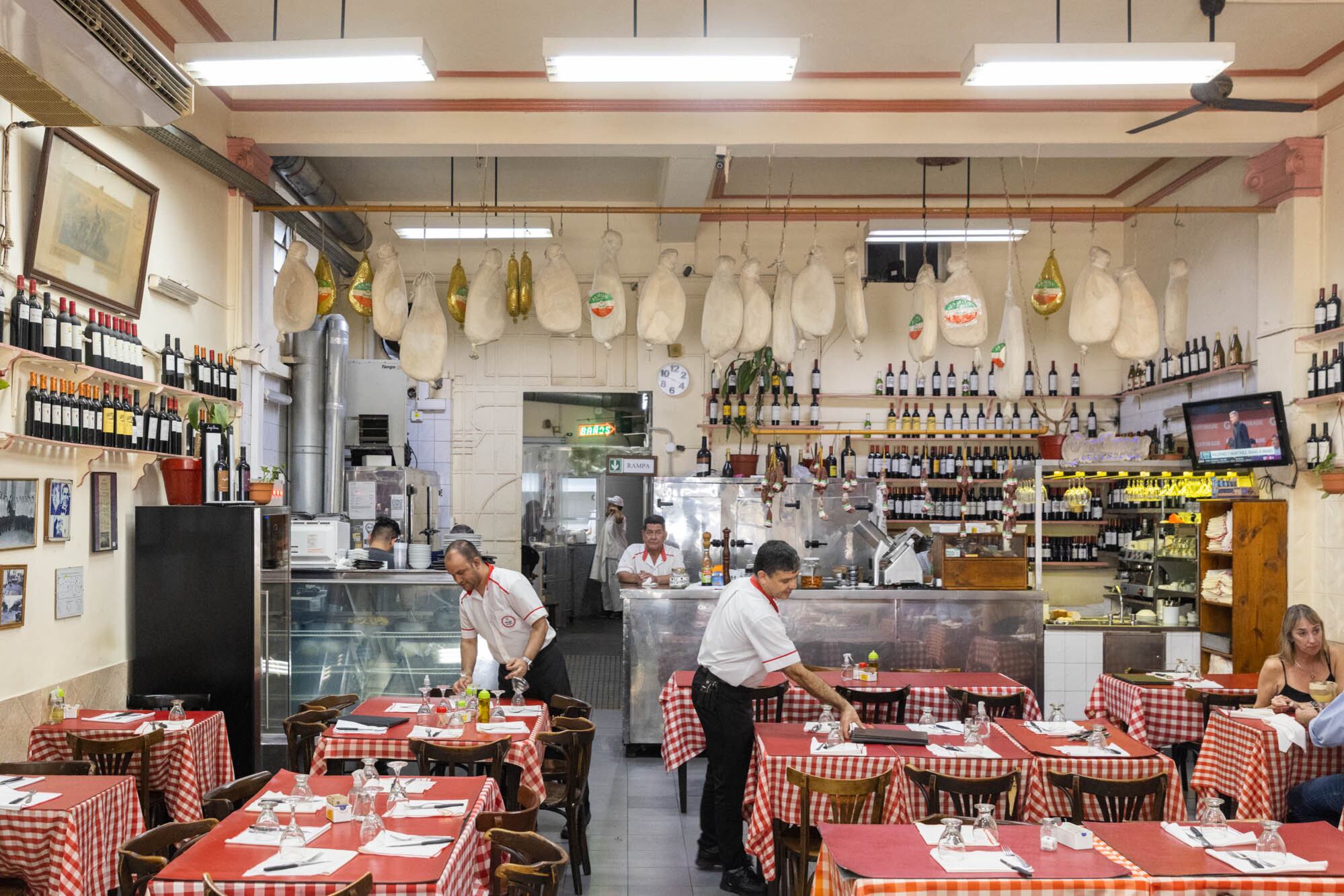
A Century of Italian Flavor: Spiagge di Napoli Celebrates 100 Years
Translated from Spanish, summarized and contextualized by DistantNews.
TLDR
- Spiagge di Napoli, a cantina founded by Italian immigrant Giovanni Ranieri in 1926, is celebrating its 100th anniversary in Buenos Aires.
- The restaurant remains family-owned, with Giovanni's granddaughter Rosario now at the helm, preserving the legacy of hard work and dedication.
- Its enduring popularity is attributed to its authentic Italian cuisine and its role as a cherished neighborhood gathering place, honoring its historical roots.
In Buenos Aires, where the echoes of Italian immigration resonate deeply, Spiagge di Napoli stands as a living monument to a century of family dedication and culinary tradition. Founded in 1926 by Giovanni Ranieri, who arrived alone from Italy with dreams of a better life, the cantina has remained in the Ranieri family's hands for three generations.
This is my home.
Rosario Ranieri, Giovanni's granddaughter, speaks of the restaurant not just as a business, but as her home, a place imbued with the stories of her family's journey. The name itself, 'Spiagge di Napoli' (Beaches of Naples), evokes the coastal Italian heritage Giovanni left behind, a strategic choice to connect with the local community while honoring his roots.
It starts with my grandfather, Giovanni, who arrived in Argentina in 1926.
This centennial celebration is more than just a milestone; it's a testament to the enduring appeal of authentic experiences in a city that cherishes its past. Spiagge di Napoli’s continued success, particularly its tradition of selling pasta by the kilo, offers a unique glimpse into the culinary and social fabric of Buenos Aires, a city shaped by the very immigrants who sought refuge and opportunity within its borders.
He came alone to Argentina, leaving his family behind. He had four young children (one of them my father, who was five years old) and came with the idea of working and seeing what happened next.
DistantNews Editorial
Originally published by La Nación in Spanish. Translated, summarized, and contextualized by our editorial team with added local perspective. Read our editorial standards.
More Stories


From Our Blog

What Gets Lost (and Found) When News Is Translated

The Critical Role of Diaspora Media in Global News

What Travellers Should Know About Countries with Restricted Press

A Digital Nomad's Guide to Following Local News

How the Same Story Looks Different in Different Countries
