


A Narrow Strip Between Railway Tracks Becomes Tokyo’s Gateway
Translated from Korean and summarized by DistantNews. Read the original for the full story.
At a glance
In-depth
Documents & data
Context piece
- JR East has transformed a long, narrow former railway site near Shinagawa Station into Takanawa Gateway City, a mixed-use compact urban district.
- The project includes commercial facilities, hotels, offices, rental housing and the Mon Takanawa: Museum of Narratives, along with autonomous mobility and hydrogen-vehicle infrastructure.
- JR East is linking developments across the wider Shinagawa area as it expands its real estate, hotel, retail and entertainment businesses.
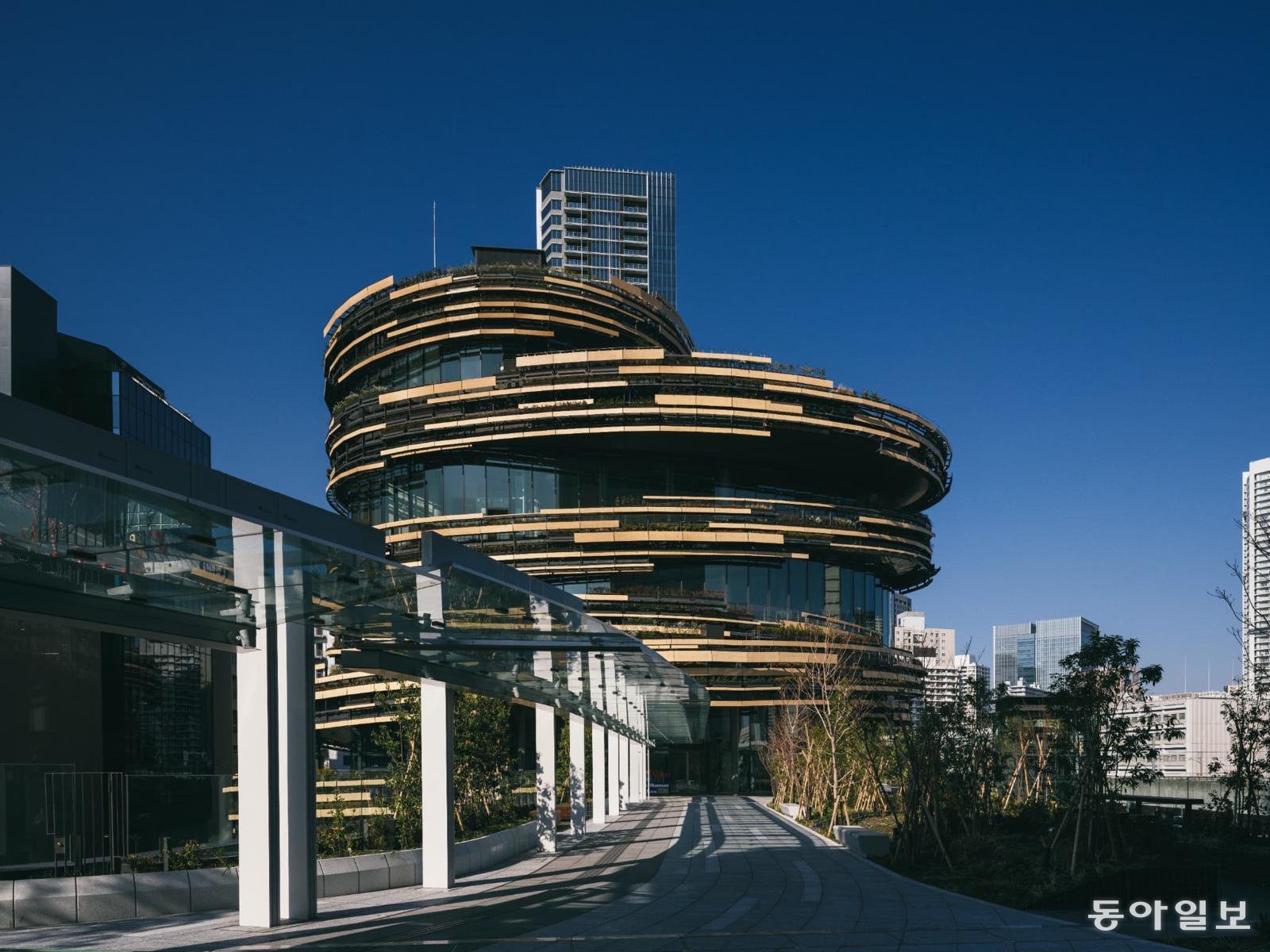
A museum shaped like a giant spring now marks the center of Tokyo’s newest railway-led urban development. Mon Takanawa: Museum of Narratives opened in March, with trees and greenery pushing through walls designed by Kengo Kuma. It serves as the final statement of Takanawa Gateway City, a new district that began welcoming visitors when its commercial facilities opened last year.
The development stretches along a long, narrow strip of land near the railway tracks in Takanawa, south of central Tokyo and less than a kilometer from Shinagawa Station. The site includes shops, hotels, the Link Pillar office building and rental residences. Together they form a compact station-centered city combining work, housing, shopping and tourism.
JR East is doing more than constructing the buildings. Japan’s largest railway company is attracting tenants, leasing and operating commercial and residential properties, building the museum and planning its exhibitions. It even opened Takanawa Gateway Station on the Yamanote and Keihin-Tohoku lines for the project. The new Yamanote Line station was the first since Nishi-Nippori opened in 1971.
The location explains the scale of the effort. Shinagawa, a major transfer point for travelers arriving from Haneda Airport, handles more than 700,000 users a day and has little undeveloped land nearby. JR East used a former rail yard to create a new urban district. It plans to improve the walking connection between Takanawa Gateway and Shinagawa stations.
The project presents the area as an international and forward-looking gateway between the airport and Tokyo’s core. Offices are targeting foreign companies and startup headquarters, while the residences are designed mainly for foreign workers and are planned to include an international school. Autonomous personal mobility vehicles, hydrogen-vehicle charging stations and a system that reuses surplus nighttime railway electricity support the city’s carbon-free ambitions.
JR East is extending the model along what it calls the wider Shinagawa area. Oimachi Tracks offers shops, restaurants, a hotel, cinema and residences on land surrounded by rail lines, while Waters Takeshiba combines theaters and restaurants on waterfront property near Hamamatsucho. JR East plans to connect these sites through events and autonomous shuttle services. In the financial year ending March 2026, real estate and hotel leasing and sales generated 128.2 billion yen of the company’s 414.2 billion yen in consolidated operating profit, while retail and services contributed 68 billion yen.
About this summary
Originally published by Dong-A Ilbo in Korean. Translated, summarized, and contextualized automatically by DistantNews, with a note on how the source frames the story. Not individually reviewed before publishing. How this works.
More Stories


From Our Blog

What Gets Lost (and Found) When News Is Translated

The Critical Role of Diaspora Media in Global News

What Travellers Should Know About Countries with Restricted Press

A Digital Nomad's Guide to Following Local News

How the Same Story Looks Different in Different Countries
