

A village raising masked palm civets beside the Ve River
Translated from Vietnamese and summarized by DistantNews. Read the original for the full story.
At a glance
In-depth
Named sources
Context piece
- Hồ Duy Trung began raising masked palm civets in 2007 after buying three young animals caught in a tree, two of which survived.
- The breeding operation grew to hundreds of civets, and Trung began supplying breeding animals to families in Phú Lâm Tây village and other provinces.
- After learning in 2017 that the animals were regulated forest wildlife, he registered the operation and subjected it to periodic inspections.
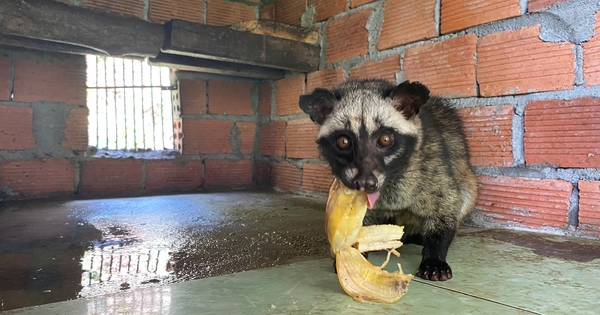
Nearly 20 years ago, Hồ Duy Trung was the only person in Phú Lâm Tây village who tried to raise masked palm civets. Today, families across the village keep the animals in pens beneath its fruit trees.
Trung began in late 2007, when he saw members of the Ca Dong community capture three hairless young civets inside a large old tree. He bought them for 200,000 dong because he felt sorry for them. One died, leaving a male and a female that he had to learn to feed and care for without prior experience.
He started with fruit, then tried fish porridge after guessing that the animals might prefer fish. Because masked palm civets sleep during the day and forage at night, Trung would quietly check on them after the village had gone to bed. After 14 months, the pair produced four young.
The herd continued to grow. Trung built more pens and separated the animals into breeding, young, meat and breeding-stock groups. The facility now holds hundreds of civets. He said the animals develop musk at around 16 months old, and he also joked about their distinctive smell.
At that time, I didn’t know how to raise them. I brought them home and then panicked because I didn’t know what to feed them.
Breeding the wild animals required careful handling. Trung places a male between two females and moves him in for mating during the breeding period. He separates the male immediately after a female gives birth because, he said, the male may eat the young.
Trung initially sold meat and breeding animals. In 2011, he partnered with a coffee grower in Đắk Lắk to produce civet coffee. He later displayed 60 adult civets at the 2017 Buon Ma Thuot Coffee Festival, where he learned that the species belonged to a regulated category of forest wildlife and required a permit. He then registered the herd, which has since faced periodic official inspections.
He now sells breeding animals to provinces including Bình Định and nearby areas. As demand grew, he began sharing stock with neighbors, turning a personal experiment into a village activity.
I really wanted to sell breeding animals to local families and tell them that these animals are easy to raise and can provide a good income, but I hesitated.
About this summary
Originally published by Thanh Niên in Vietnamese. Translated, summarized, and contextualized automatically by DistantNews, with a note on how the source frames the story. Not individually reviewed before publishing. How this works.
More Stories



From Our Blog

What Gets Lost (and Found) When News Is Translated

The Critical Role of Diaspora Media in Global News

What Travellers Should Know About Countries with Restricted Press

A Digital Nomad's Guide to Following Local News

How the Same Story Looks Different in Different Countries
