


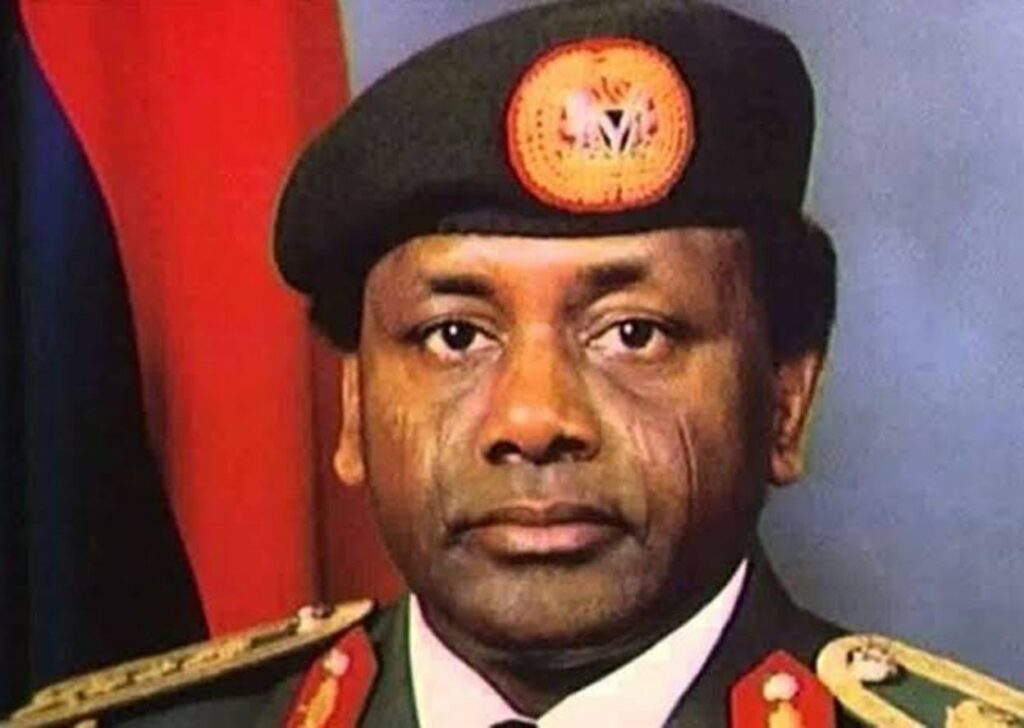
Abacha's death: Retired DSS officer's claims reignite 28-year mystery
Translated from English, summarized and contextualized by DistantNews.
At a glance
News
Named sources
Context piece
- Fresh claims by a retired Nigerian intelligence officer have reignited debate surrounding the 1998 death of former Head of State, General Sani Abacha.
- The officer, Dennis Amachree, dismisses sensationalized theories like poisoned apples and foreign plots, presenting his account as based on an eyewitness testimony.
- Amachree's claims have been challenged by Abacha's former Chief Security Officer, Major Hamza al-Mustapha, setting the stage for renewed controversy.
Nearly three decades after the sudden death of Nigeria's former Head of State, General Sani Abacha, new claims have resurfaced, thrusting the circumstances of his final hours back into the national spotlight. Retired Department of State Services (DSS) officer Dennis Amachree has reignited the long-standing mystery through recent interviews, presenting revelations from his newly released memoir, 'DSS at 40: My Journey Behind the Shield.'
My colleagues and I laughed when we saw stories about Indian ladies with poisoned apples. I think that was the imagination of somebody or some journalist trying to manufacture a story.
Amachree's account directly challenges popular theories surrounding Abacha's death, including narratives involving poisoned apples, Indian women, and foreign intelligence operations. He described these stories as products of imagination, stating his intention was to put an end to decades of speculation. "My colleagues and I laughed when we saw stories about Indian ladies with poisoned apples. I think that was the imagination of somebody or some journalist trying to manufacture a story," Amachree said during an interview on Arise Television.
He asserted that his version of events is based on the testimony of the last person who saw Abacha alive, whom he personally interrogated. Amachree considers this eyewitness account the most reliable source. He also indicated that his findings were part of the DSS's official investigation, with his interrogation report submitted upon the witness's return to Abuja, though he declined to produce official documents.
The most reliable account of any event is an eyewitness account. This particular lady was right there when it happened. I interrogated her myself and I have no doubt that what she told me was true.
Amachree defended the timing of these revelations, explaining that security agencies traditionally maintain silence on operational matters. He argued that his memoir is one of the first by a retired DSS officer, providing Nigerians insight into the agency's work. He dismissed notions that the information remains classified, stating, "There is nothing classified about the death or illness of any president."
My conclusion formed part of the DSS conclusion of the investigation. After I finished interrogating her, she was sent back to Abuja with my interrogation report.
However, Amachree's claims have been met with skepticism and direct challenges. Major Hamza al-Mustapha, Abacha's former Chief Security Officer, has dismissed the new accounts as false. This opposition sets the stage for a renewed controversy over one of Nigeria's most disputed political events, with differing accounts from key figures involved.
Security agencies don’t come around telling the public details about their work. This is one of the first memoirs written by a retired DSS officer. Nigerians need to know what their intelligence agency has been doing.
DistantNews Editorial
Originally published by Vanguard in English. Translated, summarized, and contextualized by our editorial team with added local perspective. Read our editorial standards.
More Stories


From Our Blog

How the Same Story Looks Different in Different Countries

What Gets Lost (and Found) When News Is Translated

The Critical Role of Diaspora Media in Global News

What Travellers Should Know About Countries with Restricted Press

A Digital Nomad's Guide to Following Local News
