


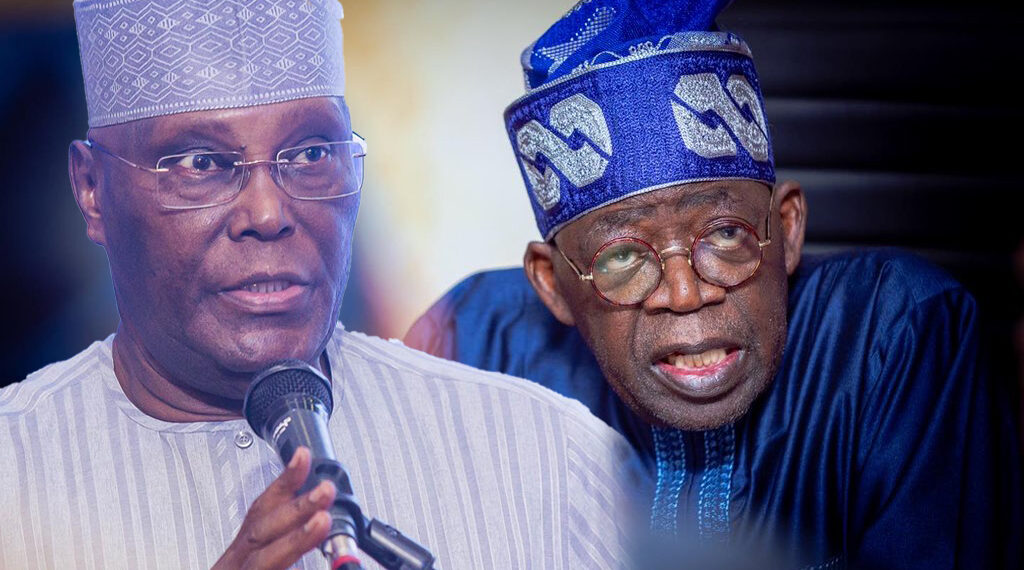
Abubakar rejects Tinubu's economic claims, cites unpaid wages and rising debt
Translated from English, summarized and contextualized by DistantNews.
At a glance
News
Named sources
Context piece
- Atiku Abubakar, Nigeria's presidential candidate, rejected President Bola Tinubu's economic defense, calling it revisionist.
- Abubakar cited unpaid wages and a significant increase in federal government debt to the Central Bank of Nigeria as evidence against the government's claims.
- He also questioned the source of funding for the Nigerian Education Loan Fund, challenging the narrative that it comes from subsidy savings.
Presidential candidate Atiku Abubakar has sharply criticized the Tinubu administration's economic defense, labeling it a "desperate attempt at revisionism." Abubakar specifically rejected claims made by Taiwo Oyedele, Chairman of the Presidential Committee on Fiscal Policy and Tax Reforms, regarding public debt, subsidy removal, debt servicing, and workers' welfare.
Which salary increase is the government talking about? The Federal Government is yet to fully implement the new minimum wage. The 40 per cent peculiar allowance tied to the wage adjustment remains unpaid despite official directives that it should take effect from May 1, 2026. These are not opposition allegations; they are the grievances of organised labour.
Abubakar highlighted the Federal Government's failure to fully implement the new minimum wage, noting that a 40 percent allowance remains unpaid despite official directives. He stated that these grievances are not just opposition claims but are shared by organized labor.
Citing figures from the Central Bank of Nigeria, Abubakar pointed to a substantial rise in the Federal Government's exposure to the apex bank. He noted that this exposure increased from approximately ₦26.9 trillion in May 2023 to over ₦40.38 trillion by May 2026. Abubakar argued that the government has merely relabeled debt by converting "Ways and Means" advances into Treasury Bills and bonds, rather than genuinely repaying it.
This administration has not reduced its indebtedness to the CBN. It has merely changed the label on the debt by converting Ways and Means advances into Treasury Bills and bonds while simultaneously piling up fresh obligations. That is debt restructuring, not debt repayment.
Furthermore, Abubakar challenged the assertion that savings from subsidy removal are financing the Nigerian Education Loan Fund (NELFUND). He referenced a statement by NELFUND's CEO indicating the scheme received a ₦50 billion injection from recovered funds, questioning why the government now attributes the funding to subsidy savings. Abubakar concluded by listing persistent economic challenges such as rising food prices, inflation, business closures, unemployment, and currency depreciation as the realities Nigerians face.
If that is the case, why is the government now presenting subsidy savings as the source?
DistantNews Editorial
Originally published by Vanguard in English. Translated, summarized, and contextualized by our editorial team with added local perspective. Read our editorial standards.
More Stories

From Our Blog

How the Same Story Looks Different in Different Countries

What Gets Lost (and Found) When News Is Translated

The Critical Role of Diaspora Media in Global News

What Travellers Should Know About Countries with Restricted Press

A Digital Nomad's Guide to Following Local News
