


Accidental discovery reveals natural radioactivity
Translated from Polish, summarized and contextualized by DistantNews.
At a glance
In-depth
Sources not specified
Context piece
- Henri Becquerel accidentally discovered natural radioactivity in 1896 while studying phosphorescence and uranium salts.
- His experiments showed that uranium emitted invisible radiation that could expose photographic plates, even without sunlight.
- Maria Skłodowska-Curie later refined measurements of this radiation using an electrometer, leading her to hypothesize the existence of a new, more radioactive element in uranium ore.
The discovery of natural radioactivity was an accidental revelation in February 1896, stemming from the research of French physicist Henri Becquerel. While investigating phosphorescence, the property of certain minerals to glow after exposure to sunlight, Becquerel focused on uranium salts, which exhibited strong phosphorescence. He suspected this glow might be linked to the newly discovered X-rays.
Becquerel devised an experiment where he wrapped photographic plates in black paper, placed uranium salts on top, and exposed the package to sunlight. He theorized that if uranium emitted X-rays, they would penetrate the paper and expose the film. His initial results confirmed this. However, one experiment was interrupted by bad weather. Becquerel placed the wrapped plates with uranium salts in a dark drawer, intending to continue later. Upon developing the plates despite the lack of sunlight, he found they were exposed, revealing dark spots shaped like the crystals.
This unexpected outcome led Becquerel to realize that uranium emitted a mysterious, invisible radiation on its own, without needing an external energy source. This serendipitous finding marked humanity's first encounter with natural radioactivity. He further observed that these rays ionized the air, causing the leaves of a charged electroscope to fall, indicating the rays possessed significant energy.
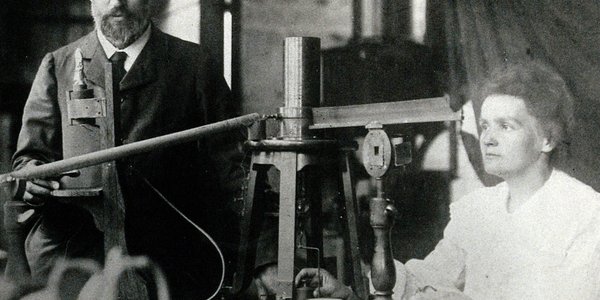
Later, Maria Skłodowska-Curie delved deeper into this phenomenon. Using a more precise electrometer, she measured the ionization of air caused by uranium radiation. Her meticulous measurements led her to a crucial conclusion: the intensity of the radiation was directly proportional to the amount of pure uranium present. When she began examining natural minerals like pitchblende, from which uranium was extracted, she found they emitted radiation four times stronger than her calculations predicted based on their uranium content. This discrepancy led Skłodowska-Curie to hypothesize that the ore must contain another, unknown element far more radioactive than uranium itself.
DistantNews Editorial
Originally published by Rzeczpospolita in Polish. Translated, summarized, and contextualized by our editorial team with added local perspective. Read our editorial standards.
More Stories



From Our Blog

What Gets Lost (and Found) When News Is Translated

The Critical Role of Diaspora Media in Global News

What Travellers Should Know About Countries with Restricted Press

A Digital Nomad's Guide to Following Local News

How the Same Story Looks Different in Different Countries
