


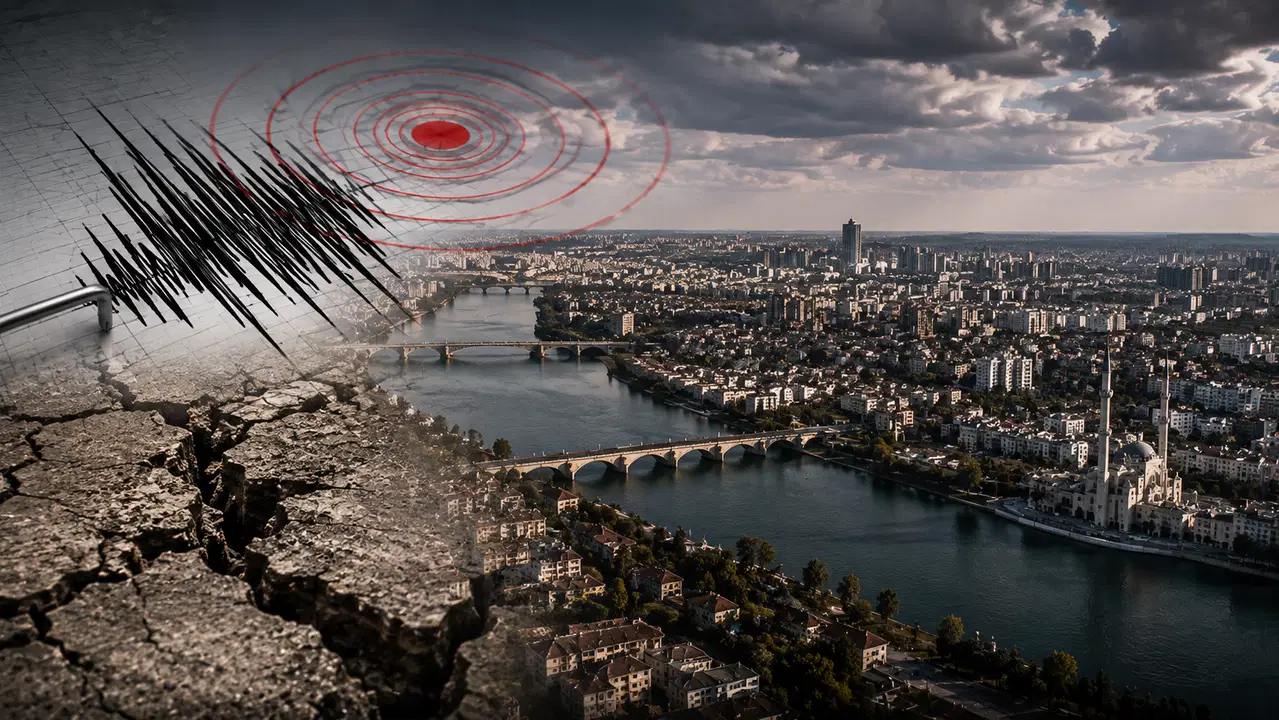
Adana's Earthquake Risk: Four Districts Under Threat as Experts Analyze Seismic Vulnerability
Translated from Turkish, summarized and contextualized by DistantNews.
At a glance
News
Named sources
Context piece
- Adana experienced significant damage in the February 6 earthquakes, with 11 buildings destroyed and 418 fatalities.
- Experts identify South Adana's alluvial soil as particularly risky due to its susceptibility to seismic activity.
- While large earthquakes are not expected, strengthening buildings and choosing stable ground are crucial for preventing future casualties.
Adana, one of the 11 provinces affected by the February 6 Kahramanmaraş earthquakes, recorded 11 building collapses and 418 deaths. The city also saw 3,279 buildings sustain severe damage. Amidst the ongoing risk of seismic activity, Dr. Mehmet Tatar, head of the Adana branch of the Chamber of Geological Engineers, emphasized the city's vulnerability.
We live in an earthquake region. There have been earthquakes in the past, there are them today, and there will be them in the future.
Tatar highlighted that South Adana, encompassing Seyhan, Yüreğir, and parts of Sarıçam, is at higher risk due to its alluvial soil, which is prone to liquefaction. In contrast, North Adana offers more stable ground. He noted that while major earthquakes of magnitude 7 or higher are not anticipated for Adana, the region is situated in an active seismic zone.
"We live in an earthquake region. There have been earthquakes in the past, there are them today, and there will be them in the future," Tatar stated. He pointed out active faults in Karataş and Yumurtalık, as well as smaller fault lines in Karaisalı, Feke, and Tufanbeyli. Ceyhan is also situated on risky ground. The dormant Ecemiş Fault, running from Kamışlı Valley to the sea through Pozantı, could potentially generate earthquakes if activated, though not expected to be above magnitude 7.
We cannot prevent earthquakes, but we can prevent loss of life by choosing stable ground and robust buildings.
Tatar stressed the urgent need to reinforce existing structures. "If your building has a risk of collapsing in a magnitude 6 earthquake, you should not live in it because that building is not resistant to a moderate earthquake," he warned. He attributed the collapses seen in Adana during such quakes to buildings not being constructed soundly and not adhering to earthquake regulations. "We cannot prevent earthquakes, but we can prevent loss of life by choosing stable ground and robust buildings," Tatar concluded.
If your building has a risk of collapsing in a magnitude 6 earthquake, you should not live in it because that building is not resistant to a moderate earthquake.
DistantNews Editorial
Originally published by Cumhuriyet in Turkish. Translated, summarized, and contextualized by our editorial team with added local perspective. Read our editorial standards.
More Stories


From Our Blog

What Gets Lost (and Found) When News Is Translated

The Critical Role of Diaspora Media in Global News

What Travellers Should Know About Countries with Restricted Press

A Digital Nomad's Guide to Following Local News

How the Same Story Looks Different in Different Countries
