

Afghan women's work offers hope amid crisis
Translated from German, summarized and contextualized by DistantNews.
At a glance
In-depth
From a news agency
Context piece
- A small soap factory in western Afghanistan, run by women, offers a glimmer of hope amidst the Taliban's rule and a deepening humanitarian crisis.
- Founded by 21-year-old Rukia Resai, the factory employs eight women, improving their mental health and providing income.
- Despite economic growth, Afghanistan faces severe malnutrition, displacement, and restrictions on women's freedoms under the Taliban.
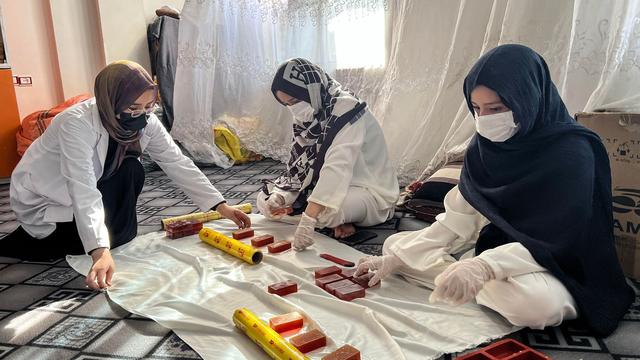
In the western Afghan city of Herat, a small soap manufacturing business run almost exclusively by women is providing a vital source of income and hope. Rukia Resai, 21, founded the "Herat Saffron" soap factory five years ago after the Taliban's return to power prevented her from studying. The business now employs eight women regularly, with more joining during peak demand.
Resai stated that the work has significantly improved the mental health of her employees and her own family. "Overall, through this work, the mental health of our entire family has improved," she said. The factory produces soaps scented with herbs, saffron, and turmeric, operating at full capacity.
However, the factory's success stands in stark contrast to the worsening humanitarian situation in Afghanistan since the Taliban's takeover in August 2021. The economy collapsed, leading to international financial exclusion and a significant reduction in aid. The World Bank reported economic growth last year, but per capita wealth has decreased due to massive immigration.
International aid organizations describe their programs as a "drop in the ocean" as nearly 40% of the population faces acute food insecurity, and at least 3.7 million young children are severely malnourished. Adding to the strain, nearly 3.9 million Afghans have returned from neighboring Iran and Pakistan in the past five years, either voluntarily or under duress. Tensions with Pakistan have also disrupted trade, blocking key exports like melons and nuts.
The Taliban's pervasive restrictions, particularly on women, further complicate daily life. Women are largely barred from working in offices, must be accompanied by a male guardian for travel, and are required to wear full veils. The enforcement of these rules varies across provinces, adding another layer of uncertainty for women seeking to rebuild their lives and livelihoods.
Overall, through this work, the mental health of our entire family has improved.
DistantNews Editorial
Originally published by Die Zeit in German. Translated, summarized, and contextualized by our editorial team with added local perspective. Read our editorial standards.
More Stories



From Our Blog

What Gets Lost (and Found) When News Is Translated

How the Same Story Looks Different in Different Countries

The Critical Role of Diaspora Media in Global News

What Travellers Should Know About Countries with Restricted Press

A Digital Nomad's Guide to Following Local News
