


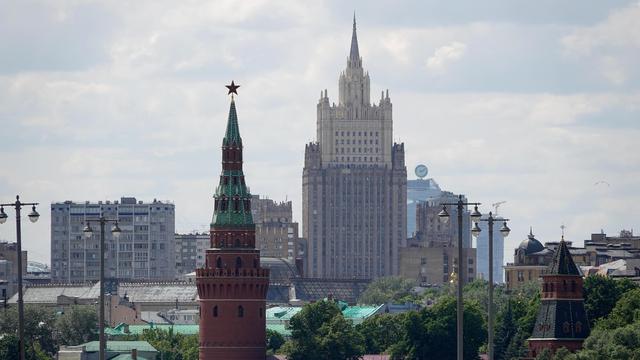
Moscow: Russia declares East European research center 'undesirable'
Translated from German, summarized and contextualized by DistantNews.
At a glance
News
Sources not specified
New plan
- Russia's Justice Ministry has declared the Research Centre for East European Studies at the University of Bremen an "undesirable organization."
- No official reason was provided for the decision, which adds the center to a list of foreign entities banned in Russia.
- Several other German organizations, including the German Historical Institute and the German Academic Exchange Service (DAAD), are already on Russia's list.
Russia's Justice Ministry has added the Research Centre for East European Studies (FSO) at the University of Bremen to its controversial list of "undesirable organizations." This designation effectively prohibits the center's activities within the Russian Federation, though no specific justification for the decision has been publicly provided.
The FSO is described by the university as a place where the Eastern Bloc and its societies, along with their distinct cultures, are analyzed. The center also publishes free country analyses on political and economic developments in post-Soviet regions, including Russia and Belarus, and has engaged with the scientific study of Russia's war against Ukraine. It also organizes exhibitions.
This move by the Russian government places the FSO alongside numerous other international and foreign entities deemed to be working against Russia's state interests. The list already includes several German organizations, such as the German Historical Institute (DHI) in Moscow and the German Academic Exchange Service (DAAD), as well as various political foundations.
Notably, the Human Rights Foundation, chaired by Russian opposition figure Yulia Navalnaya, the widow of Alexei Navalny, was also declared "undesirable." The Russian Prosecutor General's Office cited the foundation's efforts to lobby for U.S. sanctions against Russia as the reason for its designation.
The inclusion of the University of Bremen's research center signifies a continued pattern of Russia restricting the operations of foreign academic and civil society organizations within its borders.
DistantNews Editorial
Originally published by Die Zeit in German. Translated, summarized, and contextualized by our editorial team with added local perspective. Read our editorial standards.
More Stories


From Our Blog

What Gets Lost (and Found) When News Is Translated

How the Same Story Looks Different in Different Countries

The Critical Role of Diaspora Media in Global News

What Travellers Should Know About Countries with Restricted Press

A Digital Nomad's Guide to Following Local News
