


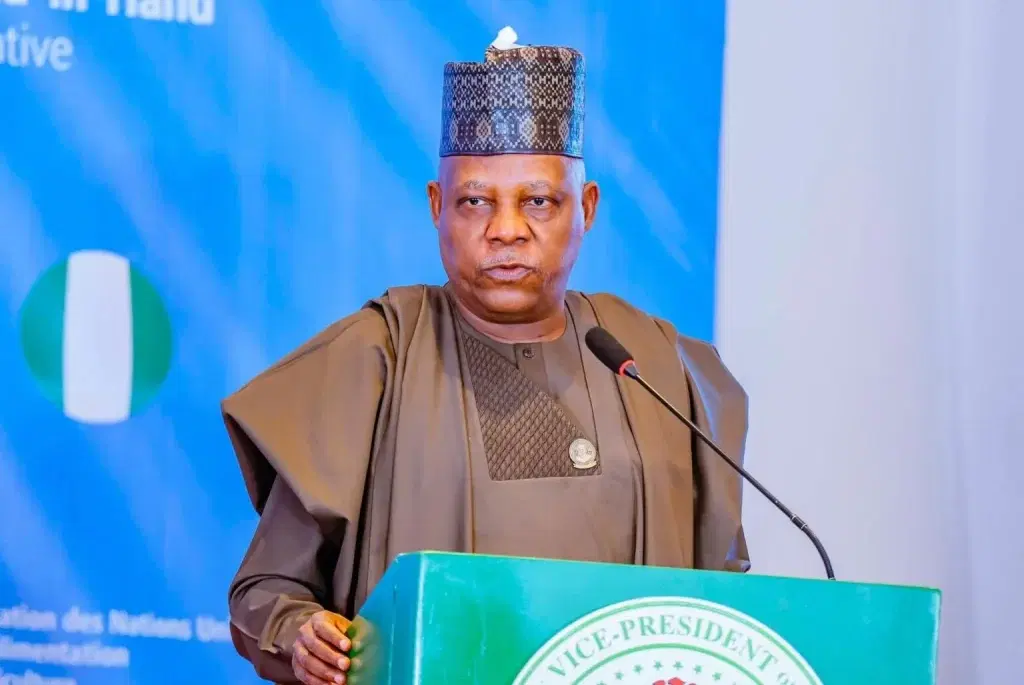
Africa must control its resources, trade – Nigerian VP Shettima
Translated from English, summarized and contextualized by DistantNews.
At a glance
News
From a news agency
Context piece
- Nigerian Vice President Kashim Shettima emphasized the need for African nations to control their resources and global trade.
- He highlighted that Africa benefits from only about 1% of the global cotton industry, valued at $370 billion.
- Shettima visited Benin's Glo-Djigbé Industrial Zone to learn from its success in developing integrated value chains for agricultural products.
Nigerian Vice President Kashim Shettima has called for African nations to assert greater control over the continent's vast resources and its participation in global trade. Speaking during a visit to the Glo-Djigbé Industrial Zone (GDIZ) in Benin, Shettima stressed the importance of maximizing Africa's natural endowments by developing industries capable of processing raw materials into higher-value products.
Africa must maximise its vast natural endowments by developing industries capable of processing raw materials into higher-value products.
Shettima expressed concern that Africa currently benefits from a mere 1% of the global cotton industry, an sector valued at $370 billion. He believes that reviving Nigeria's textile value chain alone could generate millions of jobs, significantly boost non-oil exports, and stimulate widespread economic activity.
We are here essentially at the behest of President Tinubu, in the spirit of his Renewed Hope Agenda, to see and peer-review global best practices.
During his tour of the GDIZ, which included facilities for cotton, textile, cashew, and soybean oil production, Shettima conveyed satisfaction with Benin's progress in achieving mass production and export of locally sourced resources. He stated that the visit, undertaken at the behest of President Tinubu and in line with his "Renewed Hope Agenda," aimed to study global best practices and learn from Benin's experience in creating integrated value chains.
We are setting up eight agro-industrial zones in eight states in our country.
"We are setting up eight agro-industrial zones in eight states in our country," Shettima announced, indicating Nigeria's commitment to replicating Benin's success. He described the GDIZ as "an African success story" demonstrating value addition across cotton, cashew, and soybean chains. The Nigerian delegation, which included governors from six states, inspected facilities transforming cotton into yarn and fabric, as well as processing cashews and soybeans for domestic and export markets, seeking practical lessons to enhance Nigeria's manufacturing and export capabilities.
We have learnt a lot of lessons through this visit, and we are going to replicate a lot of that in Nigeria.
DistantNews Editorial
Originally published by Vanguard in English. Translated, summarized, and contextualized by our editorial team with added local perspective. Read our editorial standards.
More Stories



From Our Blog

How the Same Story Looks Different in Different Countries

What Gets Lost (and Found) When News Is Translated

The Critical Role of Diaspora Media in Global News

What Travellers Should Know About Countries with Restricted Press

A Digital Nomad's Guide to Following Local News
