


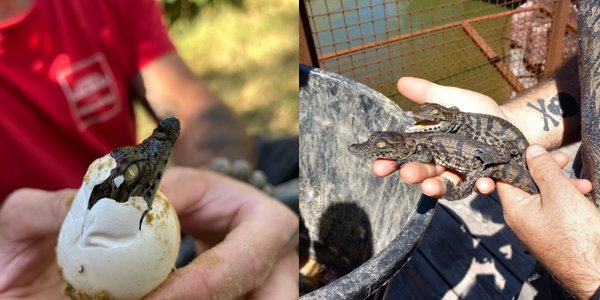
African Nile crocodiles hatch naturally in France amid heatwave
Translated from Polish and summarized by DistantNews. Read the original for the full story.
At a glance
News
Named sources
New plan
- Ten Nile crocodiles have hatched naturally at a park in southern France, a first for the facility.
- The crocodiles hatched without the use of incubators.
- Park staff believe exceptionally high temperatures created suitable conditions for the natural hatching.
An extraordinary event unfolded at La Ferme aux Crocodiles in southern France, where ten Nile crocodiles hatched naturally, bypassing the need for incubators. This marks a historic first for the park, which has housed these reptiles for years. The successful natural hatching is being attributed to the unusually high temperatures experienced recently.
Staff at the crocodile park observed the hatching process, noting that the conditions created by the heatwave were conducive to the reptiles' reproductive cycle. Nile crocodiles typically require specific temperature ranges for incubation, and the recent warm weather appears to have provided the ideal environment for the eggs to develop and hatch on their own.
This natural occurrence is significant not only for the park but also for understanding the adaptability of species in changing climate conditions. While the heatwave presented challenges in other parts of Europe, it inadvertently created a favorable microclimate for these crocodiles in southern France.
The successful natural hatching underscores the complex relationship between environmental factors and animal reproduction. It provides a unique case study on how extreme weather events, like prolonged heatwaves, can influence wildlife, even in managed environments.
About this summary
Originally published by Rzeczpospolita in Polish. Translated, summarized, and contextualized automatically by DistantNews, with a note on how the source frames the story. Not individually reviewed before publishing. How this works.
More Stories

From Our Blog

What Gets Lost (and Found) When News Is Translated

The Critical Role of Diaspora Media in Global News

What Travellers Should Know About Countries with Restricted Press

A Digital Nomad's Guide to Following Local News

How the Same Story Looks Different in Different Countries
