


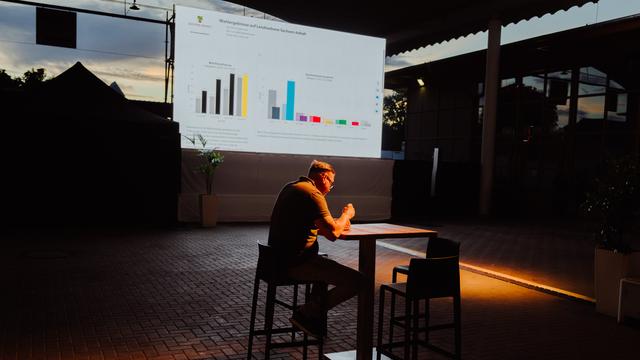

After state election, Wagenknecht’s party could hold the balance of power
Translated from German and summarized by DistantNews. Read the original for the full story.
At a glance
Newswire
Named sources
Ongoing story
- The Sahra Wagenknecht Alliance, or BSW, narrowly cleared the threshold for Saxony-Anhalt’s state parliament with slightly more than 5% of the vote.
- The result denied the AfD an outright majority and blocked a coalition of all other parties because Wagenknecht rejects such an alliance.
- The BSW has ruled out a coalition with the AfD but remains open to cooperation on issues including energy and Russia policy, creating uncertainty over the next government.
The Sahra Wagenknecht Alliance appeared close to political collapse after weeks of internal disputes and chaos. Then, in a narrow election-night escape, the party cleared the threshold for Saxony-Anhalt’s state parliament with slightly more than 5% of the vote. Its unexpected return could now make it the state’s kingmaker.
The AfD won the election but lacks an outright majority. At the same time, the other parties can no longer form a united coalition against it, because Sahra Wagenknecht rejects that option. “The mere attempt to build another firewall coalition would be an affront to voters,” Wagenknecht told the German Press Agency.
The BSW comeback has begun.
“The BSW comeback has begun,” the party founder declared. But the new influence leaves a basic question: what will the party do with it? One possibility is cooperation with the AfD. Political scientist Jan Philipp Thomeczek said the BSW had openly flirted with becoming the decisive factor before the vote and occupied a position between the political camps. Still, he said he was skeptical about what that would mean in practice.
The mere attempt to build another firewall coalition would be an affront to voters.
Wagenknecht ruled out a formal BSW-AfD coalition before the election, but she has not treated cooperation as taboo. She said voters wanted an end to business as usual and hoped the new parliament could support changes in energy policy, an end to Russia sanctions, better education and a fundamental reform of public broadcasting.
BSW lead candidate Thomas Schulze also signaled openness to talks, pointing to “some common ground,” especially on Russia. Like the AfD, he said, the BSW wants affordable energy. But he stressed sharp differences in education, economic policy and social policy. BSW co-leader Amira Mohamed Ali gave a separate firm assurance: the party would not vote for AfD minister-president candidate Ulrich Siegmund.
Some common ground, especially on the Russia question.
About this summary
Originally published by Die Zeit in German. Translated, summarized, and contextualized automatically by DistantNews, with a note on how the source frames the story. Not individually reviewed before publishing. How this works.
More Stories
From Our Blog

News in Translation: What Gets Lost, and How We Keep the Framing

The Same Story, Different Countries: How Coverage Changes at the Border

Diaspora Media: How Communities Follow News From Home

Traveling Where the Press Is Not Free: How to Read the News There

The Digital Nomad's Guide to Local News
