


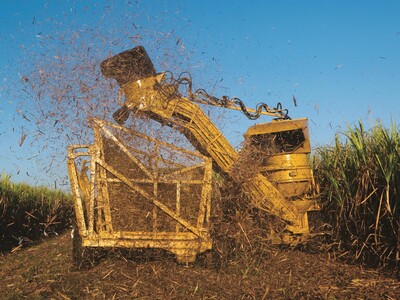
Agricultural mechanization advances in Dominican Republic amid labor scarcity
Translated from Spanish, summarized and contextualized by DistantNews.
At a glance
News
Named sources
Context piece
- Dominican agriculture faces a growing labor shortage, exacerbated by stricter immigration policies and declining interest from local workers.
- Official figures show a significant decrease in agricultural employment, with a notable drop in informal workers.
- The Ministry of Agriculture is prioritizing agricultural mechanization, including the use of drones and new technologies, to boost productivity and address the labor gap.
Dominican agriculture is grappling with a deepening labor shortage, a challenge intensified by reduced numbers of Haitian workers due to stricter immigration policies and a general disinterest among Dominicans in agricultural labor. This trend is confirmed by official figures showing a consistent decline in employment within the agriculture and livestock sectors over recent years.
Data from the first half of 2026 reveals a drop in the occupied population in agriculture and livestock to 322,868 people, an 8.98% decrease from the previous year. The number of informal workers saw a more significant decline of 10.79%, while formal employment in the sector grew by 7.54%, according to the Central Bank of the Dominican Republic.
In response to this critical situation, agricultural mechanization is increasingly being adopted on farms, particularly in sugarcane and rice cultivation. Sandra Lara, the vice-minister of Sectoral Planning at the Ministry of Agriculture, stated that a public policy is in place to promote the use of new technologies. This includes advancements in land preparation and the deployment of drones. "In the ministry, we are going to relaunch this service. We are working to acquire new equipment and new soft technologies, new forms in the extension services that the ministry has to teach and share with producers, to help in this process of productivity improvement," she said.
In 2025 alone, the Ministry's Agricultural Mechanization Service Centers provided 97 tractors for land preparation, benefiting approximately 11,322 producers and covering over 616,000 tareas of land. The sugarcane sector is notably advanced in mechanization, especially in cutting and hauling. Large producers have reported significant progress, with mechanization in the sugar industry reportedly rising from 1% to 70% in just five years, reducing reliance on foreign labor. Similarly, the rice sector is increasingly using machinery like power tillers, tractors, and harvesters, lessening dependence on less-skilled and more costly labor.
DistantNews Editorial
Originally published by Diario Libre in Spanish. Translated, summarized, and contextualized by our editorial team with added local perspective. Read our editorial standards.
More Stories


From Our Blog

What Gets Lost (and Found) When News Is Translated

The Critical Role of Diaspora Media in Global News

What Travellers Should Know About Countries with Restricted Press

A Digital Nomad's Guide to Following Local News

How the Same Story Looks Different in Different Countries
