


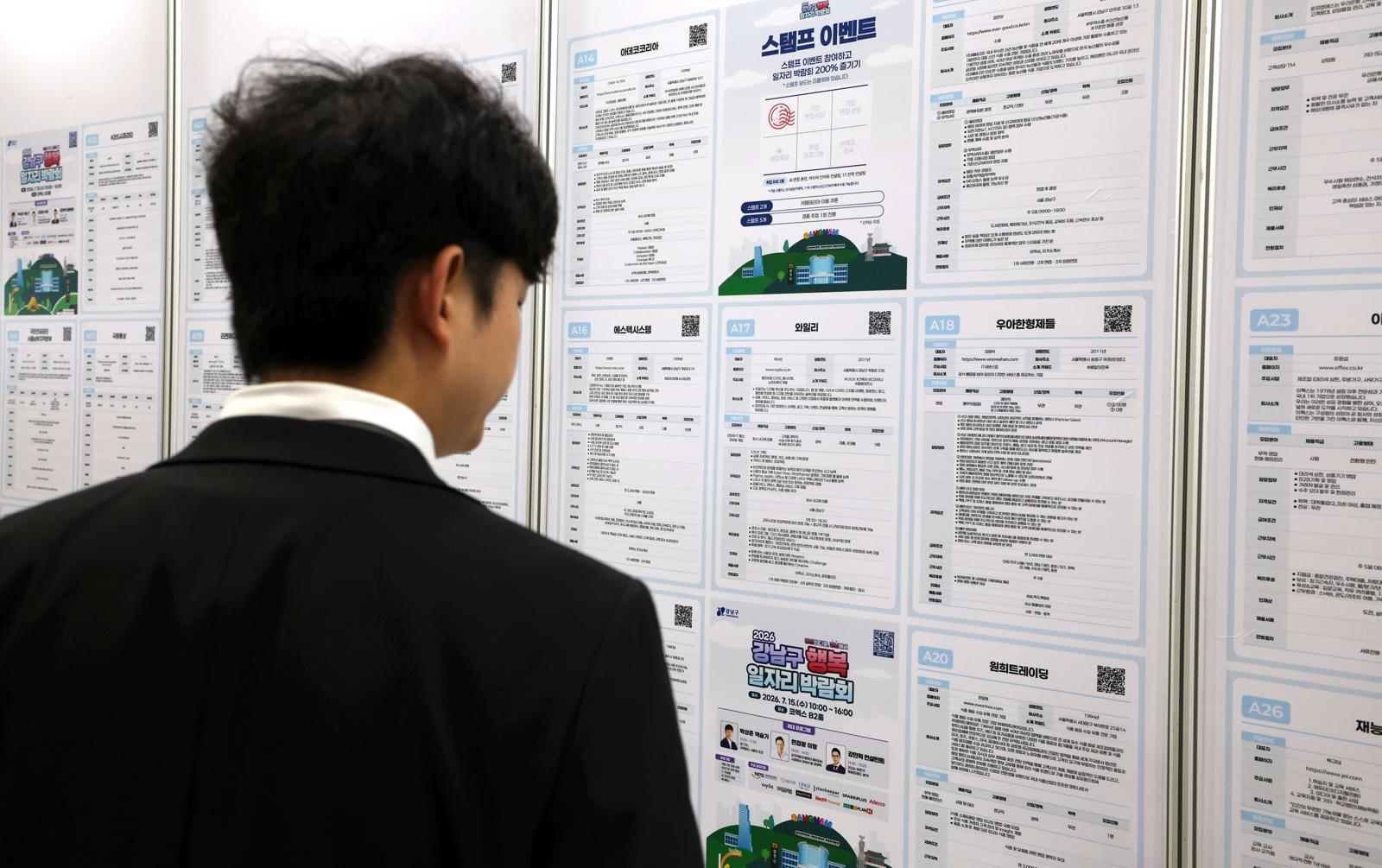
AI Exposure Cuts Job Postings in High-Risk Occupations by 11% in Five Years
Translated from Korean and summarized by DistantNews. Read the original for the full story.
At a glance
News
Documents & data
Context piece
- Average job postings in occupations highly exposed to AI fell 10.9% from 2020 through last year, while postings in medium- and low-exposure occupations rose 15.7% and 25.9%, respectively.
- The analysis estimated that 32.1% of South Korea’s employed workers are in jobs where machines or AI could eventually perform at least 70% of tasks, with higher risks among high-school graduates and workers at small businesses.
- Meter readers and gas inspectors had the highest estimated replacement risk at 98%, while external-line electricians and professional athletes had among the lowest risks.
Artificial intelligence is already reshaping South Korea’s hiring market, with job postings in highly exposed occupations declining while demand rises for work less vulnerable to automation.
A Korea Employment Information Service analysis found that average postings for high-exposure occupations fell 10.9% between 2020 and last year. Postings increased 15.7% for medium-exposure occupations and 25.9% for low-exposure occupations. The agency assessed how much AI could perform or assist with detailed tasks across 923 occupations.
The occupations with the sharpest declines included content and website operators, web programmers, systems programmers, technical sales workers, research and statistics workers, and inbound telemarketers. The analysis linked the declines to routine tasks such as information searches, data organization, document writing and basic coding, which generative AI can assist with or replace through chatbots. Some highly exposed jobs, including computer systems specialists, overseas sales workers, sales planning and management staff, and marketing specialists, saw postings increase because workers can use AI to improve efficiency while retaining technical or communication roles.
The study estimated that 9.232 million of South Korea’s 28.77 million employed people work in high-risk occupations, defined as jobs where at least 70% of tasks could be performed by machines or AI once the technology develops sufficiently. The risk reached 44.1% among high-school graduates, compared with 8.2% among people with graduate degrees. It was highest at businesses employing five to nine people, at 36.6%, and lowest among companies with at least 300 workers, at 26.9%.
By industry, the risk was highest in transport and warehousing, accommodation and food services, wholesale and retail, and manufacturing. Meter readers and gas inspectors had a 98% estimated replacement possibility within 10 years, followed by parking attendants and guides at 96.1%. Korea University professor Kwon Hyuk said the main task was moving existing workers into new jobs created by AI through training and reskilling.
The key task is how to move existing workers into new jobs created by AI.
About this summary
Originally published by Dong-A Ilbo in Korean. Translated, summarized, and contextualized automatically by DistantNews, with a note on how the source frames the story. Not individually reviewed before publishing. How this works.
More Stories

From Our Blog

What Gets Lost (and Found) When News Is Translated

The Critical Role of Diaspora Media in Global News

What Travellers Should Know About Countries with Restricted Press

A Digital Nomad's Guide to Following Local News

How the Same Story Looks Different in Different Countries
