


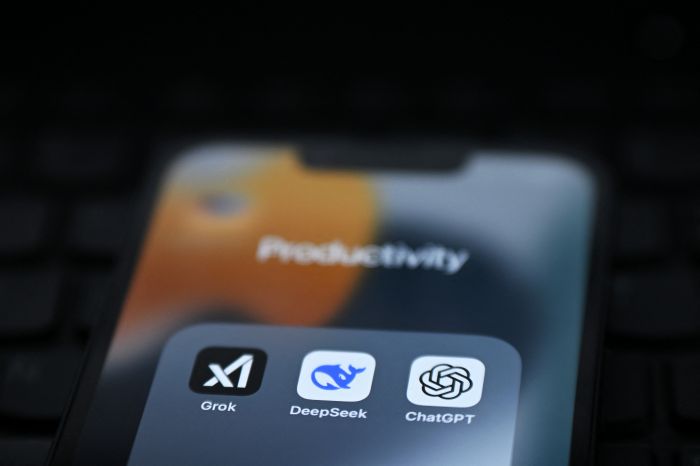
AI's Double-Edged Sword: Boosting Productivity While Weakening Thought
Translated from Malay, summarized and contextualized by DistantNews.
At a glance
News
Documents & data
Context piece
- Artificial intelligence tools can now complete tasks in minutes that once took hours or days, with generative AI used by one-sixth of the global population for work.
- In Malaysia, 93% of workers use generative AI, reporting increased productivity and time savings, with the nation aiming for AI to contribute significantly to its digital economy.
- However, over-reliance on AI may weaken critical thinking, creativity, and problem-solving skills, particularly in education, as students may become overly dependent on AI-generated answers.
Artificial intelligence tools are rapidly transforming the workplace, enabling tasks that once took hours to be completed in minutes. Global statistics from Microsoft's AI Economy Institute indicate that nearly one-sixth of the world's population now uses generative AI for work. A Microsoft and LinkedIn report highlights that 90% of generative AI users experience increased productivity, with 85% focusing on more valuable tasks and 84% reporting enhanced creativity. These findings underscore AI's integration into the current work ecosystem, boosting organizational efficiency.
90 percent of Generative AI users report increased productivity through time savings, while 85 percent state AI helps them focus on more valuable tasks and 84 percent increase creativity.
In Malaysia, this trend is pronounced, with the EY Work Reimagined Survey revealing that 93% of Malaysian workers utilize generative AI. A significant 76% report higher productivity, and 81% note substantial time savings. The Malaysian government, through the National AI Office (NAIO), is actively advancing its AI agenda with the AI Nation 2030 initiative, projecting generative AI to contribute as much as $113.4 billion to national productivity and stimulate digital economic growth.
93 percent of Malaysian workers use Generative AI in their work tasks, while 76 percent report increased productivity and 81 percent state AI helps save significant work time.
However, excessive dependence on AI raises concerns about cognitive offloading, where individuals tend to transfer their thinking processes to machines. Research from MIT Media Lab suggests that ChatGPT users exhibit lower neural activity, weaker memory engagement, and reduced creativity compared to those completing tasks without AI assistance. This could lead to a long-term decline in critical thinking, creativity, and an increased tendency to accept answers without question.
ChatGPT users show lower neural activity, weaker memory engagement, and lower creativity compared to individuals who complete tasks without AI assistance.
The education sector is also witnessing widespread AI adoption, with a Stanford AI Index study showing up to 80% of students have used generative AI for learning. Educational institutions face the challenge of ensuring ethical AI use without compromising genuine learning. The rise of prompt engineering positions humans as "thought architects," where the quality of questions dictates the quality of answers. Yet, if students solely rely on AI without understanding the content, their learning becomes superficial, potentially weakening their ability to solve critical problems.
Up to 80 percent of students have used Generative AI in their learning, whether to understand concepts or complete assignments.
DistantNews Editorial
Originally published by Utusan Malaysia in Malay. Translated, summarized, and contextualized by our editorial team with added local perspective. Read our editorial standards.
More Stories


From Our Blog

What Gets Lost (and Found) When News Is Translated

The Critical Role of Diaspora Media in Global News

What Travellers Should Know About Countries with Restricted Press

A Digital Nomad's Guide to Following Local News

How the Same Story Looks Different in Different Countries
