


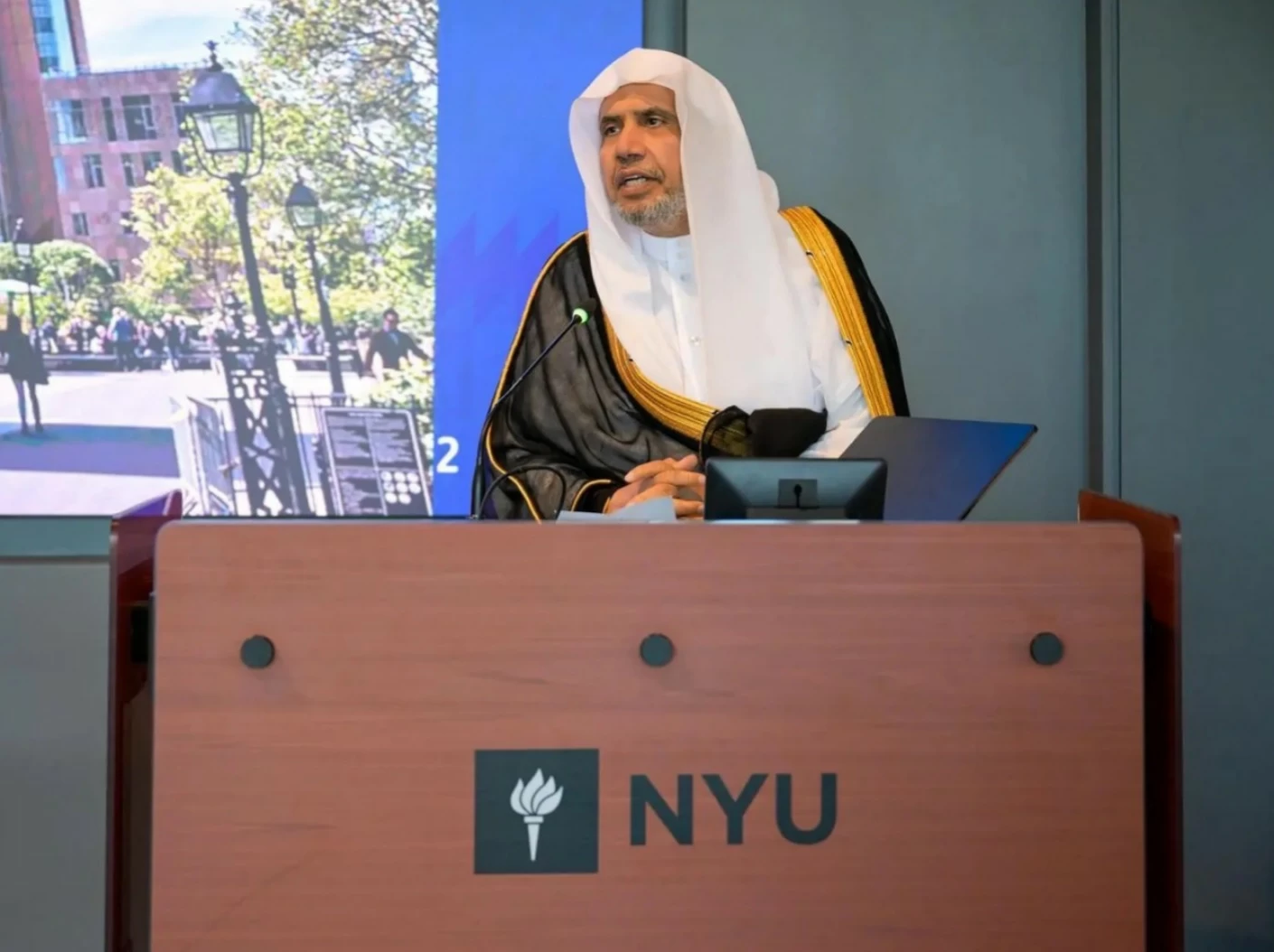
Al-Issa Addresses Risks of AI Amplifying Hate Speech at NYU
Translated from Arabic and summarized by DistantNews. Read the original for the full story.
At a glance
News
Named sources
Context piece
- The Secretary-General of the Muslim World League, Dr. Mohammed Al-Issa, lectured at New York University on the risks of artificial intelligence amplifying hate speech.
- The discussion focused on AI's role in spreading hate speech via social media, the solidarity role of community institutions, and religious approaches to combating it.
- Al-Issa highlighted challenges including AI-generated content, algorithmic targeting, bot networks, and deepfakes, emphasizing the need to balance free expression with societal protection.
In a significant address at New York University, Dr. Mohammed Al-Issa, Secretary-General of the Muslim World League and President of the Muslim Council of Elders, highlighted the escalating threat of artificial intelligence being weaponized to amplify hate speech. His lecture and subsequent dialogue with academics underscored the critical need for a multi-faceted approach to counter this digital menace.
The discussion delved into the sophisticated ways AI can be exploited, from automated content generation and algorithmic targeting of vulnerable users to the insidious spread of divisive narratives through bot networks and coordinated online campaigns. The emergence of 'deepfake' technology, capable of distorting audio and visual content to incite animosity, was also a key concern, posing a grave challenge to individuals and communities alike.
Dr. Al-Issa stressed the complex legal and ethical considerations involved, particularly the delicate balance required between safeguarding freedom of expression and protecting society from incitement. He called for a clear delineation of legal responsibility for digital actors and platforms, urging a proactive stance from religious and community institutions in developing strategies to combat hate speech. This engagement from a prominent Islamic scholar at a leading Western university signifies a crucial bridge-building effort in addressing a global challenge.
The employment of artificial intelligence in promoting hate speech raises a precise legal analysis, which is to strike a balance between ensuring freedom of expression within its legitimate scope, and protecting society from inciting content, while determining the legal responsibility of digital actors and technical platforms.
About this summary
Originally published by Okaz in Arabic. Translated, summarized, and contextualized automatically by DistantNews, with a note on how the source frames the story. Not individually reviewed before publishing. How this works.
More Stories


From Our Blog

What Gets Lost (and Found) When News Is Translated

The Critical Role of Diaspora Media in Global News

What Travellers Should Know About Countries with Restricted Press

A Digital Nomad's Guide to Following Local News

How the Same Story Looks Different in Different Countries
