


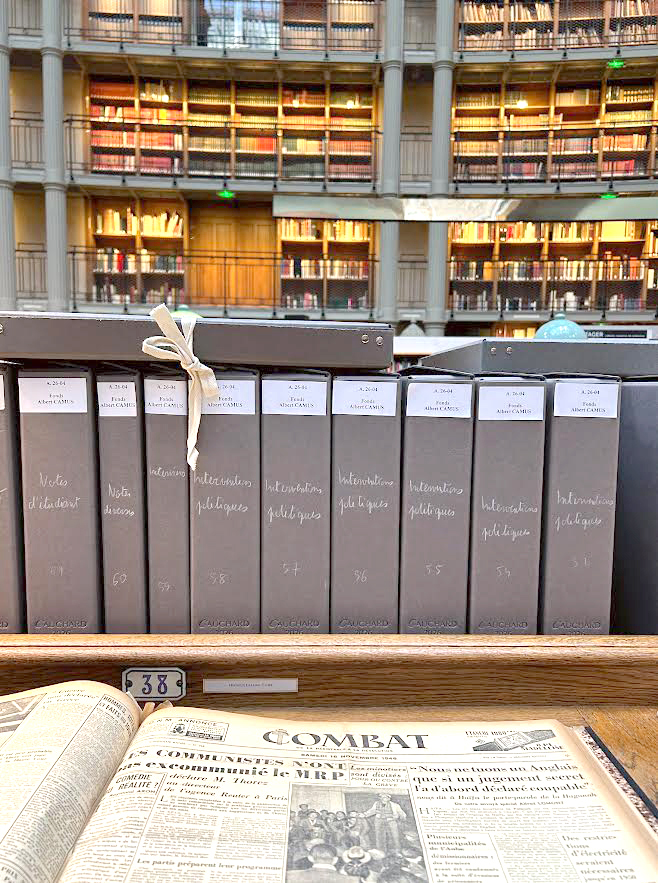
Albert Camus archives join National Library of France collections
Translated from French, summarized and contextualized by DistantNews.
At a glance
News
Sources not specified
New plan
- The literary archives of Albert Camus have been integrated into the collections of the National Library of France (BnF).
- This extensive collection includes approximately 250 boxes, representing 50 linear meters of documents.
- The archives will make hundreds of manuscripts by the Nobel laureate accessible to the general public.
Literature enthusiasts and admirers of Nobel laureate Albert Camus have reason to celebrate as his extensive personal archives are now accessible to the public. The National Library of France (BnF) has officially integrated the fonds d'archives of the renowned writer, playwright, and philosopher into its collections.
This significant acquisition comprises roughly 250 boxes, amounting to 50 linear meters of material. The collection promises to offer unprecedented access to hundreds of manuscripts and documents from Camus, who was born in Annaba, Algeria. His works, including "The Stranger" and "The Plague," have profoundly influenced 20th-century literature and thought.
The integration of Camus's archives into the BnF's holdings is a major development for literary scholarship and public engagement. It ensures the preservation and accessibility of a crucial part of French literary heritage for future generations. Researchers and the public alike will now be able to delve into the creative process and personal reflections of one of the most important writers of the modern era.
DistantNews Editorial
Originally published by El Watan in French. Translated, summarized, and contextualized by our editorial team with added local perspective. Read our editorial standards.
More Stories



From Our Blog

What Gets Lost (and Found) When News Is Translated

The Critical Role of Diaspora Media in Global News

What Travellers Should Know About Countries with Restricted Press

A Digital Nomad's Guide to Following Local News

How the Same Story Looks Different in Different Countries
