

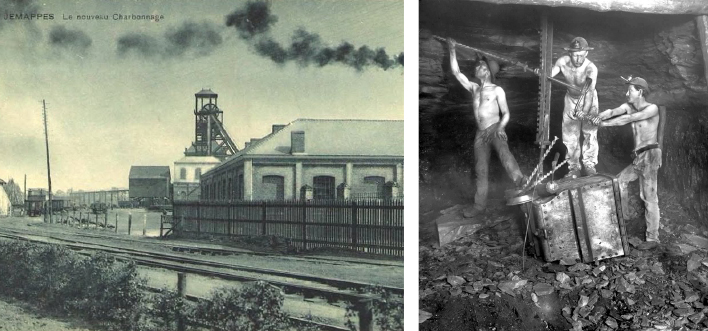

Algeria's Long Resistance: A Legacy of Defiance Leading to Independence
Translated from French, summarized and contextualized by DistantNews.
At a glance
In-depth
Sources not specified
Context piece
- Algeria's 1962 independence was the culmination of 132 years of continuous insurrectionary, armed, and political struggle.
- National consciousness in colonized regions develops from a long accumulation of refusals and attempts, not a single event.
- Figures like Lalla Fatma N’Soumer and El Mokrani embodied this persistent resistance, a lesson relevant to other nations seeking sovereignty today.
Algeria's independence in 1962 marked the end of a 132-year period defined by continuous insurrectionary, armed, and political resistance against colonial rule. The nation's journey to sovereignty was not the result of a single event but a long sedimentation of refusals and broken attempts, a process that forged a deep-seated national consciousness.
What Lalla Fatma N’Soumer, El Mokrani or the founders of the North African Star have in common, beyond the generations that separate them, is having refused, each with the means of their time, that submission become a destiny.
Historical figures such as Lalla Fatma N’Soumer and El Mokrani, despite generational differences, shared a common refusal to accept submission as destiny. Their struggles, alongside those of the founders of the North African Star, represent a persistent defiance that continues to resonate. This enduring lesson of transforming resistance into sovereignty remains relevant for nations in the Global South, both historically and in the present day.
The resistance was continuous, without interruption, and only knew mutations of form and terrain.
The colonial night began on July 5, 1830, and lasted for 132 years, characterized by unceasing resistance that mutated in form and location. From early battles in the west and east to political trenches between the World Wars, and across the southern oases and mountainous regions like the Djurdjura and Aurès, Algeria consistently rejected colonial domination. Rebellions in Zaâtcha (1849), the Ouled Sidi Cheikh revolt (1881-1884), Aïn Témouchent (1901), and the Aurès uprising (1916) punctuate each decade, demonstrating a persistent national consciousness built on accumulated surges of defiance long before the concept of 'nation' was explicitly articulated.
It is not a succession of isolated episodes that the chronology reveals, but a matrix: that of a national consciousness which is built precisely by the accumulation of these surges, well before the word 'nation' was spoken.
Lalla Fatma N’Soumer emerged as a singular embodiment of this resistance in the mid-19th century. Taking command after Chérif Boubeghla's death in 1854, she led five thousand fighters, inflicting a significant defeat on eight thousand French soldiers. Her capture in 1857 and subsequent death in prison highlight the critical, yet often overlooked, role women played in organizing, strategizing, and leading popular resistance movements. The 1871 insurrection, led by Cheikh El Mokrani, involved an estimated two hundred thousand fighters and over two hundred fifty tribes, representing nearly a third of Algeria's population. The brutal repression that followed led to massive land confiscation and the establishment of a civil regime that solidified colonial control.
Delegating military authority to whoever deserved it, regardless of gender.
DistantNews Editorial
Originally published by El Watan in French. Translated, summarized, and contextualized by our editorial team with added local perspective. Read our editorial standards.
More Stories
From Our Blog

What Gets Lost (and Found) When News Is Translated

The Critical Role of Diaspora Media in Global News

What Travellers Should Know About Countries with Restricted Press

A Digital Nomad's Guide to Following Local News

How the Same Story Looks Different in Different Countries
