


All Roads Lead to Rome: The Via Francigena
Translated from Polish, summarized and contextualized by DistantNews.
At a glance
In-depth
Sources not specified
Context piece
- The Via Francigena, a historic route from Canterbury to Rome, spanned approximately 1700 kilometers and typically took 70 to 90 days to traverse.
- Archbishop Sigeric of Canterbury journeyed the route in 990 to receive his pallium, a symbol of authority from the Pope.
- Over centuries, the Via Francigena served not only pilgrims but also as a vital path for trade and the exchange of ideas across Europe.
The Via Francigena, a historic pilgrimage and trade route connecting Canterbury to Rome, represents a significant historical artery through Europe. Historians estimate the journey covered roughly 1700 kilometers, a distance that typically required between 70 and 90 days to complete.
In 990, a notable figure, Archbishop Sigeric of Canterbury, undertook this arduous journey. His purpose was not merely spiritual; he traveled to Rome to receive his pallium, a woolen vestment signifying his authority and direct dependence on the Pope. This symbol was essential for his ecclesiastical dignity, as only the Bishop of Rome could bestow it.
Sigeric's journey began at what was then considered the edge of the known world. After crossing the English Channel, he traveled south through the lands of the Franks. Europe in the late 10th century was a complex tapestry of duchies, abbeys, and fortified settlements, interconnected by a network of roads that often dated back to Roman times. However, this era was far from secure, with fluid borders, numerous bandits on the roads, and travel dependent on weather and the goodwill of local rulers.
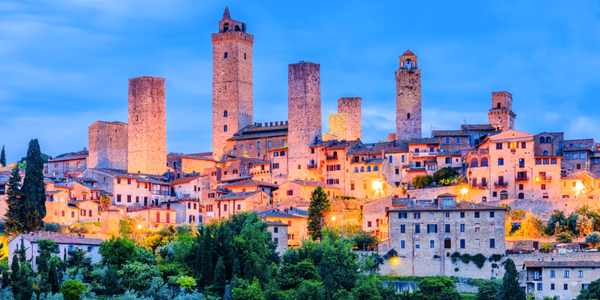
Beyond its religious significance for pilgrims, the Via Francigena evolved over the centuries into a crucial pathway for the exchange of goods and ideas. It facilitated cultural and economic interactions across the continent, linking disparate regions and contributing to the development of the communities along its path. Today, remnants of this ancient route, like the picturesque town of San Gimignano, often called the "Tuscan Manhattan," still bear witness to its historical importance.
DistantNews Editorial
Originally published by Rzeczpospolita in Polish. Translated, summarized, and contextualized by our editorial team with added local perspective. Read our editorial standards.
More Stories


From Our Blog

What Gets Lost (and Found) When News Is Translated

The Critical Role of Diaspora Media in Global News

What Travellers Should Know About Countries with Restricted Press

A Digital Nomad's Guide to Following Local News

How the Same Story Looks Different in Different Countries
