


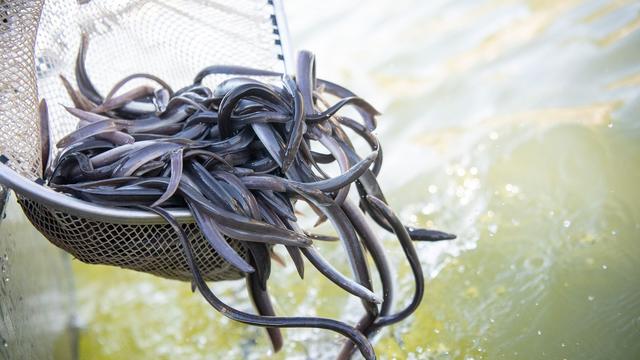
Angler Associations Release Over 3 Million Eels and Burbot into Lower Saxony Rivers
Translated from German, summarized and contextualized by DistantNews.
At a glance
News
From a news agency
Outcome reported
- Over 3.2 million eels and 109,300 burbot were released into rivers and streams across Lower Saxony by angler associations this year.
- The initiative aims to conserve endangered species like the European eel, which faces threats from dams, illegal poaching, and an increase in cormorants.
- Efforts also include raising and releasing young burbot, a freshwater species also classified as endangered due to habitat loss.
Angler associations in Germany's Lower Saxony have concluded their largest species conservation effort for 2026, releasing an impressive 3.2 million European eels and 109,300 burbot into the region's waterways. This extensive operation involved over 200 angling clubs from Borkum to Osnabrück and Amt Neuhaus to Duderstadt.
The primary goal is to bolster populations of species listed on the Red List of endangered animals. The European eel (Anguilla anguilla) faces a perilous journey, with human-made obstacles like hydropower plants disrupting its migration route from Germany to the Sargasso Sea in the North Atlantic, where it spawns. Adding to these challenges, young eels, known as glass eels, are frequently victims of illegal smuggling rings that sell them as a delicacy to East Asia.
Furthermore, the Anglerverband Niedersachsen points to an increase in natural predators, particularly cormorants, whose populations have grown significantly. To combat these threats, the association has coordinated the distribution of glass eels sourced from certified fisheries near Biarritz, France, for many years. These young eels are transported in refrigerated styrofoam boxes within 24 hours to Bramsche, Lower Saxony, where they are received by local angling clubs for release into rivers and streams.
The burbot (Lota lota), the only freshwater species of the cod family, is also critically endangered in Lower Saxony. Described as a cold-loving predatory fish, it is not widely known but is a fascinating part of Northern Germany's ichthyofauna. The loss of naturally flooded river floodplains, vital nurseries for young burbot, has severely hampered their reproduction. To address this, the association raises young burbot under near-natural conditions. This year, over 100,000 young burbot were provided to 44 angling clubs and fishing cooperatives, finding new homes in various waters like the Aller, Aue, Dümmer, Else, Fuhse, and Hunte rivers.
DistantNews Editorial
Originally published by Die Zeit in German. Translated, summarized, and contextualized by our editorial team with added local perspective. Read our editorial standards.
More Stories



From Our Blog

What Gets Lost (and Found) When News Is Translated

How the Same Story Looks Different in Different Countries

The Critical Role of Diaspora Media in Global News

What Travellers Should Know About Countries with Restricted Press

A Digital Nomad's Guide to Following Local News
