

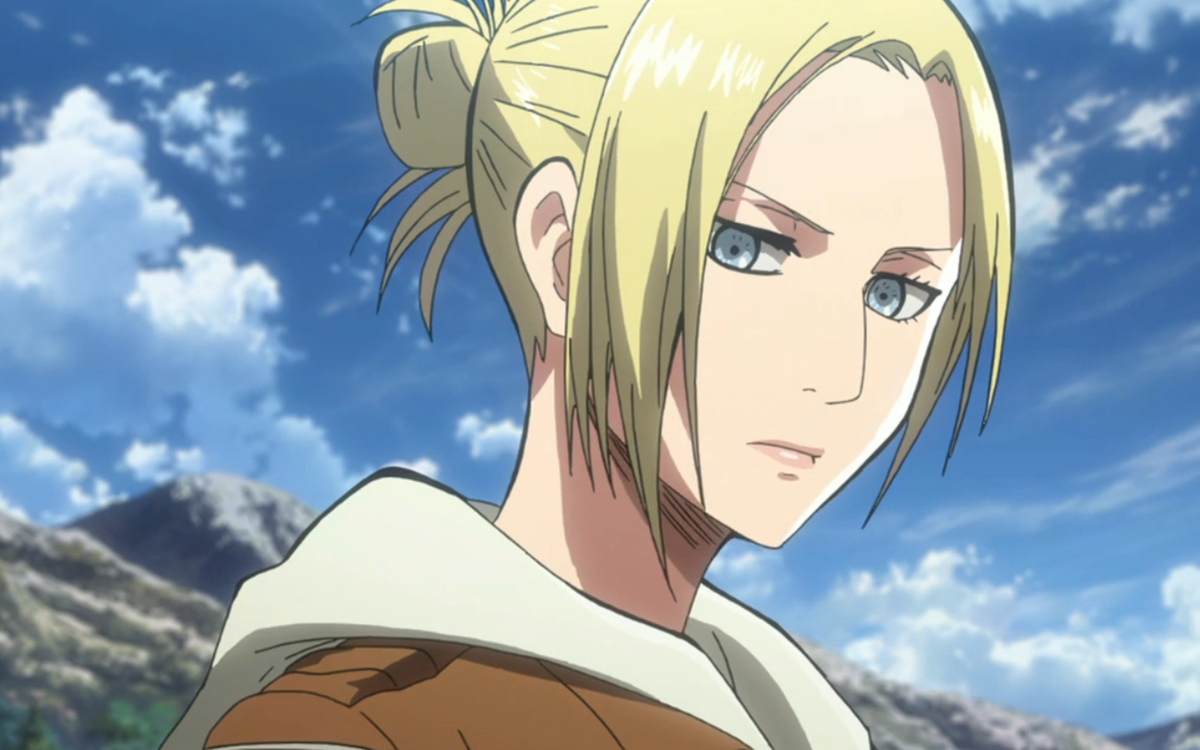
Annie Leonhart: Cruel Villain or Victim of Circumstance in Attack on Titan?
Translated from Vietnamese, summarized and contextualized by DistantNews.
At a glance
Analysis
Sources not specified
Context piece
- Annie Leonhart's brutal actions as the Female Titan, like the "yo-yo" scene in Season 1, are often seen as proof of her cruelty.
- However, her difficult childhood, raised as a "living weapon" by Marley, suggests her actions stem from emotional detachment rather than sadism.
- Fans analyze that Annie's violence was a psychological defense mechanism, a way to avoid confronting her trauma and guilt.
Annie Leonhart, a central figure in "Attack on Titan," remains one of the series' most complex characters. Her portrayal as the Female Titan, particularly in Season 1's shocking "yo-yo" scene where she violently spins a Survey Corps soldier, has led many fans to label her as purely cruel. However, a deeper look into her narrative suggests a more nuanced interpretation, attributing her brutality to a traumatic upbringing.
From a young age, Annie was abandoned by her biological parents and adopted by an Eldian man who saw her as a tool for social advancement in Marley. Her path to becoming a Titan Shifter was paved with rigorous, emotionally barren training. This harsh conditioning, devoid of affection, forced Annie to suppress her feelings and view her surroundings as insignificant, shaping her into a hardened survivor.
Despite her capacity for violence, Annie exhibited moments of hesitation, sparing Armin and showing distress over Marco's death. These instances contrast sharply with her ruthless actions on the battlefield. Fan analyses propose that her extreme violence, like the "yo-yo" incident, might be a manifestation of emotional dissociation, a psychological defense mechanism to cope with the trauma and guilt of being a weapon.
Rather than confronting her pain, Annie weaponized violence, performing killings mechanically to avoid processing her actions. Unlike Reiner, who developed a dual personality, Annie chose to freeze her emotions, continuing forward without allowing herself time for reflection. This coping strategy, born from a system that turns children into soldiers, positions Annie not just as a villain, but as a victim of war and exploitation.
DistantNews Editorial
Originally published by Tuổi Trẻ in Vietnamese. Translated, summarized, and contextualized by our editorial team with added local perspective. Read our editorial standards.
More Stories

From Our Blog

What Gets Lost (and Found) When News Is Translated

The Critical Role of Diaspora Media in Global News

What Travellers Should Know About Countries with Restricted Press

A Digital Nomad's Guide to Following Local News

How the Same Story Looks Different in Different Countries
