


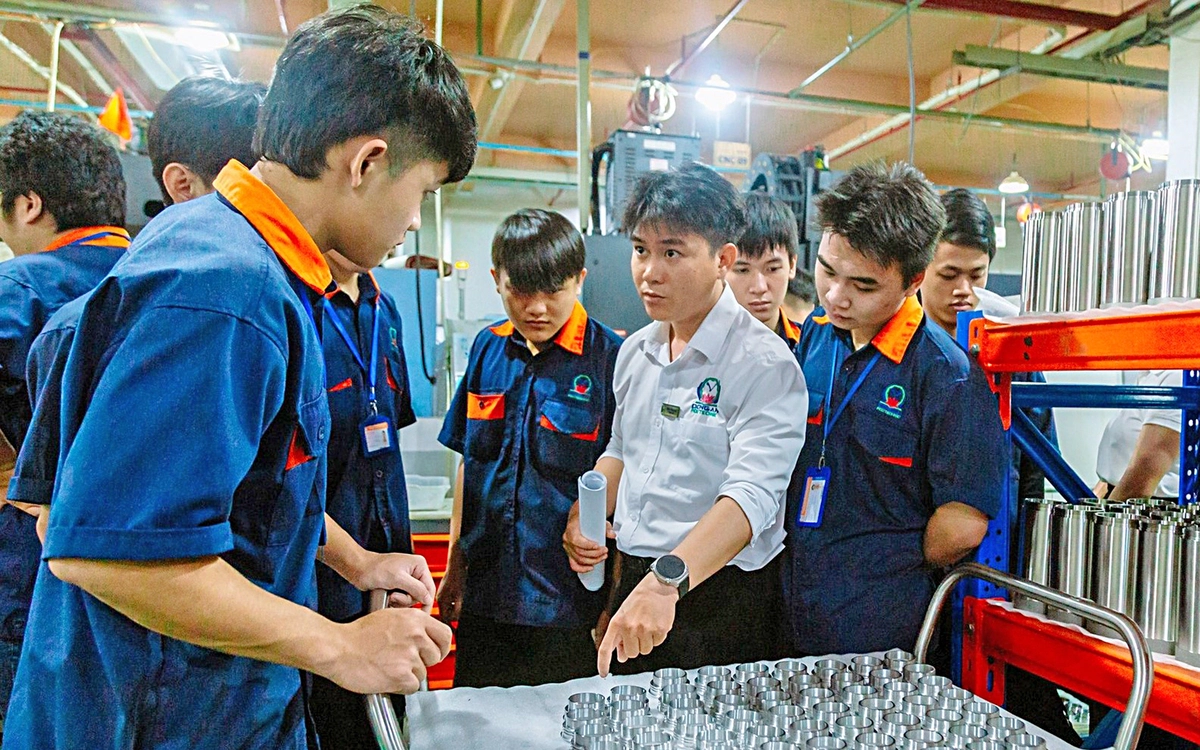
Vietnamese Students Increasingly Choose Vocational Training Over Traditional High School
Translated from Vietnamese, summarized and contextualized by DistantNews.
At a glance
News
Named sources
Context piece
- Many Vietnamese students are choosing vocational training over traditional high school after completing lower secondary education.
- This trend is driven by a desire for shorter study periods, practical skills, and clearer career paths.
- Vocational schools are adapting programs to better meet student needs and prepare them for the workforce.
A growing number of Vietnamese students are opting for vocational training immediately after completing lower secondary school, bypassing the traditional route of attending high school. This shift reflects a desire for more practical, career-oriented education and a quicker entry into the workforce.
Students like Nguyen Nhat Hoang, who has already enrolled in automotive studies at Dong An College of Technology, exemplify this trend. Despite registering for vocational training, Hoang still participated in the 10th-grade entrance exams as a personal challenge and a way to gauge his academic abilities. He plans to combine general education with vocational training, aiming to earn a vocational degree by age 18 while also completing his high school equivalency.
Sau khi tốt nghiệp mình có thể đi làm ngay nếu có cơ hội phù hợp hoặc tiếp tục học liên thông lên cao đẳng, đại học để mở rộng con đường nghề nghiệp
Similarly, Dang Gia Tuan chose to study network administration at Ho Chi Minh City International College instead of pursuing a traditional academic path. Tuan sought a more practical and less stressful educational program with a clear career direction. He will simultaneously study a continuous education program at the college to prepare for the high school graduation exam while gaining specialized skills for early employment.
Vocational institutions are responding to this demand by optimizing their programs. ThS Nguyen Dang Ly, Rector of Ho Chi Minh City International College, highlighted the need for innovative teaching methods and curriculum design to motivate students and provide them with long-term development opportunities. The positive enrollment figures suggest that vocational training is increasingly seen as a viable and attractive alternative to traditional schooling in Vietnam.
Học nghề là lựa chọn một lộ trình phù hợp hơn với năng lực và mục tiêu của mình hiện tại. Sau khi tốt nghiệp tôi có thể đi làm nếu tìm được cơ hội phù hợp hoặc tiếp tục học liên thông lên trình độ cao hơn tùy theo định hướng nghề nghiệp sau này
DistantNews Editorial
Originally published by Tuổi Trẻ in Vietnamese. Translated, summarized, and contextualized by our editorial team with added local perspective. Read our editorial standards.
More Stories



From Our Blog

What Gets Lost (and Found) When News Is Translated

The Critical Role of Diaspora Media in Global News

What Travellers Should Know About Countries with Restricted Press

A Digital Nomad's Guide to Following Local News

How the Same Story Looks Different in Different Countries
