

Antarctic Glaciers Melting Rapidly, Threatening Accelerated Climate Change, Scientist Warns
Translated from Turkish, summarized and contextualized by DistantNews.
At a glance
News
Named sources
Context piece
- Glaciologist Prof. Dr. Ersan Başar reported significant melting of glaciers in Antarctica, with some losing up to 10 meters annually.
- This rapid melting, driven by global warming, releases carbon and methane, further accelerating climate change in a domino effect.
- The trend observed over the last decade indicates a concerning acceleration of ice loss, impacting global climate patterns.
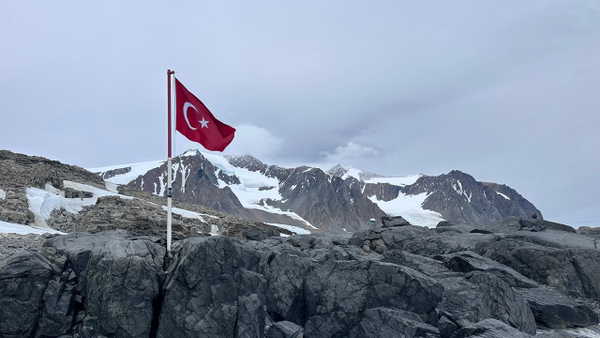
The rapid melting of glaciers, particularly in polar regions like Antarctica, is a stark indicator of climate change, according to Prof. Dr. Ersan Başar, a faculty member at Karadeniz Technical University's (KTÜ) Sürmene Marine Sciences Faculty. Leading the 10th National Antarctic Science Expedition, Başar shared alarming scientific data revealing the accelerated pace of ice loss.
"We are witnessing the effects of climate change and the rapid melting of the poles due to global warming," Başar stated. "Measurements show melting of up to 3 centimeters per day, nearly 10 meters per year. While this might seem normal initially, this rate of melting is not normal."
We are witnessing the effects of climate change and the rapid melting of the poles due to global warming. Measurements show melting of up to 3 centimeters per day, nearly 10 meters per year. While this might seem normal initially, this rate of melting is not normal.
Data collected over the past decade, including observations at the Horseshoe Island's 'Shoesmith Glacier' near Turkey's Antarctic base, clearly demonstrates this acceleration. Prof. Dr. Başar explained that the melting of glaciers, which have existed for millions of years, releases significant amounts of carbon and methane. These emissions exacerbate global warming, creating a domino effect that further intensifies climate change.
"The rapid melting of glaciers is causing increased carbon and methane emissions," Başar noted. "As the effect of the ice diminishes, the Earth's surface begins to absorb more heat." He stressed that this phenomenon is particularly pronounced in the Antarctic and Arctic regions. The findings underscore the urgent need to address the root causes of global warming, primarily stemming from industrialization and the intensive use of fossil fuels since the Industrial Revolution.
The rapid melting of glaciers is causing increased carbon and methane emissions. As the effect of the ice diminishes, the Earth's surface begins to absorb more heat.
DistantNews Editorial
Originally published by Cumhuriyet in Turkish. Translated, summarized, and contextualized by our editorial team with added local perspective. Read our editorial standards.
More Stories

From Our Blog

What Gets Lost (and Found) When News Is Translated

The Critical Role of Diaspora Media in Global News

What Travellers Should Know About Countries with Restricted Press

A Digital Nomad's Guide to Following Local News

How the Same Story Looks Different in Different Countries
