


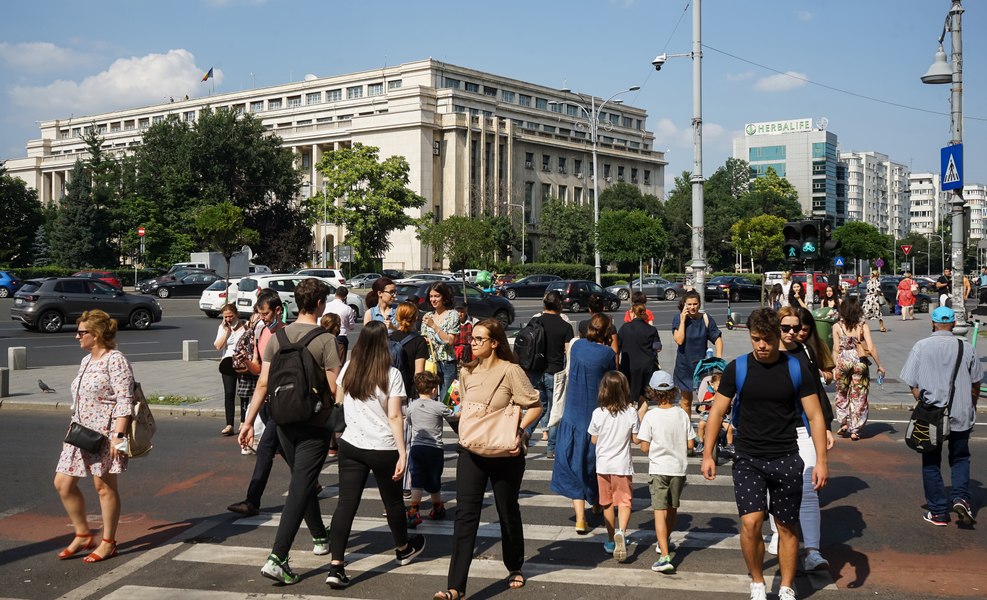
Are Romanians Less Emotionally Intelligent? A Psychologist Weighs In on a Viral Reddit Debate
Translated from Romanian, summarized and contextualized by DistantNews.
At a glance
News
Named sources
Context piece
- A viral Reddit discussion questioned whether Romanians possess lower emotional intelligence compared to other nationalities.
- Users cited difficulties in expressing emotions, fear of saying 'no,' and aggressive conflict resolution as examples.
- A psychotherapist stated there is no solid evidence to support the claim that Romanians have lower emotional intelligence, distinguishing it from cultural norms of emotional expression.
A discussion originating on Reddit has sparked debate about whether Romanians exhibit lower emotional intelligence than people from other nations. The online conversation highlighted behaviors such as difficulty expressing emotions, a reluctance to decline requests, aggressive approaches to conflict, and shame associated with vulnerability. Participants debated whether these observations indicate a deficit in emotional intelligence or are rooted in generational educational and cultural patterns.
The question of whether Romanians have a lower level of emotional intelligence than other peoples is interesting, but from a psychological point of view, there is no solid evidence to support such a conclusion.
Some users suggested that Romania's recent history, including the communist era and subsequent difficult transition period, contributed to how generations were raised, potentially impacting their emotional expression. Others rejected this historical explanation, arguing that a lack of empathy, responsibility, and self-control cannot be perpetually excused by past circumstances.
People can have the capacity to understand and manage emotions, but have been taught that their expression should be limited or controlled.
Psychotherapist Laura Găvan addressed the premise of the debate, calling it problematic. She stated that from a psychological standpoint, there is no substantial evidence to conclude that Romanians possess lower emotional intelligence. Găvan emphasized the importance of differentiating between the capacity for emotional intelligence and cultural norms surrounding emotional expression. She explained that individuals might have the ability to understand and manage emotions but have been taught to limit or control their outward display.
Children learn through observation and modeling. If they grew up in an environment where emotions were validated, discussed, and accepted, they are more likely to develop healthy emotional self-regulation and communication skills.
Găvan further elaborated that childhood experiences significantly influence how adults manage emotions and conflicts. Children learn by observing and modeling their environment. Growing up in a household where emotions are validated and discussed fosters healthier emotional regulation and communication skills. Conversely, messages like "don't cry," "don't be upset," or "you have to be strong" can lead individuals to suppress their emotions or express them indirectly. This perspective resonated with many Reddit users who shared similar experiences of growing up in environments where emotional expression was discouraged, prioritizing survival and work over emotional well-being.
The difficulty in saying 'no' and setting healthy boundaries is...
DistantNews Editorial
Originally published by Adevărul in Romanian. Translated, summarized, and contextualized by our editorial team with added local perspective. Read our editorial standards.
More Stories

From Our Blog

What Gets Lost (and Found) When News Is Translated

The Critical Role of Diaspora Media in Global News

What Travellers Should Know About Countries with Restricted Press

A Digital Nomad's Guide to Following Local News

How the Same Story Looks Different in Different Countries
