


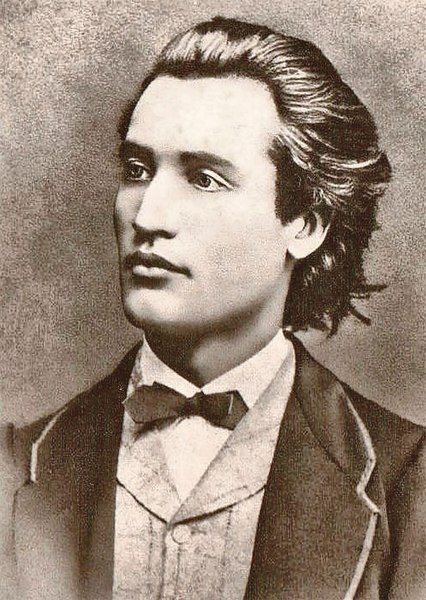
Eminescu's Death: Specialists Explain What Truly Killed the Great Poet and His Last Words
Translated from Romanian, summarized and contextualized by DistantNews.
At a glance
News
Sources not specified
Outcome reported
- Mihai Eminescu, a celebrated Romanian poet, died on June 15, 1889, at age 39, with the exact cause of his death remaining a subject of debate.
- He spent his final months in a sanatorium in Bucharest, experiencing severe financial and health issues.
- Specialists have proposed various hypotheses, but a definitive diagnosis for his death remains elusive, with his final words and wishes also unclear.
The exact circumstances and causes of Mihai Eminescu's death on June 15, 1889, continue to be debated 137 years later, shrouding the passing of Romania's most famous poet in mystery. Eminescu died at age 39 in Dr. Alexandru Suțu's sanatorium in Bucharest, reportedly on a metal bed in a locked room, after finding solace in a glass of milk. His death marked the end of a tumultuous final six years of his life, which began with a mental breakdown in June 1883. During this period, Eminescu experienced severe financial difficulties and a collapse in his health, leading to his internment in various sanatoriums in Austria, Italy, and Romania.
Eminescu's struggles intensified after his return to Romania from treatment abroad, where Austrian doctors had diagnosed him with bipolar disorder. Despite a period of recovery, his condition deteriorated again due to poverty and declining health. He was admitted to Dr. Suțu's sanatorium on February 3, 1889, by friends who were concerned about his financial straits and failing health. This internment represented the culmination of a dark period, a descent from which he never fully recovered.
Specialists in psychiatry, pathology, and forensic medicine have attempted to reconstruct the events leading to Eminescu's death, proposing various working hypotheses and opinions. However, definitive diagnoses have been scarce, leaving many questions unanswered about his final moments, his last words, or his ultimate wishes. The poet's legacy as a literary genius and a symbol of Romanian literature is undisputed, yet the details surrounding his demise remain a subject of historical and medical inquiry.
DistantNews Editorial
Originally published by Adevărul in Romanian. Translated, summarized, and contextualized by our editorial team with added local perspective. Read our editorial standards.
More Stories



From Our Blog

What Gets Lost (and Found) When News Is Translated

The Critical Role of Diaspora Media in Global News

What Travellers Should Know About Countries with Restricted Press

A Digital Nomad's Guide to Following Local News

How the Same Story Looks Different in Different Countries
