


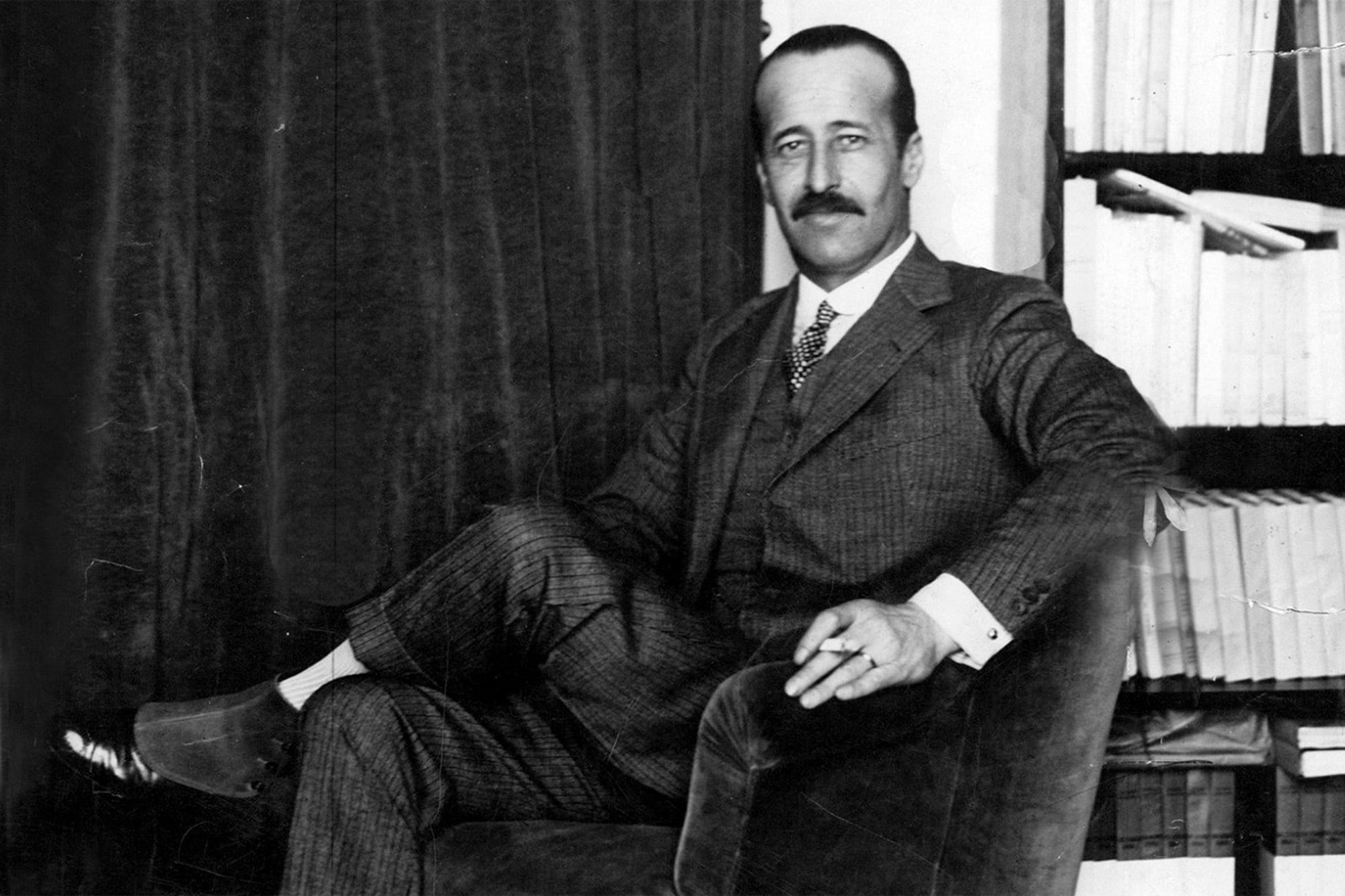
Argentine Academy of Letters marks centenary of "Don Segundo Sombra"
Translated from Spanish, summarized and contextualized by DistantNews.
At a glance
News
Sources not specified
Outcome reported
- The Argentine Academy of Letters is honoring Ricardo Güiraldes and his novel "Don Segundo Sombra" on its centenary.
- The event will feature academics and writers discussing the novel's significance and Güiraldes' lesser-known aspects.
- "Don Segundo Sombra," published in 1926, is considered a central work in Argentine literature, exploring themes of stoicism, nature, and identity.
The Argentine Academy of Letters is commemorating the 100th anniversary of Ricardo Güiraldes' seminal novel, "Don Segundo Sombra," a work considered a cornerstone of Argentine literary history. A special event is scheduled for Wednesday at the institution's Leopoldo Lugones Hall.
The homenaje will include insights from prominent figures such as the Academy's president, Rafael Felipe Oteriño, alongside academics Alicia María Zorrilla, Santiago Sylvester, and Jorge Dubatti. Writers Ivonne Bordelois and María Minellono will also participate, with Bordelois focusing on lesser-known facets of Güiraldes' life and work. First editions and manuscripts of the author will be exhibited.
This centenary celebration is part of a broader series of events honoring Güiraldes, who was born 140 years ago and died 100 years ago in Paris. The commemorations are set to continue until October 2027.
I am going to talk about the lesser-known aspects of Ricardo Güiraldes. I knew people who knew him and I can offer a perhaps different perspective.
Ivonne Bordelois shared her perspective on the novel's enduring relevance, stating, "It is not a book of nostalgia. It is a book that speaks about stoicism, austerity, non-violence, and creative fusion with nature." She believes these core principles, which she feels emanate strongly from the novel, have not been fully grasped by some critics.
"Don Segundo Sombra," published when Güiraldes was 40, chronicles the journey of adolescent Fabio Cáceres as he leaves village life to learn rural work under the tutelage of a seasoned gaucho. The novel, inspired by Güiraldes' childhood experiences in San Antonio de Areco and his encounters with the rural worker Segundo Ramírez, explores themes of personal growth, the transmission of values, and the connection with nature, solidifying its place in Argentine literary heritage.
It is not a book of nostalgia. It is a book that speaks about stoicism, austerity, non-violence, and creative fusion with nature. I believe these principles, which are what truly emanate from the novel, have not been well read.
DistantNews Editorial
Originally published by La Nación in Spanish. Translated, summarized, and contextualized by our editorial team with added local perspective. Read our editorial standards.
More Stories



From Our Blog

What Gets Lost (and Found) When News Is Translated

The Critical Role of Diaspora Media in Global News

What Travellers Should Know About Countries with Restricted Press

A Digital Nomad's Guide to Following Local News

How the Same Story Looks Different in Different Countries
