


Argentine deputy slams proposed soil law as threat to private property
Translated from Spanish, summarized and contextualized by DistantNews.
At a glance
News
Sources not specified
New plan
- A national deputy criticized a proposed soil law in Buenos Aires Province, calling it an infringement on private property.
- The bill aims to protect soil and water for agricultural and forestry production, declaring them of public interest.
- Critics argue the law could lead to increased state intervention and a redefinition of private land as social or public goods.
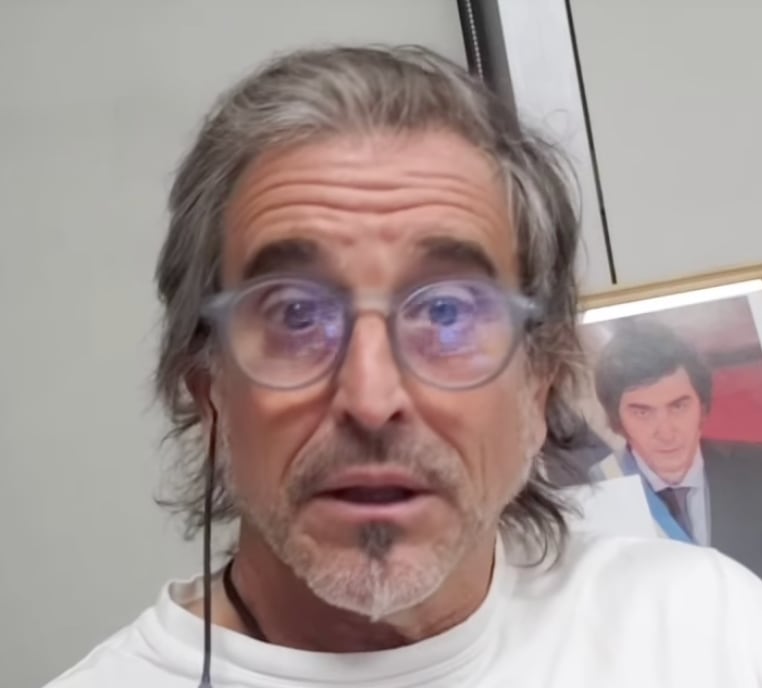
Alberto “Bertie” Benegas Lynch, a national deputy for La Libertad Avanza, has strongly criticized a proposed soil law in Buenos Aires Province, denouncing it as an encroachment on private property rights. The bill, put forth by the Provincial College of Agronomists and Foresters (Ciafba), seeks to declare the protection and management of soils and water for agricultural and forestry production as being of "public interest."
Parasites are not only traditional politicians, pseudo-entrepreneurs, mercenaries infiltrated in journalism and the indignant. Other groups also seek to live off the worker through the state.
Benegas Lynch voiced his opposition in a social media video, arguing that the initiative represents a move towards greater state control over private activities. He stated that certain groups, beyond traditional politicians and media figures, aim to live off workers through the state. He specifically targeted some representatives of the College of Agronomists, suggesting their proposal masks a desire for state-funded livelihoods.
Using the excuse of false environmentalism, they say that private fields are social goods. It is a disguised way of talking about collective goods or public goods.
The deputy contended that the bill's proponents use "false environmentalism" as a pretext to redefine private fields as social or public goods, thereby undermining property rights. He highlighted a specific aspect of the project that would mandate private rural establishments to obtain state-certified sustainable soil management practices, with certification exclusively provided by the College of Agronomists. Benegas Lynch sees this as a way for the college to create a captive market for its services.
These guys intend, via the State, to force private rural establishments to certify sustainable soil improvement practices on their land. A certificate that only the Professional College of Agronomists would provide, of course.
Asserting that the debate transcends technical agronomy, Benegas Lynch invoked Articles 14 and 17 of the National Constitution, which he believes guarantee the defense of private property against such "invasions." He argued that if professionals wish to offer soil improvement services, they should engage with potential clients in the open market, allowing landowners to voluntarily accept or reject their proposals, rather than relying on state mandates.
This is not a technical discussion of agronomy, as they want to present it. It is about Articles 14 and 17 of the National Constitution, the defense of private property against these invasions.
DistantNews Editorial
Originally published by La Nación in Spanish. Translated, summarized, and contextualized by our editorial team with added local perspective. Read our editorial standards.
More Stories



From Our Blog

What Gets Lost (and Found) When News Is Translated

The Critical Role of Diaspora Media in Global News

What Travellers Should Know About Countries with Restricted Press

A Digital Nomad's Guide to Following Local News

How the Same Story Looks Different in Different Countries
