


Arkalochori Residents Endure Dangerous Homes Years After Crete Earthquake
Translated from Greek, summarized and contextualized by DistantNews.
At a glance
News
Named sources
Context piece
- Residents of Arkalochori, Crete, are living in dangerous homes years after a devastating earthquake in September 2021.
- Over 400 homes were red-tagged as uninhabitable, and 700 students continue to attend classes in temporary container classrooms.
- Many residents have resorted to makeshift repairs due to slow restoration processes, while some businesses and farmers have abandoned the area.
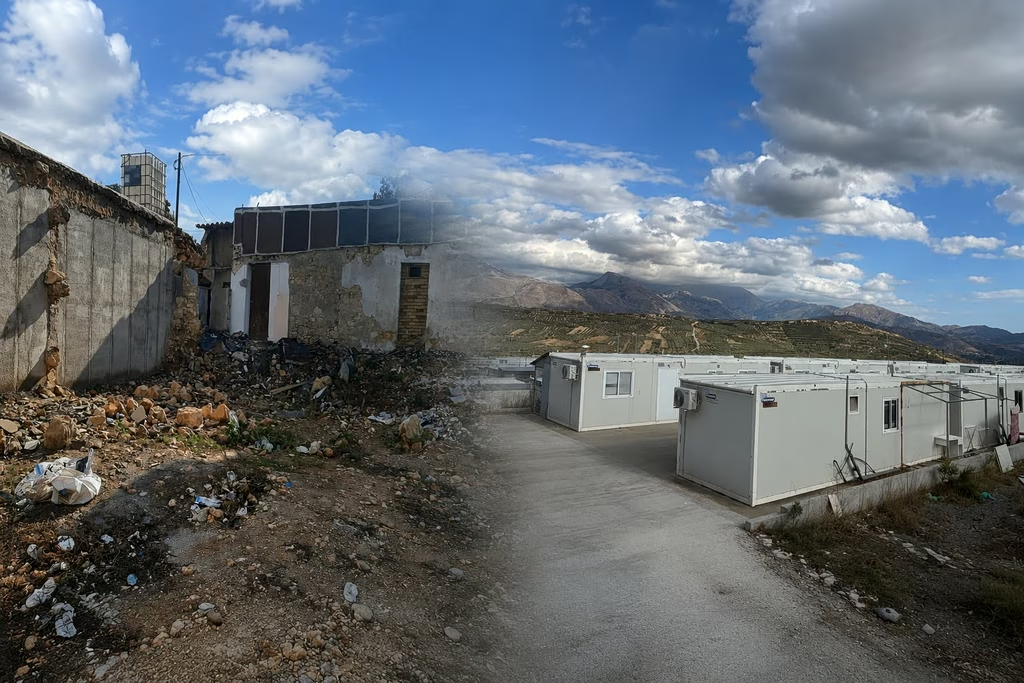
Arkalochori, Greece – "How long will we live in dangerous houses?" This question haunts the residents of Arkalochori, a community in Crete still grappling with the aftermath of a devastating earthquake in September 2021. Five years on, the town's recovery seems frozen in time, marked by crumbling walls, abandoned shops, and a pervasive sense of neglect.
How long will we live in dangerous houses?
Instead of a community healing its wounds, visitors find ruins and containers. Kostas Gantatsios, president of the "Elpida" Association of Earthquake Victims of the Minoa Pediada Municipality, describes Arkalochori as "barely surviving." Economically and socially, the area remains trapped in uncertainty. "It's as if not a day has passed since that September," Gantatsios laments. Red-tagged "red" houses, deemed completely uninhabitable, remain within the urban fabric, while some residents still live in cracked homes bearing visible earthquake damage.
Arkalochori is barely surviving.
The situation is particularly dire for students, with 700 pupils in the Minoa Pediada and Archanes-Asterousion municipalities still attending classes in container classrooms. "I am sure that this generation will never see what a normal school looks like in our area," Gantatsios stated grimly. The slow pace of reconstruction means that even two decades might not be enough to rebuild homes, leading to immense frustration among residents.
It's as if not a day has passed since that September.
Disheartened by the prolonged delays, many locals have taken matters into their own hands, performing rudimentary repairs to make their homes minimally habitable. "There's a person who put plastic sheeting on the walls because of moisture and rodents," Gantatsios noted, highlighting the unacceptable living conditions. Several farmers and business owners have permanently left the region, convinced that meaningful change is unlikely. "We are tired because we feel wronged. I keep hearing 'Why have they forgotten us?' and I have no answer," Gantatsios said, expressing a sentiment of abandonment and despair. He fears the area will never fully recover without substantial support and effective reconstruction programs.
I am sure that this generation will never see what a normal school looks like in our area.
DistantNews Editorial
Originally published by Ta Nea in Greek. Translated, summarized, and contextualized by our editorial team with added local perspective. Read our editorial standards.
More Stories
From Our Blog

What Gets Lost (and Found) When News Is Translated

The Critical Role of Diaspora Media in Global News

What Travellers Should Know About Countries with Restricted Press

A Digital Nomad's Guide to Following Local News

How the Same Story Looks Different in Different Countries
