

Asian shares fall as chipmakers drag; US jobs data looms
Summarized and contextualized by DistantNews.
At a glance
News
Sources not specified
Context piece
- Asian shares declined on Thursday, led by a sell-off in chipmakers after a strong quarter.
- Oil prices fell to four-month lows amid comments from US President Trump and increased transit through the Strait of Hormuz.
- Markets are awaiting US non-farm payrolls data for clues on potential interest rate hikes.
Asian stock markets fell on Thursday, with technology shares, particularly chipmakers, dragging down the broader indices. Investors are reassessing their positions after a strong second quarter, while currency and bond markets are on edge ahead of crucial US jobs data that could signal future interest rate movements.
Oil prices reached new four-month lows. Brent crude dropped 0.8 percent to $71 a barrel, influenced by US President Donald Trump's remarks about positive talks with Iran and increased oil tanker traffic through the Strait of Hormuz. This decline adds to concerns about global oil supply and demand dynamics.
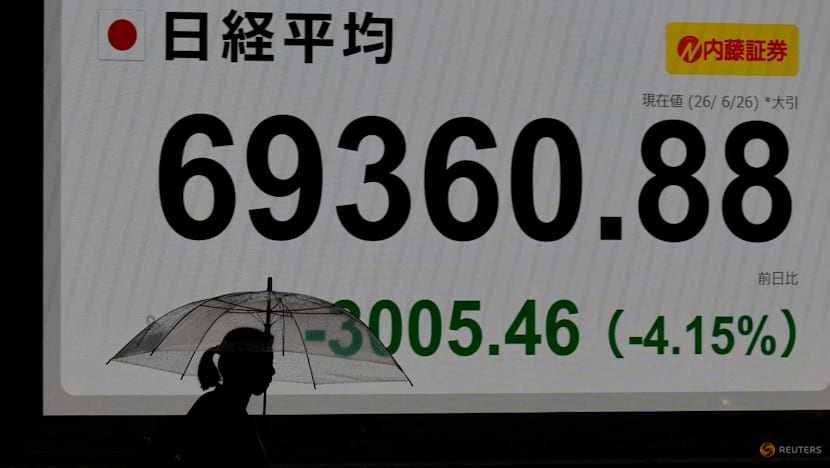
MSCI's broadest index of Asia-Pacific shares outside Japan slipped 0.8 percent, and Japan's Nikkei also dropped 1.1 percent. South Korea's Kospi experienced a significant decline of 2.7 percent, following a substantial 68 percent surge in the previous quarter driven by AI-related demand for memory chips. Major chip manufacturers like SK Hynix and Samsung saw sharp drops of 7.7 percent and 6.2 percent, respectively. This downturn occurred after Meta Platforms announced plans to build a cloud business utilizing excess AI computing capacity, which had boosted Meta's shares.
Hong Kong's Hang Seng index was a notable exception, gaining 1.8 percent. Foreign investors had been selling Asian equities at the fastest pace in at least 16 years during the first half of 2026, rebalancing portfolios away from high-flying South Korean and Taiwanese tech stocks towards less expensive alternatives.
Attention is now focused on the US non-farm payrolls report for June, due Thursday. Economists surveyed by Reuters anticipate 110,000 job additions, though forecasts vary widely, suggesting a potential for surprises. The unemployment rate is expected to remain steady at 4.3 percent. Analysts suggest that a "Goldilocks" outcome, moderate job creation and a stable unemployment rate, would be ideal for equity markets, avoiding significant increases in the probability of near-term rate hikes.
For the equity traders, there is probably no single rigid playbook to work from. Ideally, equity players want a Goldilocks outcome: respectable job creation, a stable unemployment rate. Anything that avoids a marked increase in the implied probability of near-term rate hikes is likely to be welcomed by equity bulls.
DistantNews Editorial
Originally published by CNA. Summarized and contextualized by our editorial team with added local perspective. Read our editorial standards.
More Stories



From Our Blog

What Gets Lost (and Found) When News Is Translated

The Critical Role of Diaspora Media in Global News

What Travellers Should Know About Countries with Restricted Press

A Digital Nomad's Guide to Following Local News

How the Same Story Looks Different in Different Countries
