


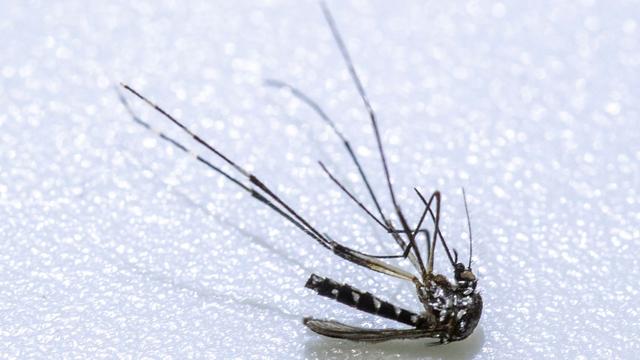
Asian tiger mosquito spreads in Hesse, health risks loom
Translated from German, summarized and contextualized by DistantNews.
At a glance
News
Sources not specified
Context piece
- The Asian tiger mosquito, a small black-and-white striped insect originating from Southeast Asia, is spreading in the German state of Hesse.
- While its bite is generally harmless, the mosquito can transmit diseases like Dengue, Chikungunya, and Zika, though no such transmission has been recorded in Germany yet.
- Residents are urged to prevent mosquito breeding by regularly emptying small water collections in gardens and balconies.
The Asian tiger mosquito, a small, black-and-white striped insect native to Southeast Asia, is establishing a presence in Germany's state of Hesse. Health Minister Diana Stolz noted its increasing prevalence, particularly in southern Hesse, with documented sightings expanding northward.
We see that it is slowly moving further north.
"We see that it is slowly moving further north," Stolz said. By the end of the last season in September, the mosquito had been detected in 14 cities and districts, appearing in a total of 40 municipalities. While the mosquito's bite typically causes only localized itching and swelling, similar to other mosquito bites, it poses a potential health risk.
Experts warn that the tiger mosquito can carry and transmit dangerous pathogens, including the Dengue, Chikungunya, and Zika viruses. Although no cases of local transmission by a tiger mosquito have been reported in Germany to date, scientists believe it is only a matter of time. Transmission occurs only if the mosquito first feeds on an infected host.
The most effective thing people can do is very simple, in their own garden and on the balcony, and it costs nothing. It is the regular check of everything in which water can collect.
Mosquito expert Doreen Werner from the Leibniz Centre for Agricultural Landscape Research highlighted the mosquito's ability to breed in even the smallest accumulations of water. Unlike common house mosquitoes, tiger mosquitoes can reproduce in containers as small as plant pot saucers, bird baths, or cemetery flower vases, provided there are just a few millimeters of standing water. Werner also described them as "nasty little biters" that can make outdoor activities unpleasant.
These are very small nasty biters. They can make spending time outdoors really unpleasant.
The mosquito was first documented in Germany in 2007 near the Swiss border and first confirmed in Hesse in 2018. The Hessian Ministry of the Environment reports regular sightings along the Bergstraße, in Darmstadt-Dieburg, Groß-Gerau, Wiesbaden, the Main-Taunus district, Frankfurt, the Hochtaunus district, the Main-Kinzig district, and Hanau, with individual sightings in other areas as well. Minister Stolz emphasized that public awareness and preventative measures are key to controlling its spread, urging citizens to regularly check and empty any containers that could collect water in their gardens and on balconies.
If only two to three millimeters of water remain, that is completely sufficient.
DistantNews Editorial
Originally published by Die Zeit in German. Translated, summarized, and contextualized by our editorial team with added local perspective. Read our editorial standards.
More Stories


From Our Blog

What Gets Lost (and Found) When News Is Translated

How the Same Story Looks Different in Different Countries

The Critical Role of Diaspora Media in Global News

What Travellers Should Know About Countries with Restricted Press

A Digital Nomad's Guide to Following Local News
