


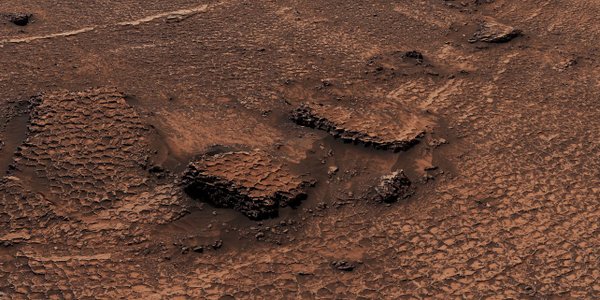
Astonishing 'Endless Sea of Polygons' Discovered on Mars by Curiosity Rover
Translated from Polish, summarized and contextualized by DistantNews.
At a glance
News
Sources not specified
Context piece
- NASA released stunning images from Mars showing a vast expanse of polygonal formations.
- The Curiosity rover discovered this unusual geological structure in a region called 'Valle Grande'.
- Scientists described the finding as an "endless sea of polygons" that stretched to the horizon.
NASA has unveiled breathtaking images captured from the surface of Mars, revealing a geological formation that has astonished scientists. The agency described the sight as an "endless sea of polygons" that extended as far as the eye could see.
The discovery was made by the Curiosity rover while it was exploring a Martian valley known as 'Valle Grande'. The rover encountered an extraordinary geological feature that researchers have likened to a honeycomb structure. This unique pattern covers a vast area, creating a visually striking landscape.
We were breathless.
Scientists involved in the mission expressed their amazement at the find, with one remarking that it "took our breath away." The intricate network of polygons stretching towards the horizon presents a novel and intriguing subject for geological study on the Red Planet. Further analysis is expected to shed light on the processes that formed this remarkable Martian terrain.
endless sea of polygons
DistantNews Editorial
Originally published by Rzeczpospolita in Polish. Translated, summarized, and contextualized by our editorial team with added local perspective. Read our editorial standards.
More Stories



From Our Blog

What Gets Lost (and Found) When News Is Translated

The Critical Role of Diaspora Media in Global News

What Travellers Should Know About Countries with Restricted Press

A Digital Nomad's Guide to Following Local News

How the Same Story Looks Different in Different Countries
