

Attabad Lake not drying up, heavy silt deposits create illusion, fact check finds
Translated from English, summarized and contextualized by DistantNews.
At a glance
News
Named sources
Context piece
- Recent images of Attabad Lake in Pakistan show large areas of exposed land, leading to speculation it is drying up.
- A fact check confirmed the lake is not drying but is experiencing heavy silt and sedimentation, a natural process.
- Experts note that while the lake's surface area has gradually reduced since its formation in 2010, changes have become less pronounced since 2016, indicating a move towards stability.
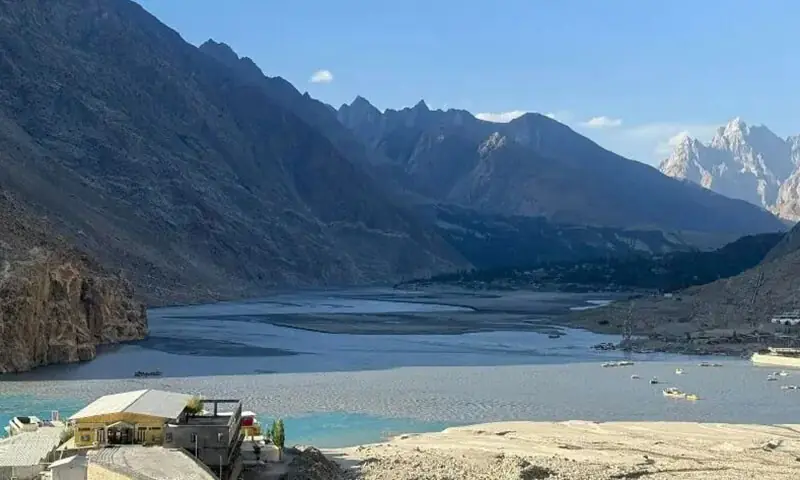
Recent visuals of Pakistan's Attabad Lake, a popular tourist spot, have sparked online discussion, with many noticing large expanses of exposed land where water once lay. These images have led some to believe the lake is drying up, with concerns raised about environmental degradation.
However, an iVerify fact check, corroborated by local correspondent Jamil Nagri, clarifies that the phenomenon is not a drying lake but rather a natural process of heavy silt and sedimentation. The lake, formed by a 2010 landslide, is a landslide-dammed reservoir susceptible to changes from inflows and outflow management.
The lake has not dried up; instead, it is shrinking due to high levels of silt in the lake, which is a natural phenomenon.
A 2024 research paper noted a gradual reduction in the lake's surface area between 2010 and 2020 due to rapid silting from the Hunza River. Sediment accumulation in the upstream northern estuary has increased exposed deposits and altered the landscape. Despite this, the study observed that changes became less pronounced after 2016, suggesting the lake is moving toward a more stable state. A local climate expert confirmed that summer siltation from tributaries can create the illusion of the lake drying up, but emphasized it is a natural occurrence.
Because of its proximity to the source of the Hunza River, the lake experiences rapid silting. Over time, this natural sedimentation gradually shrinks the active water area and alters the surrounding landscape.
DistantNews Editorial
Originally published by Dawn in English. Translated, summarized, and contextualized by our editorial team with added local perspective. Read our editorial standards.
More Stories

From Our Blog

What Gets Lost (and Found) When News Is Translated

The Critical Role of Diaspora Media in Global News

What Travellers Should Know About Countries with Restricted Press

A Digital Nomad's Guide to Following Local News

How the Same Story Looks Different in Different Countries
