

Aurus project, Russia's 'Rolls-Royce,' faces failure
Translated from Polish, summarized and contextualized by DistantNews.
At a glance
News
Named sources
Context piece
- The Aurus luxury car project, intended as a "Russian Rolls-Royce," is nearing failure due to a lack of investment, technology, and economic viability.
- High production costs and low demand mean the project is unlikely to become a mass-market brand, with state funding potentially propping it up for official use.
- The project's origins are linked to Chinese technology, and its future production is uncertain, with Sollers selling its stake and Gazprom Tech becoming a co-owner.
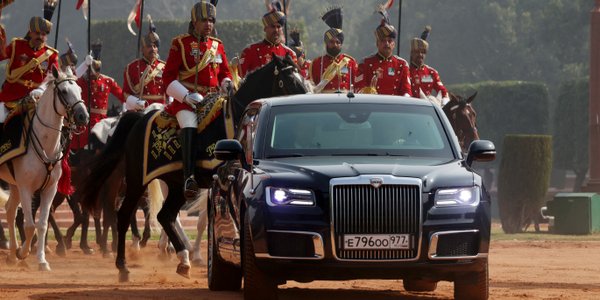
Russia's ambitious "Russian Rolls-Royce" project, the Aurus luxury car, is reportedly on the verge of collapse, facing significant economic hurdles and a lack of market appeal. Experts suggest the project, which aimed to create a mass-market luxury brand, has failed to gain traction due to insufficient investment, outdated technology, and a fundamental lack of economic justification.
Automotive expert Sergey Cyganov, who was involved with the state institute that developed Aurus, stated that the brand could not be transformed from a "presidential toy" into a truly mass-market success. He pointed to a deficit in investment, technology, and capable partners needed to elevate the project to the level of brands like Audi or BMW. Cyganov anticipates the state will continue to support the project, at least for small-scale production, but expressed hope that its purchase by state officials would not excessively strain the budget.
Aurus vehicles are priced at approximately 50 million rubles (around $550,000 USD), with the luxury Senat limousine, used by President Putin, costing up to 117 million rubles ($1.3 million USD) in its most secure configuration. Despite these high prices, demand is reportedly minimal, falling far short of the initially projected 5,000 cars annually. The cost of assembling Aurus vehicles in the Yelabuga Special Economic Zone in Tatarstan is prohibitively high, rendering the project unprofitable regardless of production volume.
Production of Aurus began in 2018 in Moscow, with plans to expand to Yelabuga for contract assembly and later for SUV production. However, these expansion plans were hampered by the conflict in Ukraine. In 2024, Sollers sold its stake in the project to Hit Motors Rus, a company with Kazakh roots, and Gazprom Tech, a subsidiary of Gazprom, became a co-owner in 2025. Sources indicate that the Yelabuga assembly plant's future is uncertain.
The article also suggests that the Aurus is based on Chinese Hongqi technology, challenging the notion of it being a purely Russian-developed luxury vehicle. The project's overall failure highlights the difficulties Russia faces in developing and sustaining high-end automotive manufacturing independent of international partnerships and significant state subsidies.
Brakuje inwestycji, technologii i partnerów zdolnych do doprowadzenia tego projektu do bardziej popularnego i dochodowego poziomu rosyjskiego Audi czy BMW
DistantNews Editorial
Originally published by Rzeczpospolita in Polish. Translated, summarized, and contextualized by our editorial team with added local perspective. Read our editorial standards.
More Stories



From Our Blog

What Gets Lost (and Found) When News Is Translated

The Critical Role of Diaspora Media in Global News

What Travellers Should Know About Countries with Restricted Press

A Digital Nomad's Guide to Following Local News

How the Same Story Looks Different in Different Countries
