


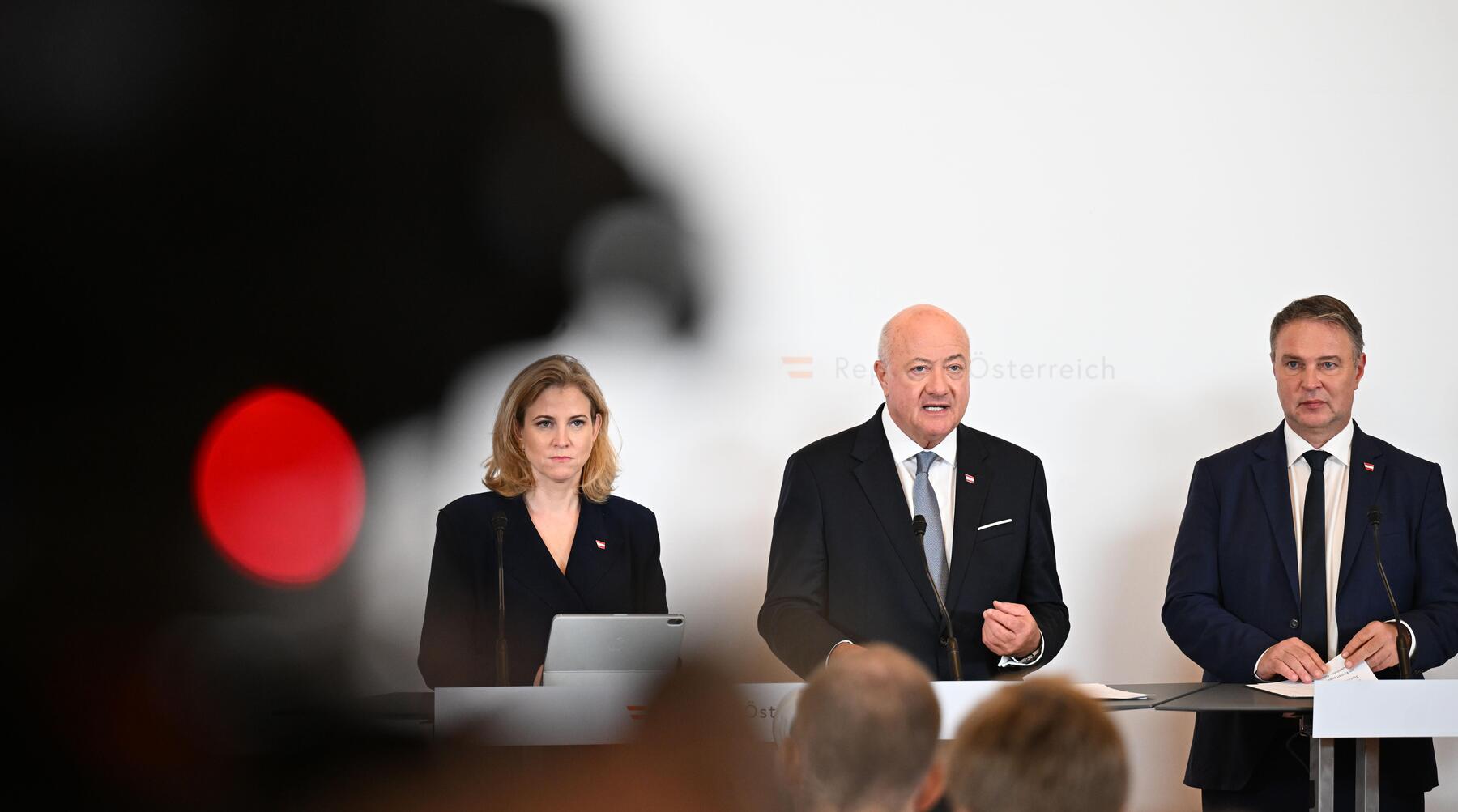
Austria's Government: Few Praises, Growing Internal Strife
Translated from German, summarized and contextualized by DistantNews.
At a glance
Opinion
Sources not specified
Context piece
- The Austrian coalition government rarely receives praise, with approval and sympathy ratings declining rapidly while internal party differences increase.
- The article questions whether this is due to the government acting in the country's interest rather than partisan tactics, fostering mutual respect, and discussing disagreements objectively.
- It highlights internal party conflicts, citing examples of criticism within the Social Democratic Party (SPÖ) and questioning the motives and effectiveness of political maneuvering.
The Austrian federal government finds itself in a position where praise is scarce, and its approval and sympathy ratings are in sharp decline. Simultaneously, internal party disputes are escalating, prompting an examination of the underlying reasons for this trend. The author questions whether the government's actions, often perceived negatively, are truly aligned with the nation's interests or if they are driven by partisan strategies.
One perspective suggests that the coalition government, comprising the ÖVP, SPÖ, and Greens, strives to act in the best interest of the country and its inhabitants. This view posits that the parties engage in their work with mutual respect, avoiding harsh criticism of differing opinions and instead opting for objective discussions. However, the article acknowledges that a minority might hold this positive view, suggesting that the government may be better than its media portrayal.
Mistakes? Certainly! After all, people are at work, not AI-optimized political puppets.
Despite the potential for objective governance, the article does not shy away from acknowledging the government's missteps. "Mistakes? Certainly! After all, people are at work, not AI-optimized political puppets," the author notes, implying that human fallibility is inherent in political decision-making. These errors might include compromises that could have been avoided, negotiated to make life more affordable and to disarm internal critics.
The piece delves into internal party conflicts, particularly within the Social Democratic Party (SPÖ). It highlights instances of sharp criticism, such as a district chairman's disparaging remarks about the Vice-Chancellor. The article also touches upon historical grievances, like a provincial governor's apparent inability to accept his loss in a previous party leadership election, suggesting a persistent struggle for power and influence within the party. The author invokes the German philosopher Wilhelm Schmid's observation that "Whoever seeks enemies is in the right place in politics," underscoring the often adversarial nature of the political arena.
Whoever seeks enemies is in the right place in politics.
DistantNews Editorial
Originally published by Die Presse in German. Translated, summarized, and contextualized by our editorial team with added local perspective. Read our editorial standards.
More Stories

From Our Blog

What Gets Lost (and Found) When News Is Translated

The Critical Role of Diaspora Media in Global News

What Travellers Should Know About Countries with Restricted Press

A Digital Nomad's Guide to Following Local News

How the Same Story Looks Different in Different Countries
