


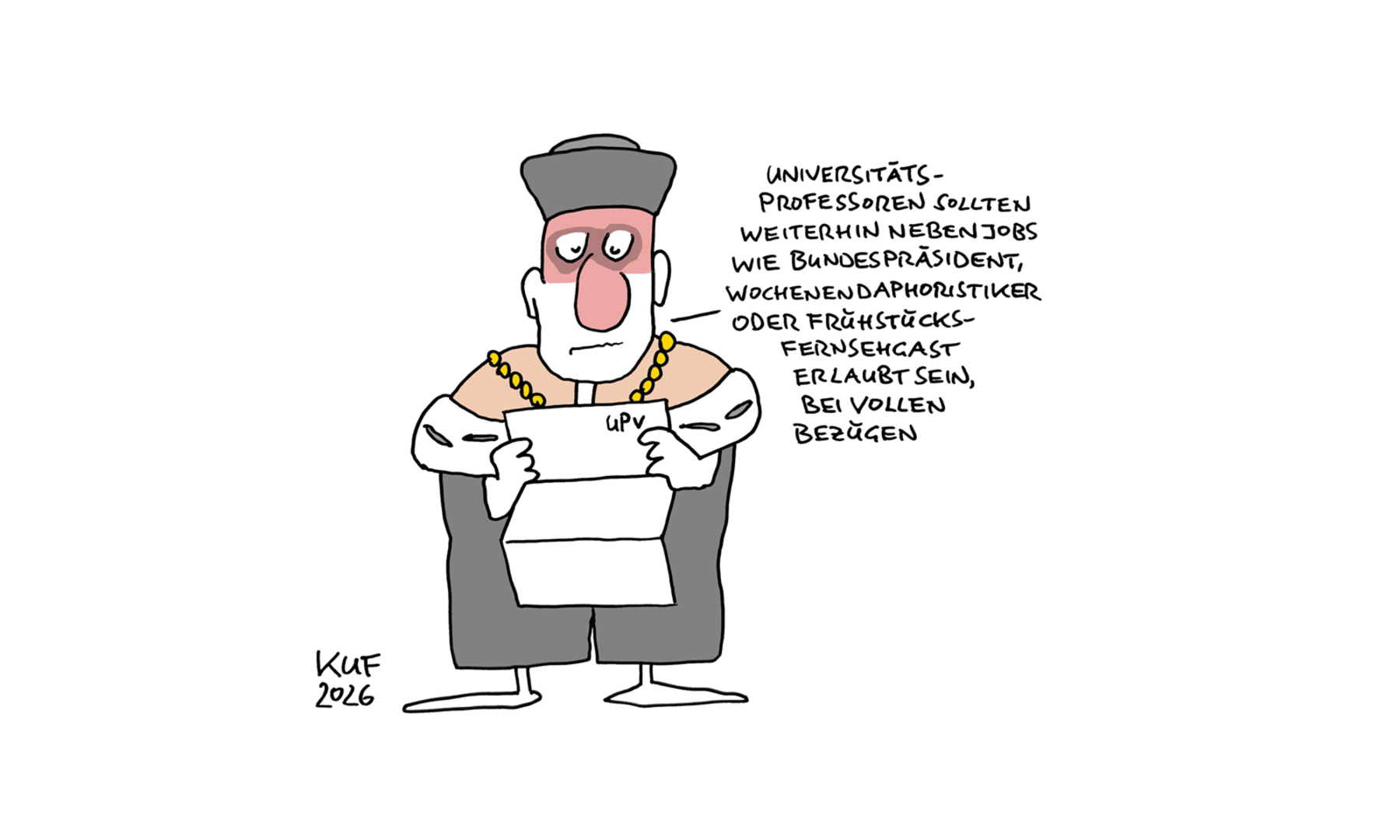
Austrian Professors Urge Government to Prioritize Strategy Over Budget Cuts
Translated from German, summarized and contextualized by DistantNews.
At a glance
Opinion
Named sources
Context piece
- Austrian university professors are urging the government to prioritize strategic goals before discussing financial implementation for higher education.
- They highlight concerns over potential budget cuts for the 2028-2030 period, including inflation-related reductions and possible nominal cuts.
- The professors emphasize the need for stable funding to ensure continuity in research, teaching, and the development of arts and sciences.
University professors in Austria are calling for a clear agreement on strategic objectives before financial discussions commence for the nation's higher education sector. In an open letter addressed to Federal Minister Eva-Maria Holzleitner, the Association of Austrian University Professors (UPV) expressed gratitude for her engagement at the Trilateral Conference of University Associations from Germany, Switzerland, and Austria. This conference, held in Graz, focused on the "University Strategy 2040." However, the UPV noted that recent collaborations between the Federal Ministry and universities have been overshadowed by debates concerning budget reductions for the 2028–2030 triennial period. Concerns include not only inflation-adjusted budget cuts but also the possibility of nominal reductions. The professors stressed that consistent funding is essential for any meaningful strategic development. They referenced the "Austrian University Development Plan (GUEP) 2028–2033," which states that "adequate financing is required to achieve the targeted objectives." Without it, the progress made in teaching and research cannot be sustained, ongoing programs may falter, and new goals cannot be established on a solid financial foundation. The letter outlines the core tasks of universities as teaching, research and development, and the "Third Mission", engaging with society. The professors highlighted how digitalization, societal shifts driven by the climate crisis, geopolitical changes, socioeconomic developments, and societal polarization have transformed the demands on university education. They emphasized that research-led teaching should equip students not only with knowledge and vocational training but also empower them as critical, reflective citizens.
Only after strategic goals have been agreed upon can their financial implementation be discussed.
DistantNews Editorial
Originally published by Die Presse in German. Translated, summarized, and contextualized by our editorial team with added local perspective. Read our editorial standards.
More Stories


From Our Blog

What Gets Lost (and Found) When News Is Translated

The Critical Role of Diaspora Media in Global News

What Travellers Should Know About Countries with Restricted Press

A Digital Nomad's Guide to Following Local News

How the Same Story Looks Different in Different Countries
