

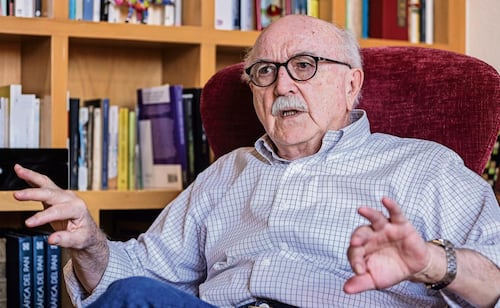
‘Authoritarian Error for a Government to Define Truth’: Francisco Valdés Ugalde
Translated from Spanish, summarized and contextualized by DistantNews.
At a glance
Interview
Sources not specified
Context piece
- A Mexican political scientist warns that governments defining 'truth' risks authoritarianism and censorship.
- The expert criticizes a proposed government body to monitor media, likening it to a 'ministry of truth.'
- He advocates for total freedom of expression and press, with autonomous bodies to protect audience rights, not government control.
Francisco Valdés Ugalde, a prominent Mexican political scientist and sociologist, asserts that any government's attempt to define 'truth' is a grave error, pushing the nation toward autocracy and undermining its democratic character. He argues that such actions strip away the essence of a democratic regime.
It is like creating a 'ministry of truth,' what we are seeing is closer to the creation of a censorship tool, than a tool for the audiences.
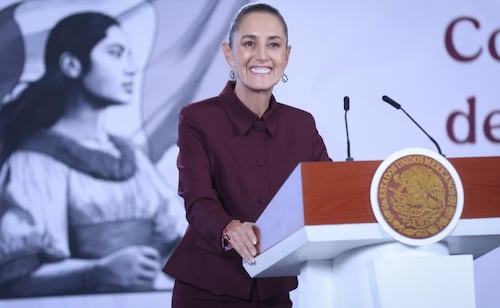
Valdés Ugalde expressed concern over a new proposal by President Claudia Sheinbaum Pardo's administration regarding guidelines for protecting audience rights. He believes this initiative, which suggests creating a governmental body to monitor media behavior, could evolve into a tool for censorship rather than a genuine protection for audiences. He likens the proposed agency to a 'ministry of truth,' emphasizing its potential to stifle content and opinions.
When a government decides to take the definition of truth into its own hands, it is committing a grave error, an error of an authoritarian nature.
"When a government decides to take the definition of truth into its own hands, it is committing a grave error, an error of an authoritarian nature," Valdés Ugalde stated in an interview with EL UNIVERSAL. He explained that political power in a democracy is forged through the agreement of diverse opinions and viewpoints. Therefore, he stressed the importance of complete freedom of expression and press, enabling audiences to form their own opinions independently.
There must be full freedom of expression, full freedom of the press, and there must be conditions for audiences to form their own opinion.
While acknowledging the need to protect audience rights, Valdés Ugalde prefers mechanisms like public ethics codes and autonomous ombudsman offices, independent of political power. He finds the proposed guidelines vague regarding terms like 'truthful,' 'objective opinion,' and 'appropriate conduct' for media. This ambiguity, he suggests, could grant excessive power to the monitoring agency, potentially leading to self-censorship among media outlets.
I think the ombudsman for audiences should be autonomous from political power.
DistantNews Editorial
Originally published by El Universal in Spanish. Translated, summarized, and contextualized by our editorial team with added local perspective. Read our editorial standards.
More Stories
From Our Blog

What Press Freedom Means for the News You Read

What Gets Lost (and Found) When News Is Translated

The Critical Role of Diaspora Media in Global News

What Travellers Should Know About Countries with Restricted Press

A Digital Nomad's Guide to Following Local News
