


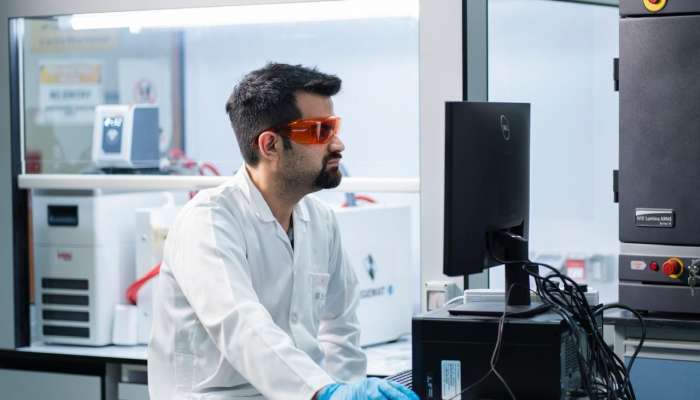
Award-winning research develops advanced gene-based dressing for chronic wounds
Summarized and contextualized by DistantNews.
At a glance
News
Named sources
Approved/passed
- Researchers at the University of Nizwa have developed an advanced gene-based wound dressing for chronic wounds, particularly those associated with diabetes.
- The innovative dressing, which targets inflammation using extracellular vesicles loaded with si-TNF-α, won the National Research Award 2025 in Oman.
- Animal model testing showed significantly faster healing, reduced inflammation, and improved tissue regeneration compared to standard treatments.
An innovative research project at the University of Nizwa has yielded a promising new approach for treating chronic wounds, especially those linked to diabetes. The study, which focuses on engineered local delivery of extracellular vesicles loaded with si-TNF-α via a core-sheath 3D-bio-printed scaffold, earned the National Research Award 2025 in Oman under the Young Researcher category.
Led by Associate Researcher Mr. Saeid Vakilian, the research addresses the persistent inflammation that often hinders the healing of chronic wounds, leading to complications like infections or amputations. The team's solution combines nanotechnology, gene therapy, and 3D bioprinting. They engineered extracellular vesicles, tiny particles naturally released by cells, to carry si-TNF-α. This molecule reduces excessive inflammation by targeting TNF-α, a protein commonly implicated in chronic wounds.
The engineered vesicles are embedded within a 3D-printed scaffold designed to mimic natural tissue. This scaffold gradually degrades, enabling a controlled, localized release of the therapeutic vesicles directly at the wound site. Laboratory results confirmed the system's ability to regulate particle release and promote immune cells to shift towards a healing state.
Chronic wounds are often difficult to treat due to persistent inflammation, which can delay healing and lead to serious complications such as infections or even amputations.
Further testing in animal models demonstrated the advanced dressing's efficacy. Wounds treated with this novel approach healed significantly faster than those receiving standard treatments or non-loaded scaffolds. The treatment also effectively reduced inflammation levels and enhanced overall tissue regeneration, signaling strong potential for clinical application.
The research highlights the successful integration of advanced biological and engineering techniques. This includes efficiently loading therapeutic molecules into extracellular vesicles while maintaining their function and developing a stable, effective 3D-bioprinted scaffold. These innovations collectively contribute to a more targeted and effective strategy for wound healing. The findings have been published in the Journal of Drug Delivery Science and Technology.
The approach uses tiny particles naturally released by cells, known as extracellular vesicles, which are engineered to carry a therapeutic molecule called si-TNF-α. This molecule works by reducing excessive inflammation through targeting a key protein, TNF-α, that is commonly associated with chronic wounds.
DistantNews Editorial
Originally published by Times of Oman. Summarized and contextualized by our editorial team with added local perspective. Read our editorial standards.
More Stories

From Our Blog

What Gets Lost (and Found) When News Is Translated

The Critical Role of Diaspora Media in Global News

What Travellers Should Know About Countries with Restricted Press

A Digital Nomad's Guide to Following Local News

How the Same Story Looks Different in Different Countries
